Guifeng Mountain
⭐ 4.20
Guifeng Mountain Nature Reserve, Xinhui District, Jiangmen City, Guangdong Province, China
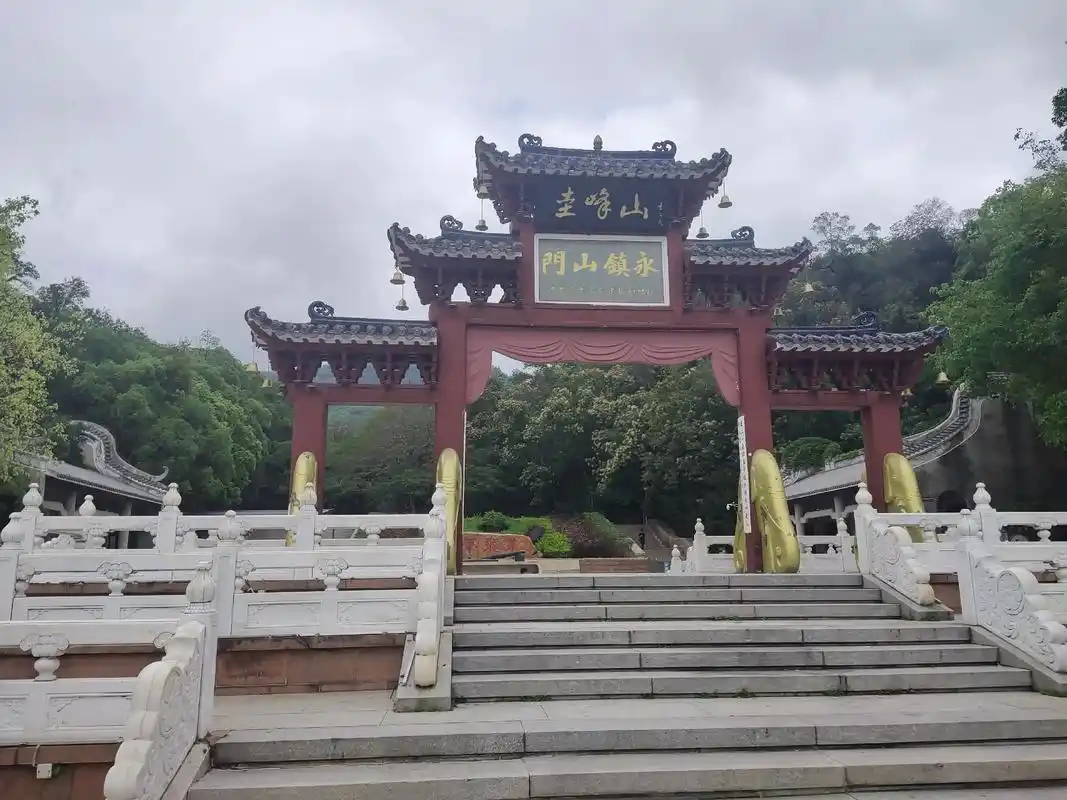 Guifeng Mountain carries a layered history stretching back to the Tang Dynasty (618–907 CE), when Yutai Temple was founded as one of Lingnan's four great Buddhist monasteries—a regional counterpart to Kyoto's ancient Zen temples or Tuscany's hillside abbeys. The Zhen Shan Pagoda, raised during the Yuan Dynasty (1271–1368), stands as one of southern China's most important surviving ancient pagodas, its weathered brick silhouette comparable to a Romanesque campanile rising above the canopy. A century later, the mountain would shelter Zhou Enlai's wartime memorial hall and the former Xinhui Labor University, sites that connect this seemingly remote peak to modern China's revolutionary narrative.
Yutai Temple cascades down the hillside in classic Lingnan Buddhist fashion, its halls arranged in disciplined terraces that follow the slope's natural contours—much like a Carthusian monastery built into Alpine cliffs. Aged wooden eaves, ochre walls, and stone stairways blend seamlessly with camphor and banyan groves, embodying the harmony between monastic architecture and forested landscape. Nearby, the Yuan-style Zhen Shan Pagoda rises in tapering brickwork, its sober proportions a striking contrast to the lush vegetation and the temple's colorful rooftops.
Beyond its Buddhist heritage, Guifeng serves as a popular pilgrimage site where devotees light incense for blessings, while secular visitors come for the sweeping panoramas from Yunfeng's summit. The mountain's 98% forest cover—comparable to Germany's Black Forest—has earned it designation as a National Forest Park and natural oxygen bar. Four signature landscapes define the experience: the alpine-meadow feel of Swan Lake lawn atop the peak, the thundering Longtan Waterfall (best May–October), the tranquil Yuhu Lake reflecting spring blossoms, and Shijian Park's cathedral-like dawn redwood grove.
Each season paints the mountain differently: late February through March brings cherry-blossom avenues rivaling Washington D.C.'s Tidal Basin, while November through January sets the triangular maples ablaze in crimson and gold, framing the ancient temple like a Hokusai print. The summer monsoon swells Longtan Waterfall into a roaring curtain, and July–August afternoons remain pleasantly cool on the summit meadow—popular for family camping. Even winter offers crisp hiking days when mist curls between the peaks, lending the basin its poetic name.
Entry to the park is free, with voluntary donations for incense at Yutai Temple and sightseeing-car tickets ranging from 10 to 28 yuan one-way. Self-drivers should navigate to Yongzhen Mountain Gate Parking; public buses 3 and 301 run directly from Xinhui's urban center. The park itself never closes, though core attractions and shuttle buses operate 08:30–21:00—early mornings and late afternoons offer the coolest temperatures and best photography light. Visitors should bring mosquito repellent, sunscreen, and a light rain jacket in summer, and observe quiet, respectful behavior within temple grounds.
For Western travelers, Guifeng Mountain offers something rare in the densely populated Pearl River Delta: a genuine wilderness escape without a long journey. The recommended seven-to-twelve-kilometer loop from Yongzhen Gate through Yutai Temple, Longtan Waterfall, and the Green-Protected Peach Blossom Basin rewards hikers with waterfall spray, ancient pagoda silhouettes, and panoramic delta views. Lazy travelers can hop the shuttle directly to either the temple or the highland meadow, making this an effortless half-day immersion into Lingnan's mountain culture.
Guifeng Mountain carries a layered history stretching back to the Tang Dynasty (618–907 CE), when Yutai Temple was founded as one of Lingnan's four great Buddhist monasteries—a regional counterpart to Kyoto's ancient Zen temples or Tuscany's hillside abbeys. The Zhen Shan Pagoda, raised during the Yuan Dynasty (1271–1368), stands as one of southern China's most important surviving ancient pagodas, its weathered brick silhouette comparable to a Romanesque campanile rising above the canopy. A century later, the mountain would shelter Zhou Enlai's wartime memorial hall and the former Xinhui Labor University, sites that connect this seemingly remote peak to modern China's revolutionary narrative.
Yutai Temple cascades down the hillside in classic Lingnan Buddhist fashion, its halls arranged in disciplined terraces that follow the slope's natural contours—much like a Carthusian monastery built into Alpine cliffs. Aged wooden eaves, ochre walls, and stone stairways blend seamlessly with camphor and banyan groves, embodying the harmony between monastic architecture and forested landscape. Nearby, the Yuan-style Zhen Shan Pagoda rises in tapering brickwork, its sober proportions a striking contrast to the lush vegetation and the temple's colorful rooftops.
Beyond its Buddhist heritage, Guifeng serves as a popular pilgrimage site where devotees light incense for blessings, while secular visitors come for the sweeping panoramas from Yunfeng's summit. The mountain's 98% forest cover—comparable to Germany's Black Forest—has earned it designation as a National Forest Park and natural oxygen bar. Four signature landscapes define the experience: the alpine-meadow feel of Swan Lake lawn atop the peak, the thundering Longtan Waterfall (best May–October), the tranquil Yuhu Lake reflecting spring blossoms, and Shijian Park's cathedral-like dawn redwood grove.
Each season paints the mountain differently: late February through March brings cherry-blossom avenues rivaling Washington D.C.'s Tidal Basin, while November through January sets the triangular maples ablaze in crimson and gold, framing the ancient temple like a Hokusai print. The summer monsoon swells Longtan Waterfall into a roaring curtain, and July–August afternoons remain pleasantly cool on the summit meadow—popular for family camping. Even winter offers crisp hiking days when mist curls between the peaks, lending the basin its poetic name.
Entry to the park is free, with voluntary donations for incense at Yutai Temple and sightseeing-car tickets ranging from 10 to 28 yuan one-way. Self-drivers should navigate to Yongzhen Mountain Gate Parking; public buses 3 and 301 run directly from Xinhui's urban center. The park itself never closes, though core attractions and shuttle buses operate 08:30–21:00—early mornings and late afternoons offer the coolest temperatures and best photography light. Visitors should bring mosquito repellent, sunscreen, and a light rain jacket in summer, and observe quiet, respectful behavior within temple grounds.
For Western travelers, Guifeng Mountain offers something rare in the densely populated Pearl River Delta: a genuine wilderness escape without a long journey. The recommended seven-to-twelve-kilometer loop from Yongzhen Gate through Yutai Temple, Longtan Waterfall, and the Green-Protected Peach Blossom Basin rewards hikers with waterfall spray, ancient pagoda silhouettes, and panoramic delta views. Lazy travelers can hop the shuttle directly to either the temple or the highland meadow, making this an effortless half-day immersion into Lingnan's mountain culture.