Guifeng Mountain National Forest Park
⭐ 4.00
Anren County, Chenzhou City, Hunan Province, China
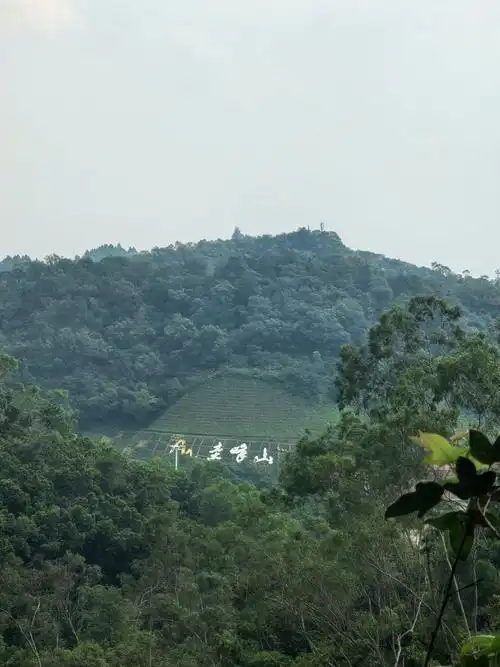 Rising above the western Pearl River Delta, Guifeng Mountain has been a spiritual landmark since the Han dynasty, when Yutai Temple was founded nearly two millennia ago—roughly contemporary with the fall of Rome. The temple ranks among the "Four Great Buddhist Monasteries of Southern Guangdong," and its sacred flame has burned continuously through the Tang, Song, and Ming dynasties. Set amid subtropical peaks rather than the alpine sanctuaries of Tibet, it offers an alternative lineage of Chinese Buddhist heritage within easy reach of the Guangdong coast.
Yutai Temple's most striking feature is its Tang-dynasty relic pagoda, the only fully preserved lama-style stupa in Guangdong—a genuine rarity in southern China, where Tibetan-influenced architecture is seldom seen. Modeled on the dagobas of Central Asia and reminiscent of Nepal's Boudhanath, this cylindrical brick tower introduces an unexpected Silk Road aesthetic to the Lingnan region. Nearby stands the Zhou Enlai Memorial Hall, commemorating the premier's 1958 inspection of Xinhui and adding a layer of modern political history to the ancient landscape.
The mountain rises in gentle, layered ridges blanketed with subtropical evergreens, where waterfalls tumble through boulder-strewn gullies and mist clings to the summits after rain. At its base, Jade Lake mirrors the surrounding dawn-redwood forest, which transforms dramatically through the year—emerald in summer, fiery rust-red in December. In spring, the Green-Peach-Blossom-Source area erupts with cherry and camellia blossoms, earning Guifeng a reputation as the premier floral destination of the Lingnan region and drawing photographers from across the delta.
For Guangdong's urban dwellers, Guifeng represents a rare convergence of natural and spiritual heritage within an hour's drive of three major cities. Pilgrims climb to Yutai for prayers, hikers trace the lake loop, and families picnic beneath the blossoms. The combination of a working Buddhist sanctuary, a contemporary political memorial, and pristine forest makes the park a microcosm of southern China's layered identity—where ancient devotion, revolutionary memory, and ecological leisure coexist in a single valley.
Entry is free year-round, though Yutai Temple requests a small incense ticket. From Jiangmen city, a taxi reaches the historic Yongzhen Gate entrance in about 30 minutes; Guangzhou, Foshan, and Zhuhai are all 1 to 1.5 hours by car, with public buses also serving the park. Visitors typically spend 3–4 hours exploring via walking paths, shuttle buses, or an optional cable car. Spring (March–April) and early winter (December) offer the finest colors, while summer provides cool forest relief from the Guangdong heat.
What sets Guifeng apart from better-known Chinese scenic areas is its accessibility and variety: a forest hike, a Buddhist pilgrimage, a botanical garden, and a lakeside stroll, all in one gentle circuit. Pair the visit with a stay at a nearby hot-spring resort for a classic Guangdong two-day escape of mountain walking followed by thermal bathing—a combination reminiscent of the spa-and-hill-town traditions of Tuscany or the Japanese countryside, but at a fraction of the journey time from Hong Kong.
Rising above the western Pearl River Delta, Guifeng Mountain has been a spiritual landmark since the Han dynasty, when Yutai Temple was founded nearly two millennia ago—roughly contemporary with the fall of Rome. The temple ranks among the "Four Great Buddhist Monasteries of Southern Guangdong," and its sacred flame has burned continuously through the Tang, Song, and Ming dynasties. Set amid subtropical peaks rather than the alpine sanctuaries of Tibet, it offers an alternative lineage of Chinese Buddhist heritage within easy reach of the Guangdong coast.
Yutai Temple's most striking feature is its Tang-dynasty relic pagoda, the only fully preserved lama-style stupa in Guangdong—a genuine rarity in southern China, where Tibetan-influenced architecture is seldom seen. Modeled on the dagobas of Central Asia and reminiscent of Nepal's Boudhanath, this cylindrical brick tower introduces an unexpected Silk Road aesthetic to the Lingnan region. Nearby stands the Zhou Enlai Memorial Hall, commemorating the premier's 1958 inspection of Xinhui and adding a layer of modern political history to the ancient landscape.
The mountain rises in gentle, layered ridges blanketed with subtropical evergreens, where waterfalls tumble through boulder-strewn gullies and mist clings to the summits after rain. At its base, Jade Lake mirrors the surrounding dawn-redwood forest, which transforms dramatically through the year—emerald in summer, fiery rust-red in December. In spring, the Green-Peach-Blossom-Source area erupts with cherry and camellia blossoms, earning Guifeng a reputation as the premier floral destination of the Lingnan region and drawing photographers from across the delta.
For Guangdong's urban dwellers, Guifeng represents a rare convergence of natural and spiritual heritage within an hour's drive of three major cities. Pilgrims climb to Yutai for prayers, hikers trace the lake loop, and families picnic beneath the blossoms. The combination of a working Buddhist sanctuary, a contemporary political memorial, and pristine forest makes the park a microcosm of southern China's layered identity—where ancient devotion, revolutionary memory, and ecological leisure coexist in a single valley.
Entry is free year-round, though Yutai Temple requests a small incense ticket. From Jiangmen city, a taxi reaches the historic Yongzhen Gate entrance in about 30 minutes; Guangzhou, Foshan, and Zhuhai are all 1 to 1.5 hours by car, with public buses also serving the park. Visitors typically spend 3–4 hours exploring via walking paths, shuttle buses, or an optional cable car. Spring (March–April) and early winter (December) offer the finest colors, while summer provides cool forest relief from the Guangdong heat.
What sets Guifeng apart from better-known Chinese scenic areas is its accessibility and variety: a forest hike, a Buddhist pilgrimage, a botanical garden, and a lakeside stroll, all in one gentle circuit. Pair the visit with a stay at a nearby hot-spring resort for a classic Guangdong two-day escape of mountain walking followed by thermal bathing—a combination reminiscent of the spa-and-hill-town traditions of Tuscany or the Japanese countryside, but at a fraction of the journey time from Hong Kong.