Jiangmen Wuyi Overseas Chinese Cultural Exchange Center
⭐ 3.80
Pengjiang District, Jiangmen City, Guangdong Province, China
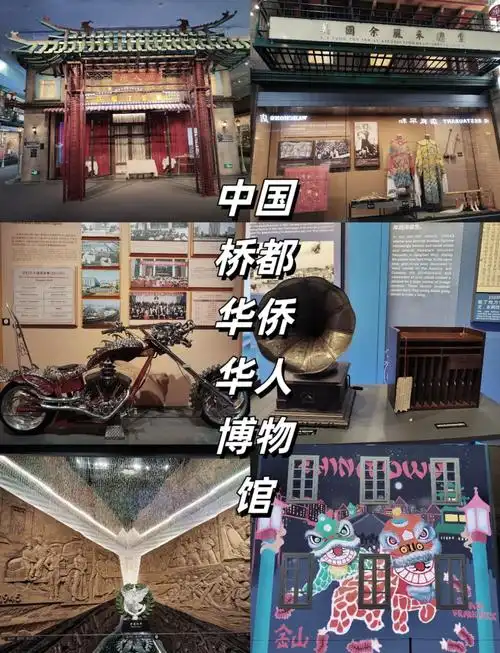 **Historical Context**: Jiangmen's Wuyi region has been a cradle of Chinese emigration for centuries, producing a diaspora that rivals the Irish, Italian, and Jewish emigrations in global impact. Between the 19th and 20th centuries, hundreds of thousands of Wuyi natives crossed the Pacific, helping build railways, Chinatowns, and businesses from San Francisco to Vancouver to Lima. The museum, upgraded to national first-class status in May 2024, sits at the symbolic heart of this story, much as Ellis Island does for American immigration history or the Museum of the Irish Famine in Dublin does for the Celtic diaspora.
**Architecture & Exhibits**: Housed in a purpose-built 17,000-square-meter hall that fuses traditional Lingnan architectural motifs with sleek contemporary design, the museum stretches its narrative across a 1,200-meter exhibition route. State-of-the-art multimedia installations, scale models, and atmospheric lighting bring over 40,000 artifacts to life, including fragile remittance letters known as *qiaopi* and antique passports carried by emigrants navigating the long sea routes to foreign shores.
**Cultural Significance**: More than a regional archive, this institution functions as a spiritual touchstone for the estimated 20 million overseas Chinese worldwide who trace their ancestry to Wuyi. It tells a complete arc of departure, struggle, achievement, and enduring attachment to the homeland, themes that resonate with any Western visitor familiar with Greek, Polish, or Italian emigration narratives. The museum also serves as a gathering place for diaspora families seeking documentary evidence of their forebears.
**Practical Visit Information**: Admission is free, though advance booking via the "江门市博物馆" WeChat official account is required. The museum opens Tuesday through Sunday from 9:00 a.m. to 5:00 p.m. and closes for maintenance on Mondays. Signage is bilingual in Chinese and English, and multilingual audio guides are available on request; English-speaking docent tours can sometimes be arranged at the information desk. Plan to spend two to three hours for a meaningful visit.
**Suggested Itinerary**: Combine the museum with the adjacent Jiangmen Art Museum and Cultural Center on the same square, then walk west to Huangzhuang food street to sample signature Wuyi dishes such as dried-tangerine-peel duck and eel rice. For a taste of contemporary Jiangmen, the Huiyue Grand Mixc mall lies within easy reach, rounding out a satisfying half-day cultural circuit.
**Why Visit**: This is an essential stop for history enthusiasts, genealogy researchers, and families with children studying migration or world history. Visitors seeking purely light entertainment may find the subject matter weighty, but those willing to engage will leave with a richer understanding of how one small region of southern China helped shape global migration patterns.
**Historical Context**: Jiangmen's Wuyi region has been a cradle of Chinese emigration for centuries, producing a diaspora that rivals the Irish, Italian, and Jewish emigrations in global impact. Between the 19th and 20th centuries, hundreds of thousands of Wuyi natives crossed the Pacific, helping build railways, Chinatowns, and businesses from San Francisco to Vancouver to Lima. The museum, upgraded to national first-class status in May 2024, sits at the symbolic heart of this story, much as Ellis Island does for American immigration history or the Museum of the Irish Famine in Dublin does for the Celtic diaspora.
**Architecture & Exhibits**: Housed in a purpose-built 17,000-square-meter hall that fuses traditional Lingnan architectural motifs with sleek contemporary design, the museum stretches its narrative across a 1,200-meter exhibition route. State-of-the-art multimedia installations, scale models, and atmospheric lighting bring over 40,000 artifacts to life, including fragile remittance letters known as *qiaopi* and antique passports carried by emigrants navigating the long sea routes to foreign shores.
**Cultural Significance**: More than a regional archive, this institution functions as a spiritual touchstone for the estimated 20 million overseas Chinese worldwide who trace their ancestry to Wuyi. It tells a complete arc of departure, struggle, achievement, and enduring attachment to the homeland, themes that resonate with any Western visitor familiar with Greek, Polish, or Italian emigration narratives. The museum also serves as a gathering place for diaspora families seeking documentary evidence of their forebears.
**Practical Visit Information**: Admission is free, though advance booking via the "江门市博物馆" WeChat official account is required. The museum opens Tuesday through Sunday from 9:00 a.m. to 5:00 p.m. and closes for maintenance on Mondays. Signage is bilingual in Chinese and English, and multilingual audio guides are available on request; English-speaking docent tours can sometimes be arranged at the information desk. Plan to spend two to three hours for a meaningful visit.
**Suggested Itinerary**: Combine the museum with the adjacent Jiangmen Art Museum and Cultural Center on the same square, then walk west to Huangzhuang food street to sample signature Wuyi dishes such as dried-tangerine-peel duck and eel rice. For a taste of contemporary Jiangmen, the Huiyue Grand Mixc mall lies within easy reach, rounding out a satisfying half-day cultural circuit.
**Why Visit**: This is an essential stop for history enthusiasts, genealogy researchers, and families with children studying migration or world history. Visitors seeking purely light entertainment may find the subject matter weighty, but those willing to engage will leave with a richer understanding of how one small region of southern China helped shape global migration patterns.