Jinping District Old Town
⭐ 4.20
Old Town, Jinping District, Shantou City, Guangdong Province, China
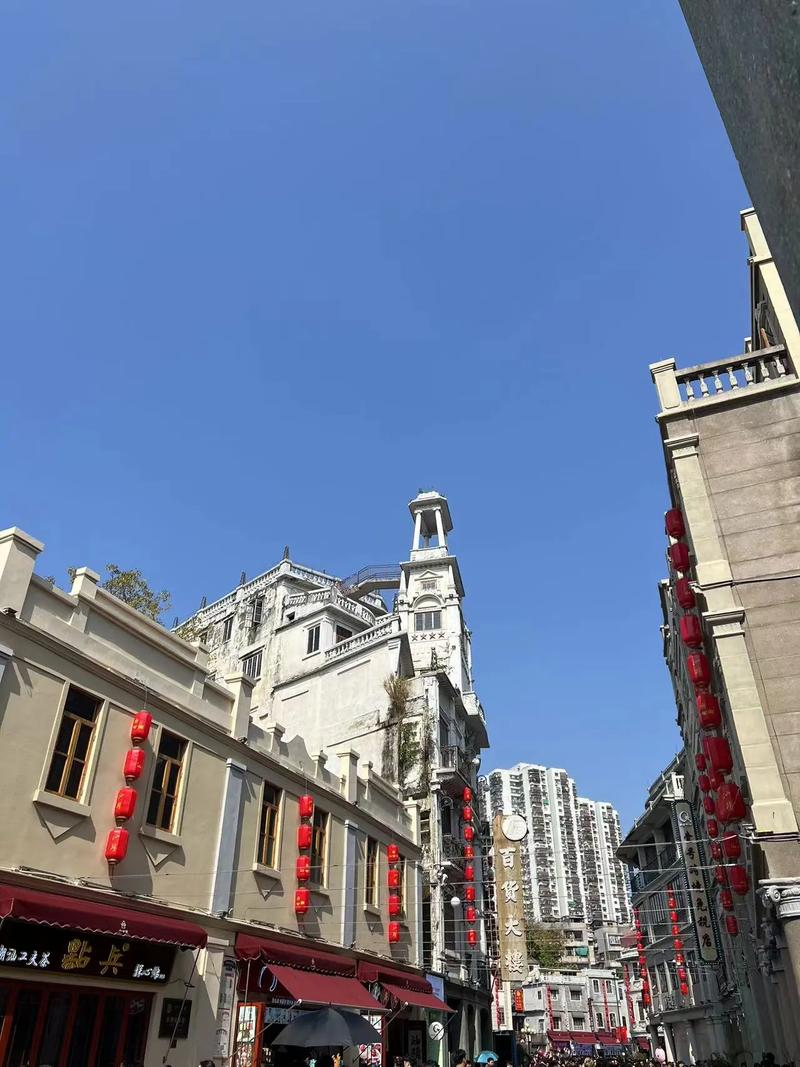 Shantou opened as one of China's first treaty ports in 1861, in the wake of the Second Opium War—a moment when coastal cities from Guangzhou to Tianjin were thrust into global commerce. Like Marseille or Naples at the height of their mercantile glory, Shantou became a magnet for merchants, missionaries, and migrants, particularly the Chaoshan diaspora who sailed to Southeast Asia and beyond. The Old Town's distinctive radial plan, fanning out from a central pavilion, was a colonial-era urban design that set it apart from the rigid grids common elsewhere in China, making it a rare surviving example of nineteenth-century treaty-port city planning.
Nearly 600 qilou—arcade buildings—line the radiating streets in two to four-story rows, their facades a fascinating East-meets-West tapestry. Picture Greek pilasters and Baroque pediments framing doorways, then look closer to spot traditional ceramic inlays and intricate gray-sculpted reliefs of Chinese motifs. The covered ground-floor walkways, much like those in Singapore's Chinatown or Havana's colonial avenues, shelter pedestrians from monsoon rains and summer heat while doubling as commercial space. Three landmark structures—the domed Zhongshan Memorial Pavilion, the Shantou Hotel with its iconic oversized Chinese characters, and the neoclassical Nansheng Department Store—are essential stops for photographers.
Beyond the photogenic architecture, the Old Town is a powerful monument to the overseas Chinese experience. The Qiaopi (Overseas Letters) Museum preserves thousands of remittance slips and family letters sent home by Chaoshan migrants—a uniquely tangible archive of twentieth-century diaspora history, carrying emotional weight comparable to Ellis Island's immigration records. Scattered throughout the district are four nationally protected heritage sites, including the Qing-era Old Sea Customs House and the historic Post Office Building, which together narrate the rise and reinvention of this "Century-Old Trading Port."
The entire district is freely accessible and best explored on foot; budget two to three hours. Stone-paved lanes make comfortable flat shoes essential, and the core zone is closed to cars and bicycles. Two distinct moods await: arrive on a weekday morning for quiet architectural contemplation, or time your visit for sunset when the arcades glow under warm lighting. The dramatic Queshi Bridge makes a stunning backdrop from the adjacent Xidi Park.
No visit is complete without sampling Chaoshan cuisine—springy beef balls, sizzling oyster omelettes, silken rice-noodle rolls, and the legendary粽子 (zongzi) from Old Mama Temple. Head to nearby Longyan South Road or Zhenbang Food Street for one-stop snacking; note that some venerable shops accept cash only. After dinner, a short ferry ride across the harbor reveals old and new Shantou facing each other across the water—a fitting finale to a city that lives gracefully between past and future.
Shantou opened as one of China's first treaty ports in 1861, in the wake of the Second Opium War—a moment when coastal cities from Guangzhou to Tianjin were thrust into global commerce. Like Marseille or Naples at the height of their mercantile glory, Shantou became a magnet for merchants, missionaries, and migrants, particularly the Chaoshan diaspora who sailed to Southeast Asia and beyond. The Old Town's distinctive radial plan, fanning out from a central pavilion, was a colonial-era urban design that set it apart from the rigid grids common elsewhere in China, making it a rare surviving example of nineteenth-century treaty-port city planning.
Nearly 600 qilou—arcade buildings—line the radiating streets in two to four-story rows, their facades a fascinating East-meets-West tapestry. Picture Greek pilasters and Baroque pediments framing doorways, then look closer to spot traditional ceramic inlays and intricate gray-sculpted reliefs of Chinese motifs. The covered ground-floor walkways, much like those in Singapore's Chinatown or Havana's colonial avenues, shelter pedestrians from monsoon rains and summer heat while doubling as commercial space. Three landmark structures—the domed Zhongshan Memorial Pavilion, the Shantou Hotel with its iconic oversized Chinese characters, and the neoclassical Nansheng Department Store—are essential stops for photographers.
Beyond the photogenic architecture, the Old Town is a powerful monument to the overseas Chinese experience. The Qiaopi (Overseas Letters) Museum preserves thousands of remittance slips and family letters sent home by Chaoshan migrants—a uniquely tangible archive of twentieth-century diaspora history, carrying emotional weight comparable to Ellis Island's immigration records. Scattered throughout the district are four nationally protected heritage sites, including the Qing-era Old Sea Customs House and the historic Post Office Building, which together narrate the rise and reinvention of this "Century-Old Trading Port."
The entire district is freely accessible and best explored on foot; budget two to three hours. Stone-paved lanes make comfortable flat shoes essential, and the core zone is closed to cars and bicycles. Two distinct moods await: arrive on a weekday morning for quiet architectural contemplation, or time your visit for sunset when the arcades glow under warm lighting. The dramatic Queshi Bridge makes a stunning backdrop from the adjacent Xidi Park.
No visit is complete without sampling Chaoshan cuisine—springy beef balls, sizzling oyster omelettes, silken rice-noodle rolls, and the legendary粽子 (zongzi) from Old Mama Temple. Head to nearby Longyan South Road or Zhenbang Food Street for one-stop snacking; note that some venerable shops accept cash only. After dinner, a short ferry ride across the harbor reveals old and new Shantou facing each other across the water—a fitting finale to a city that lives gracefully between past and future.