Haishan Temple
⭐ 3.50
Haishan Temple, Chaoyang District, Shantou, Guangdong Province, China
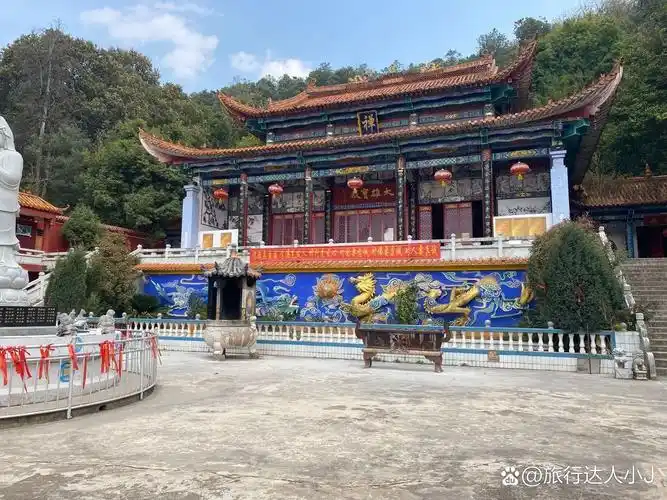 **A Buddhist Heritage Older Than Many European Cathedrals**
Haichao Temple's origins trace back to the Jin Dynasty (265–420 AD), placing its founding centuries before Charlemagne unified much of Western Europe or the first Saxon kings were crowned in England. It reached its golden age during the Tang Dynasty (618–907 AD)—an era celebrated across East Asia as a cultural zenith comparable to Italy's Renaissance—under Chan Buddhist masters Huizhao and the renowned Dadian, a contemporary of the great poet-monk Hanshan. After centuries of decline and revival, the site was designated a protected cultural relic in 1993. The Ming-era scholar-official Xiao Duanmeng famously studied here, leaving behind a reading alcove and inscribed plaques still visible today.
**A Sanctuary Carved by Nature**
The temple's most striking feature is its "Lion's Throat"—a cavernous chamber naturally formed within a massive boulder, transforming the site into one of southern China's rare rock-integrated Buddhist sanctuaries, somewhat reminiscent of the cave monasteries of Cappadocia in Turkey or Ethiopia's rock-hewn churches, though on a more modest scale. Beside the temple, the curious "Wenchao Quan," or "Tide-Questioning Well," mysteriously rises and falls in rhythm with nearby coastal tides—an enthralling natural phenomenon that still puzzles visitors. Together with the thousand-year-old pear tree, these elements form an enchanting trinity of stone, water, and living wood.
**Carved Stone and Living Tradition**
Beyond its natural wonders, Haichao Temple holds considerable cultural and artistic value. The surrounding boulders and cave walls bear centuries of inscriptions—stone poetry, couplets, and dedications left by monks, scholars, and pilgrims—offering rich material for those interested in the evolution of Chinese calligraphy and Buddhist devotion. For students of history, the surviving reading alcove of Xiao Duanmeng provides a tangible link to Ming Dynasty scholarly traditions and the spread of learning through the Chaoshan region. The temple thus stands as a rare surviving repository where Buddhist faith, geological curiosity, and literary heritage converge in a single landscape.
**Planning Your Visit**
Haichao Temple welcomes visitors free of charge and sits conveniently beside the Guangzhou–Shanwei Highway (G324), with parking available for self-driving travelers from Shantou or the wider Guangdong region. From the temple grounds, Tashan Hill offers sweeping vistas over the Chaoyang plain and the distant South China Sea. Allow one to two hours for a leisurely visit. Spring and autumn bring the most comfortable weather, ideal for climbing up to the higher pavilions. Facilities remain simple and traditional, so visitors should expect an unembellished, contemplative experience rather than polished tourist amenities.
**Why This Hidden Gem Deserves Your Time**
This temple is ideal for travelers drawn to off-the-beaten-path heritage, Buddhist culture, or tranquil mountain scenery. History enthusiasts, Buddhist pilgrims, and photographers will find particular rewards in the layered inscriptions and atmospheric stone chambers. For a richer cultural day, combine your visit with the other two of Chaoyang's "Three Rocks"—East Rock and North Rock—and conclude with an afternoon stroll through the old lanes of Miancheng town to sample local Chaoshan street snacks. Just remember: this is Chaoyang's West Rock, not to be confused with Lingshan Temple in Tongxu Town or Haiyan Temple in Hexi Town.
**A Buddhist Heritage Older Than Many European Cathedrals**
Haichao Temple's origins trace back to the Jin Dynasty (265–420 AD), placing its founding centuries before Charlemagne unified much of Western Europe or the first Saxon kings were crowned in England. It reached its golden age during the Tang Dynasty (618–907 AD)—an era celebrated across East Asia as a cultural zenith comparable to Italy's Renaissance—under Chan Buddhist masters Huizhao and the renowned Dadian, a contemporary of the great poet-monk Hanshan. After centuries of decline and revival, the site was designated a protected cultural relic in 1993. The Ming-era scholar-official Xiao Duanmeng famously studied here, leaving behind a reading alcove and inscribed plaques still visible today.
**A Sanctuary Carved by Nature**
The temple's most striking feature is its "Lion's Throat"—a cavernous chamber naturally formed within a massive boulder, transforming the site into one of southern China's rare rock-integrated Buddhist sanctuaries, somewhat reminiscent of the cave monasteries of Cappadocia in Turkey or Ethiopia's rock-hewn churches, though on a more modest scale. Beside the temple, the curious "Wenchao Quan," or "Tide-Questioning Well," mysteriously rises and falls in rhythm with nearby coastal tides—an enthralling natural phenomenon that still puzzles visitors. Together with the thousand-year-old pear tree, these elements form an enchanting trinity of stone, water, and living wood.
**Carved Stone and Living Tradition**
Beyond its natural wonders, Haichao Temple holds considerable cultural and artistic value. The surrounding boulders and cave walls bear centuries of inscriptions—stone poetry, couplets, and dedications left by monks, scholars, and pilgrims—offering rich material for those interested in the evolution of Chinese calligraphy and Buddhist devotion. For students of history, the surviving reading alcove of Xiao Duanmeng provides a tangible link to Ming Dynasty scholarly traditions and the spread of learning through the Chaoshan region. The temple thus stands as a rare surviving repository where Buddhist faith, geological curiosity, and literary heritage converge in a single landscape.
**Planning Your Visit**
Haichao Temple welcomes visitors free of charge and sits conveniently beside the Guangzhou–Shanwei Highway (G324), with parking available for self-driving travelers from Shantou or the wider Guangdong region. From the temple grounds, Tashan Hill offers sweeping vistas over the Chaoyang plain and the distant South China Sea. Allow one to two hours for a leisurely visit. Spring and autumn bring the most comfortable weather, ideal for climbing up to the higher pavilions. Facilities remain simple and traditional, so visitors should expect an unembellished, contemplative experience rather than polished tourist amenities.
**Why This Hidden Gem Deserves Your Time**
This temple is ideal for travelers drawn to off-the-beaten-path heritage, Buddhist culture, or tranquil mountain scenery. History enthusiasts, Buddhist pilgrims, and photographers will find particular rewards in the layered inscriptions and atmospheric stone chambers. For a richer cultural day, combine your visit with the other two of Chaoyang's "Three Rocks"—East Rock and North Rock—and conclude with an afternoon stroll through the old lanes of Miancheng town to sample local Chaoshan street snacks. Just remember: this is Chaoyang's West Rock, not to be confused with Lingshan Temple in Tongxu Town or Haiyan Temple in Hexi Town.