Chaoshan Folk Culture Village
⭐ 3.20
Chaoshan Folk Culture Village, Miancheng Street, Chaoyang District, Shantou, Guangdong, China
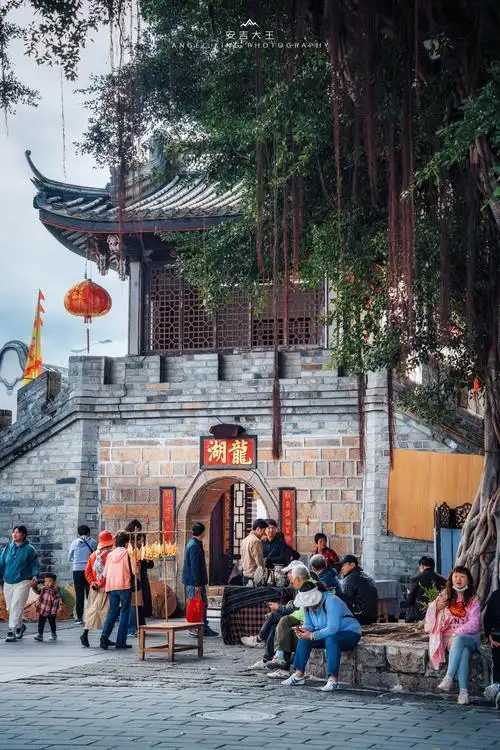 Dehua Folk Culture Park emerged in 2002 as a grassroots cultural preservation initiative, growing into Guangdong Province's first facility dedicated to showcasing the region's folk heritage. It rises from the same tide of rural heritage conservation that swept across China during the early 2000s, comparable to how the open-air folk museums of Scandinavia preserve vanishing agrarian traditions. The park's mission goes beyond display—it's a deliberate effort to gather scattered artifacts of Chaoshan rural life, from farming implements to architectural styles, into one cohesive educational space where visitors can grasp the region's distinctive identity, which differs notably from mainstream Cantonese culture.
The park's architectural centerpiece is Sheng'an Lou, a circular Hakka walled dwelling echoing the design principles of Fujian's famous Tulou earthen towers—massive communal fortresses that UNESCO recognized in 2008. Constructed from rammed earth and fired grey brick, the compound's enclosed layout reflects the Hakka tradition of clan-based living, where entire extended families once pooled resources for mutual protection. Visitors familiar with European medieval walled villages or Scottish tower houses will recognize similar imperatives of defense and community cohesion. Beyond the fortress, traditional herb gardens, century-old fruit orchards, and displays of antique farming tools create layered landscapes that merge built heritage with ecological beauty.
The cultural corridor running through the park serves as its interpretive backbone, presenting Chaoshan architecture, festival customs, dietary traditions, and folk crafts through vivid illustrations and bilingual panels. What truly animates the experience, however, are the weekend performances featuring high-pole lion dancing, Yingge warrior dances reminiscent of ancient battlefield rituals, intricate paper-cutting, and the meticulous craft of bottle interior painting. These living heritage demonstrations transform static museum-style exhibits into something Western travelers might compare to the cultural festivals of Tuscany or the folk celebrations of rural Ireland—moments where tradition becomes viscerally alive rather than confined to glass cases.
Practical planning requires realistic expectations. Located on Lianhua Mountain's slopes about 45 minutes from central Shantou, the park is best reached by taxi or rideshare, as public transport options remain limited. Visiting on weekends or Chinese holidays is strongly advised to catch the intangible heritage performances; weekday visits offer quieter exploration but minimal programmed activities. The park itself takes only one to two hours to tour fully, and basic refreshments are available, though travelers should bring water and snacks. Mosquito repellent is essential during summer months given the lush vegetation, and calling ahead to confirm performance schedules is wise.
The park rewards cultural enthusiasts seeking an off-the-beaten-path dimension of Guangdong beyond the typical Guangzhou and Shenzhen circuits. Value depends on expectation management—as a convenient stop while exploring Chenghai's other attractions, it offers satisfying cultural depth; as a stand-alone destination requiring long travel, it may leave visitors wanting more. Those combining it with a broader Chaoshan itinerary, perhaps including the historic port quarter of Old Swatow or the culinary pilgrimage to Chaozhou, will find it provides essential context for understanding why this corner of Guangdong has cultivated such a fiercely distinct cultural identity spanning architecture, cuisine, and performing arts.
Dehua Folk Culture Park emerged in 2002 as a grassroots cultural preservation initiative, growing into Guangdong Province's first facility dedicated to showcasing the region's folk heritage. It rises from the same tide of rural heritage conservation that swept across China during the early 2000s, comparable to how the open-air folk museums of Scandinavia preserve vanishing agrarian traditions. The park's mission goes beyond display—it's a deliberate effort to gather scattered artifacts of Chaoshan rural life, from farming implements to architectural styles, into one cohesive educational space where visitors can grasp the region's distinctive identity, which differs notably from mainstream Cantonese culture.
The park's architectural centerpiece is Sheng'an Lou, a circular Hakka walled dwelling echoing the design principles of Fujian's famous Tulou earthen towers—massive communal fortresses that UNESCO recognized in 2008. Constructed from rammed earth and fired grey brick, the compound's enclosed layout reflects the Hakka tradition of clan-based living, where entire extended families once pooled resources for mutual protection. Visitors familiar with European medieval walled villages or Scottish tower houses will recognize similar imperatives of defense and community cohesion. Beyond the fortress, traditional herb gardens, century-old fruit orchards, and displays of antique farming tools create layered landscapes that merge built heritage with ecological beauty.
The cultural corridor running through the park serves as its interpretive backbone, presenting Chaoshan architecture, festival customs, dietary traditions, and folk crafts through vivid illustrations and bilingual panels. What truly animates the experience, however, are the weekend performances featuring high-pole lion dancing, Yingge warrior dances reminiscent of ancient battlefield rituals, intricate paper-cutting, and the meticulous craft of bottle interior painting. These living heritage demonstrations transform static museum-style exhibits into something Western travelers might compare to the cultural festivals of Tuscany or the folk celebrations of rural Ireland—moments where tradition becomes viscerally alive rather than confined to glass cases.
Practical planning requires realistic expectations. Located on Lianhua Mountain's slopes about 45 minutes from central Shantou, the park is best reached by taxi or rideshare, as public transport options remain limited. Visiting on weekends or Chinese holidays is strongly advised to catch the intangible heritage performances; weekday visits offer quieter exploration but minimal programmed activities. The park itself takes only one to two hours to tour fully, and basic refreshments are available, though travelers should bring water and snacks. Mosquito repellent is essential during summer months given the lush vegetation, and calling ahead to confirm performance schedules is wise.
The park rewards cultural enthusiasts seeking an off-the-beaten-path dimension of Guangdong beyond the typical Guangzhou and Shenzhen circuits. Value depends on expectation management—as a convenient stop while exploring Chenghai's other attractions, it offers satisfying cultural depth; as a stand-alone destination requiring long travel, it may leave visitors wanting more. Those combining it with a broader Chaoshan itinerary, perhaps including the historic port quarter of Old Swatow or the culinary pilgrimage to Chaozhou, will find it provides essential context for understanding why this corner of Guangdong has cultivated such a fiercely distinct cultural identity spanning architecture, cuisine, and performing arts.