Xiaogongyuan
⭐ 4.20
Xiaogongyuan Tourist Area, Longhu District, Shantou City, Guangdong Province, China
 When the Treaty of Tianjin opened Shantou (then "Swatow") to foreign trade in 1860, the port joined Shanghai and Guangzhou among China's treaty cities reshaping relations with the wider world. By the 1930s peak, Shantou was nicknamed "Little Shanghai," channeling wealth from the global Chinese diaspora back home through steamships and remittance letters. Comparable in spirit to Marseille's Vieux-Port or Liverpool's Albert Dock, Xiaogongyuan was where Chaoshan merchants, returned overseas Chinese, and foreign traders converged. The district weathered wars, revolutions, and the devastating 1969 typhoon, yet its arcaded streetscapes survive as a remarkably intact time capsule of republican-era China.
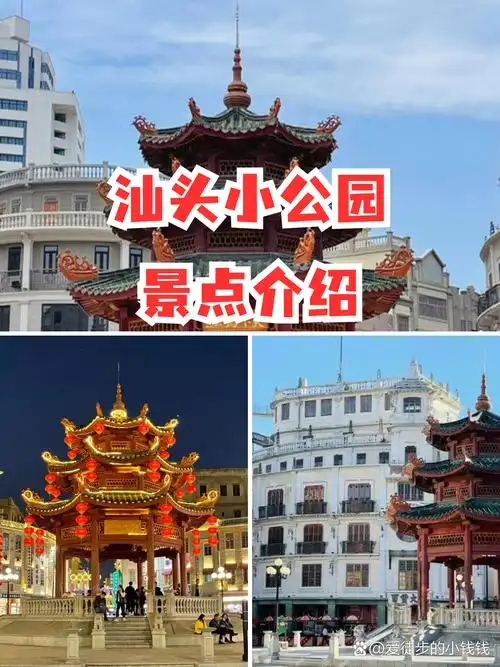
The qilou — literally "horse-riding building" — style threads covered sidewalk arcades through ground-floor shopfronts. Familiar to anyone who has wandered Penang's George Town or Singapore's Chinatown, Xiaogongyuan offers the most concentrated mainland example. Roughly 700 such buildings fan out from the octagonal Sun Yat-sen Memorial Pavilion (raised in 1935, rebuilt twice) along Anping, Shengping, and Guoping Roads in a distinctive radial plan. Their facades layer neoclassical columns, Art Deco reliefs, and Teochew folk motifs into a hybrid style found nowhere else in China at this scale. The seven-story Nansheng Department Store, once the tallest building east of the Pearl River, still anchors the district with its preserved facade.
Xiaogongyuan is the beating heart of Chaoshan overseas-Chinese culture, a region whose emigrants built communities from Bangkok to San Francisco. The Shantou Opening Port Museum and the Qiaopi (Overseas Remittance Letters) Museum — both free — recount the often heartbreaking story of Teochew sailors who crossed the South China Sea, sending money and letters home in bamboo-wrapped bundles. The qiaopi tradition gained UNESCO recognition in 2013. On weekends, the arcades come alive with Teochew opera and Yingge folk dance performances, while street musicians add a contemporary pulse to streets that have witnessed a century of commerce.
Zhenbang Food Street and the lanes around Laoma Gong temple concentrate some of Guangdong's most celebrated snacks. Try zongzi from Laoma Gong, where sweet and savory fillings share one parcel; oyster omelette; sugar-syrup scallion pancakes; and the chewy, hand-pounded beef meatballs for which Chaoshan is famous across the Chinese diaspora. Heritage shops keep their recipes and prices unchanged for decades — eating your way along the arcades, snack in hand, is the most authentic way to absorb the district's street-level warmth. For contrast, the seafront Xiti Park is a short walk west, perfect for sunset over the inner bay.
The district is open around the clock and entirely free — no tickets, no reservations. From Shantou Railway Station, taxis or ride-hailing reach Xiaogongyuan in about fifteen minutes; numerous city buses stop nearby, and shared e-bikes can be parked along the perimeter. Plan at least two to three hours, more on holidays when crowds thicken. Aim to arrive after 4pm: the slanting afternoon light flatters the pastel facades, and at dusk the arcade columns and pavilion are bathed in warm uplighting that has made the district a favourite for night photography.
Wear flat, comfortable shoes — the streets are paved in stone and unforgiving after hours of walking. Summer visitors should bring sunscreen, a hat, and water; winters are mild but occasionally damp. Photography enthusiasts can rent Republic-era costumes from vendors near Laoma Gong for portrait sessions beneath the arched colonnades, where dappled light creates a cinematic backdrop. A slower pace pays off here: linger over a cup of Chaoshan gongfu tea, watch elders practice calligraphy in the pavilion square, and let the layers of trade, migration, and memory reveal themselves.
When the Treaty of Tianjin opened Shantou (then "Swatow") to foreign trade in 1860, the port joined Shanghai and Guangzhou among China's treaty cities reshaping relations with the wider world. By the 1930s peak, Shantou was nicknamed "Little Shanghai," channeling wealth from the global Chinese diaspora back home through steamships and remittance letters. Comparable in spirit to Marseille's Vieux-Port or Liverpool's Albert Dock, Xiaogongyuan was where Chaoshan merchants, returned overseas Chinese, and foreign traders converged. The district weathered wars, revolutions, and the devastating 1969 typhoon, yet its arcaded streetscapes survive as a remarkably intact time capsule of republican-era China.
The qilou — literally "horse-riding building" — style threads covered sidewalk arcades through ground-floor shopfronts. Familiar to anyone who has wandered Penang's George Town or Singapore's Chinatown, Xiaogongyuan offers the most concentrated mainland example. Roughly 700 such buildings fan out from the octagonal Sun Yat-sen Memorial Pavilion (raised in 1935, rebuilt twice) along Anping, Shengping, and Guoping Roads in a distinctive radial plan. Their facades layer neoclassical columns, Art Deco reliefs, and Teochew folk motifs into a hybrid style found nowhere else in China at this scale. The seven-story Nansheng Department Store, once the tallest building east of the Pearl River, still anchors the district with its preserved facade.
Xiaogongyuan is the beating heart of Chaoshan overseas-Chinese culture, a region whose emigrants built communities from Bangkok to San Francisco. The Shantou Opening Port Museum and the Qiaopi (Overseas Remittance Letters) Museum — both free — recount the often heartbreaking story of Teochew sailors who crossed the South China Sea, sending money and letters home in bamboo-wrapped bundles. The qiaopi tradition gained UNESCO recognition in 2013. On weekends, the arcades come alive with Teochew opera and Yingge folk dance performances, while street musicians add a contemporary pulse to streets that have witnessed a century of commerce.
Zhenbang Food Street and the lanes around Laoma Gong temple concentrate some of Guangdong's most celebrated snacks. Try zongzi from Laoma Gong, where sweet and savory fillings share one parcel; oyster omelette; sugar-syrup scallion pancakes; and the chewy, hand-pounded beef meatballs for which Chaoshan is famous across the Chinese diaspora. Heritage shops keep their recipes and prices unchanged for decades — eating your way along the arcades, snack in hand, is the most authentic way to absorb the district's street-level warmth. For contrast, the seafront Xiti Park is a short walk west, perfect for sunset over the inner bay.
The district is open around the clock and entirely free — no tickets, no reservations. From Shantou Railway Station, taxis or ride-hailing reach Xiaogongyuan in about fifteen minutes; numerous city buses stop nearby, and shared e-bikes can be parked along the perimeter. Plan at least two to three hours, more on holidays when crowds thicken. Aim to arrive after 4pm: the slanting afternoon light flatters the pastel facades, and at dusk the arcade columns and pavilion are bathed in warm uplighting that has made the district a favourite for night photography.
Wear flat, comfortable shoes — the streets are paved in stone and unforgiving after hours of walking. Summer visitors should bring sunscreen, a hat, and water; winters are mild but occasionally damp. Photography enthusiasts can rent Republic-era costumes from vendors near Laoma Gong for portrait sessions beneath the arched colonnades, where dappled light creates a cinematic backdrop. A slower pace pays off here: linger over a cup of Chaoshan gongfu tea, watch elders practice calligraphy in the pavilion square, and let the layers of trade, migration, and memory reveal themselves.