Luojia Mountain, Wuhan University

⭐ 4.60

Luojia Mountain, Wuhan University, Wuchang District, Wuhan, Hubei Province, China
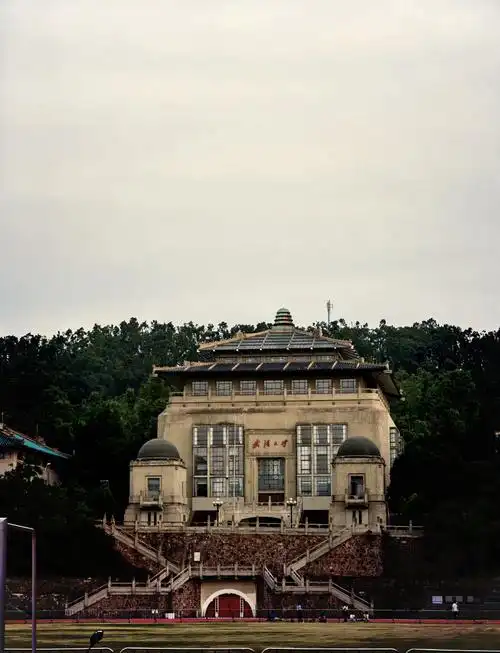
Luojia Mountain, Wuhan University
Luojia Mountain—originally called Luo Family Hill—entered its modern incarnation in 1928 when National Wuhan University broke ground on what would become one of China's most ambitious early-20th-century campuses. Literary dean and poet Wen Yiduo bestowed the lyrical name "Luojia" in 1930, drawing on the classical phrase "blazing trails in rough clothing to open up the wilderness," a sentiment echoing the pioneering ethos of Western frontier universities like Stanford or Virginia. The hill thus transformed from a lakeside mound into a powerful symbol of China's push toward modern higher education during the turbulent Republican era. The mountain's architecture is its crown jewel. Designed under the direction of American-trained architect F.H. Kales and refined by Chinese architects, the early campus buildings fuse traditional Chinese palace-style sweeping roofs and green glazed tiles with Western stone masonry, arched windows, and columned loggias. Structures such as the Old Library and Song Qing Gymnasium are now national cultural relics, and their harmonious hybrid style—imagine Oxford colleges reimagined with Forbidden City rooflines—set a precedent for Chinese modern architecture in the 1930s. The Luojia Pagoda at the summit anchors the skyline. Culturally, the mountain carries remarkable weight. Halfway up sit the fabled "Eighteen Villas," a row of stone residences that once hosted revolutionary figures including Zhou Enlai and writer-politician Guo Moruo during the 1940s—guests whose presence links this leafy slope to the same revolutionary ferment reshaping Europe and Asia in the postwar years. The Old Dormitories cascade up the hillside like a fortress-tiered village, their stone stairways threading students past mossy walls where debates still echo. Entry to the campus is free, and from May 2026 onward visitors no longer need advance reservations—just an ID card or passport at either Luojia Gate or Hongyi Gate. Gates generally open 8:30 a.m. to 5:30 p.m., and private vehicles are prohibited, so plan to walk. Wear sturdy shoes, as the campus is famously hilly and the climb to the pagoda involves several flights of stone steps. Bring water, especially in summer, when temperatures regularly exceed 35°C; visiting after 5:30 p.m. offers cooler air, lotus-fragrant breezes off East Lake, and golden light across the rooftops. A recommended route enters at Luojia Gate, follows the celebrated Cherry Blossom Avenue past the Old Dormitories, ascends the stone stairway to Luojia Pagoda for panoramic views of East Lake and Wuhan's skyline, descends past the Eighteen Villas, and finishes at Lingbo Gate's floating boardwalk stretching out over the lake's still waters. The two most magical seasons are mid-to-late March, when thousands of cherry trees explode in pink clouds rivaling Washington's Tidal Basin, and late October through November, when the broad plane trees lining the avenues blaze in autumn gold. Luojia Mountain offers something rare: a quiet, walkable hilltop where Republican-era architecture, literary history, and lake-landscape beauty converge within a single, still-bucolic Chinese university campus.

Traveler reviews

The whole campus is packed with history and academic vibes, and it's SO photogenic. Just a heads up though — you need to book online in advance to get in. Spring is the absolute best time because of...
⭐ 5 · Drew Expand
So much history here too! Zhou Enlai, Hu Shi, Wen Yiduo — all kinds of famous figures walked these paths. Hu Shi supposedly said that if you want to und...
⭐ 4 · Finley Expand