Yulong River
⭐ 4.70
Yulong River Scenic Area, Yangshuo County, Guilin City, Guangxi Zhuang Autonomous Region, China
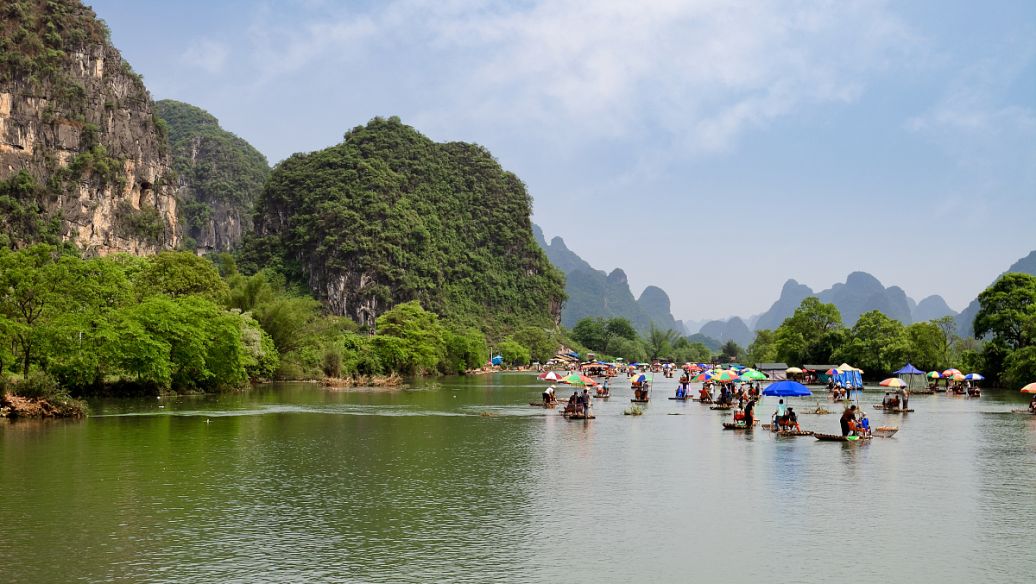 Stretching 43.5 kilometers from the mountains of western Yangshuo to its confluence with the Li River, the Yulong has been a corridor of human activity for over a millennium. Settled during the Tang dynasty and intensively developed under the Ming and Qing, the river valley functioned much like the rural waterways of Tuscany or the canals of rural Holland—serving simultaneously as irrigation lifeline, trade artery, and social gathering place. Today it remains one of the best-preserved examples of an ancient Chinese agricultural river landscape still in daily use.
The architectural treasures lining the banks are remarkably intact. A sequence of single-span stone arch bridges—Yulong Bridge, Fuli Bridge, and most notably Xianggui Bridge—date back four to five centuries. Xianggui, built during the Ming Hongwu era, is the oldest surviving stone arch bridge in all of Guangxi and rivals the rustic charm of England's medieval packhorse bridges. Each structure was engineered without mortar, using interlocking limestone blocks, and they continue to carry foot traffic and bicycles as they have for generations.
Beyond the bridges, the river itself reveals a layered landscape. Twenty-eight traditional weir dams, originally built to irrigate rice terraces during the Ming dynasty, still regulate the flow. These low stone barriers now double as gentle "rapids" for bamboo rafts, sending passengers through soft sprays of water—comparable to a mild white-water ride on a European alpine stream, but framed by surreal karst spires. The clarity of the water allows the limestone reflections to appear almost photographic.
The bamboo raft experience is the heart of any visit. Local boatmen, using nothing but a single bamboo pole, navigate the calm stretches at a meditative pace—quiet enough to hear birdsong and distant water buffalo. The classic nine-kilometer route from Jinlong Bridge to Jiuxian Village passes nine weirs and unfolds the river's finest scenery over roughly ninety minutes. A gentler short route from Shuidi to Gongnong Bridge suits families with young children or elderly travelers who prefer a calmer drift.
Cultural stops abound along the way. Jiuxian Village, at the endpoint of the main route, preserves a cluster of Ming and Qing courtyard houses with grey-tiled roofs and carved wooden screens—a setting that evokes rural Provence. Cycling the adjacent "Ten-Mile Gallery" greenway connects the river to landmarks like the 1,400-year-old banyan tree and Moon Hill, making it easy to combine rafting with a half-day bike loop through the countryside.
Practical planning is essential. Bamboo rafts must be booked one to two days in advance through the official WeChat account or registered platforms; walk-up tickets are rarely available. Each raft carries a maximum of two passengers and costs roughly 200–320 RMB. Children under one meter are not permitted, and travelers over seventy are advised to choose the gentler route. Wear non-slip sandals, bring a waterproof bag for phones and cameras, and check suspension notices during the August rainy season. Early morning—between seven and nine—is the magical window, when mist clings to the water and the light turns the karst peaks into ink-wash paintings.
Stretching 43.5 kilometers from the mountains of western Yangshuo to its confluence with the Li River, the Yulong has been a corridor of human activity for over a millennium. Settled during the Tang dynasty and intensively developed under the Ming and Qing, the river valley functioned much like the rural waterways of Tuscany or the canals of rural Holland—serving simultaneously as irrigation lifeline, trade artery, and social gathering place. Today it remains one of the best-preserved examples of an ancient Chinese agricultural river landscape still in daily use.
The architectural treasures lining the banks are remarkably intact. A sequence of single-span stone arch bridges—Yulong Bridge, Fuli Bridge, and most notably Xianggui Bridge—date back four to five centuries. Xianggui, built during the Ming Hongwu era, is the oldest surviving stone arch bridge in all of Guangxi and rivals the rustic charm of England's medieval packhorse bridges. Each structure was engineered without mortar, using interlocking limestone blocks, and they continue to carry foot traffic and bicycles as they have for generations.
Beyond the bridges, the river itself reveals a layered landscape. Twenty-eight traditional weir dams, originally built to irrigate rice terraces during the Ming dynasty, still regulate the flow. These low stone barriers now double as gentle "rapids" for bamboo rafts, sending passengers through soft sprays of water—comparable to a mild white-water ride on a European alpine stream, but framed by surreal karst spires. The clarity of the water allows the limestone reflections to appear almost photographic.
The bamboo raft experience is the heart of any visit. Local boatmen, using nothing but a single bamboo pole, navigate the calm stretches at a meditative pace—quiet enough to hear birdsong and distant water buffalo. The classic nine-kilometer route from Jinlong Bridge to Jiuxian Village passes nine weirs and unfolds the river's finest scenery over roughly ninety minutes. A gentler short route from Shuidi to Gongnong Bridge suits families with young children or elderly travelers who prefer a calmer drift.
Cultural stops abound along the way. Jiuxian Village, at the endpoint of the main route, preserves a cluster of Ming and Qing courtyard houses with grey-tiled roofs and carved wooden screens—a setting that evokes rural Provence. Cycling the adjacent "Ten-Mile Gallery" greenway connects the river to landmarks like the 1,400-year-old banyan tree and Moon Hill, making it easy to combine rafting with a half-day bike loop through the countryside.
Practical planning is essential. Bamboo rafts must be booked one to two days in advance through the official WeChat account or registered platforms; walk-up tickets are rarely available. Each raft carries a maximum of two passengers and costs roughly 200–320 RMB. Children under one meter are not permitted, and travelers over seventy are advised to choose the gentler route. Wear non-slip sandals, bring a waterproof bag for phones and cameras, and check suspension notices during the August rainy season. Early morning—between seven and nine—is the magical window, when mist clings to the water and the light turns the karst peaks into ink-wash paintings.