Huangchao Cave
⭐ 3.50
Huangchao Cave Scenic Area, Qixing District, Guilin City, Guangxi Zhuang Autonomous Region, China
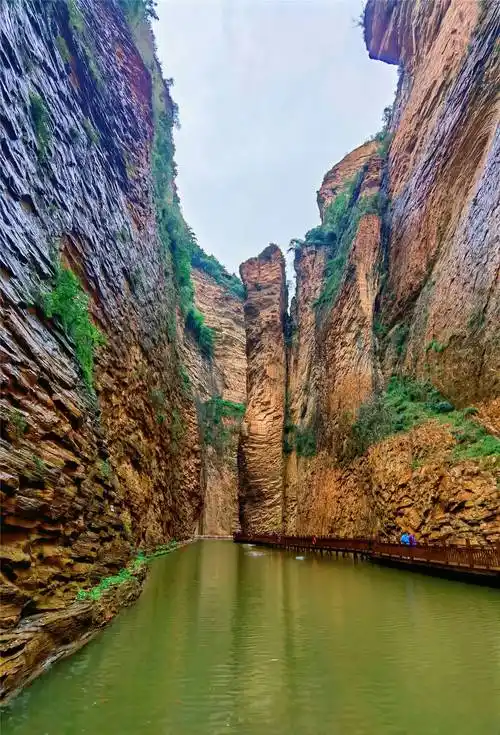 Huangchao Cave draws its name from Huang Chao, the salt smuggler who led one of medieval China's most destructive peasant uprisings between 874 and 884, briefly establishing the short-lived Qi dynasty before his defeat. Comparable to legends across medieval Eurasia, where cave sites across Europe from the Balkans to the Pyrenees absorbed rebel folklore, Huangchao is more a vessel of folk memory than confirmed history. No inscriptions, artifacts, or documentary evidence currently link the cave itself to the rebel leader, and visitors should treat any such stories as local oral tradition rather than established fact. The site is best appreciated as a layer of place-based storytelling layered onto a dramatic natural setting.
Geologically, the cave belongs to Guilin's famed karst landscape, a limestone terrain dissolved over hundreds of thousands of years by mildly acidic groundwater. Like the grottoes of Slovenia's Postojna or the caverns of France's Vercors, it contains the classic features of mature karst: dripping stalactites hanging from vaulted ceilings, stout stalagmites rising from the floor, and pillars where the two have met over centuries. Chamber sizes, water levels, and formations shift with seasonal rainfall, meaning that even repeat visitors encounter a subtly different interior. The surrounding hills mirror the iconic scenery that has drawn literati painters to the Li River basin since the Song dynasty.
Culturally, the cave sits at the intersection of natural wonder and regional legend. Guilin locals have long woven folk tales around dramatic karst features, much as the people of Cappadocia in Turkey attached names and saints to their fairy chimneys, or the inhabitants of Spain's Atapuerca region wove myths around their ancient cave systems. At Huangchao, the resonance comes from the romantic memory of rebellion against imperial authority, a theme that resonated through late Tang society. Any plaques, carvings, or village tales encountered on a visit should be heard as living folklore, not as documented chronicle.
Practical access remains the most important consideration. Huangchao is not a commercially developed show cave, and there is no public ticketing system, fixed schedule, or visitor center mentioned in official sources. Travelers must contact Guilin's culture and tourism bureau, local village committees, or licensed adventure operators to confirm whether the site is open, whether a guide is available, and what fees may apply. Attempting to find it from online forums or unofficial maps is discouraged. Insurance, a registered guide, and written permission are strongly recommended before any visit.
Those who do gain legitimate entry should prepare as for any wild caving excursion. A reliable headlamp, backup batteries, a helmet, non-slip boots, waterproof clothing, offline maps, drinking water, and a basic first-aid kit are essential. The cave may be wet, narrow, and lacking mobile signal; storms, rising water, and heavy fog can make conditions hazardous. A local guide familiar with the passages is non-negotiable for safety. Responsible visitors leave nothing behind, disturb no formations, and respect any closures set by the managing authorities.
Why visit, then? Huangchao rewards travelers seeking something rarer than convenience: the quiet thrill of standing in an unembellished karst chamber where local imagination meets slow geological time. It is a complement, not a competitor, to Guilin's famous Reed Flute Cave and Silver Cave, offering a glimpse of the landscape as it exists outside the spotlight. For those willing to do their homework, secure proper permissions, and travel with respect for both safety and tradition, Huangchao delivers an unusually intimate encounter with the poetry of stone.
Huangchao Cave draws its name from Huang Chao, the salt smuggler who led one of medieval China's most destructive peasant uprisings between 874 and 884, briefly establishing the short-lived Qi dynasty before his defeat. Comparable to legends across medieval Eurasia, where cave sites across Europe from the Balkans to the Pyrenees absorbed rebel folklore, Huangchao is more a vessel of folk memory than confirmed history. No inscriptions, artifacts, or documentary evidence currently link the cave itself to the rebel leader, and visitors should treat any such stories as local oral tradition rather than established fact. The site is best appreciated as a layer of place-based storytelling layered onto a dramatic natural setting.
Geologically, the cave belongs to Guilin's famed karst landscape, a limestone terrain dissolved over hundreds of thousands of years by mildly acidic groundwater. Like the grottoes of Slovenia's Postojna or the caverns of France's Vercors, it contains the classic features of mature karst: dripping stalactites hanging from vaulted ceilings, stout stalagmites rising from the floor, and pillars where the two have met over centuries. Chamber sizes, water levels, and formations shift with seasonal rainfall, meaning that even repeat visitors encounter a subtly different interior. The surrounding hills mirror the iconic scenery that has drawn literati painters to the Li River basin since the Song dynasty.
Culturally, the cave sits at the intersection of natural wonder and regional legend. Guilin locals have long woven folk tales around dramatic karst features, much as the people of Cappadocia in Turkey attached names and saints to their fairy chimneys, or the inhabitants of Spain's Atapuerca region wove myths around their ancient cave systems. At Huangchao, the resonance comes from the romantic memory of rebellion against imperial authority, a theme that resonated through late Tang society. Any plaques, carvings, or village tales encountered on a visit should be heard as living folklore, not as documented chronicle.
Practical access remains the most important consideration. Huangchao is not a commercially developed show cave, and there is no public ticketing system, fixed schedule, or visitor center mentioned in official sources. Travelers must contact Guilin's culture and tourism bureau, local village committees, or licensed adventure operators to confirm whether the site is open, whether a guide is available, and what fees may apply. Attempting to find it from online forums or unofficial maps is discouraged. Insurance, a registered guide, and written permission are strongly recommended before any visit.
Those who do gain legitimate entry should prepare as for any wild caving excursion. A reliable headlamp, backup batteries, a helmet, non-slip boots, waterproof clothing, offline maps, drinking water, and a basic first-aid kit are essential. The cave may be wet, narrow, and lacking mobile signal; storms, rising water, and heavy fog can make conditions hazardous. A local guide familiar with the passages is non-negotiable for safety. Responsible visitors leave nothing behind, disturb no formations, and respect any closures set by the managing authorities.
Why visit, then? Huangchao rewards travelers seeking something rarer than convenience: the quiet thrill of standing in an unembellished karst chamber where local imagination meets slow geological time. It is a complement, not a competitor, to Guilin's famous Reed Flute Cave and Silver Cave, offering a glimpse of the landscape as it exists outside the spotlight. For those willing to do their homework, secure proper permissions, and travel with respect for both safety and tradition, Huangchao delivers an unusually intimate encounter with the poetry of stone.