Guilin Museum
⭐ 4.50
No. 16, Xishan Road, Xiufeng District, Guilin City, Guangxi Zhuang Autonomous Region, China
 Guilin's strategic location along the Li River has shaped its destiny for over two millennia. The museum's "Li River Through the Ages" exhibition traces this 30,000-year story from the Neolithic Zhengpiyan cave-dwellers through to the wartime capital of China's resistance against Japan in 1938. Comparable to Stockholm's City Museum in its sweep of regional history, this gallery positions Guilin alongside imperial-era European trading hubs like Bruges or Nuremberg. The exhibition contextualizes how a minor southern prefect grew into a cosmopolitan stage where Ming princes, foreign envoys, and ethnic minorities converged.
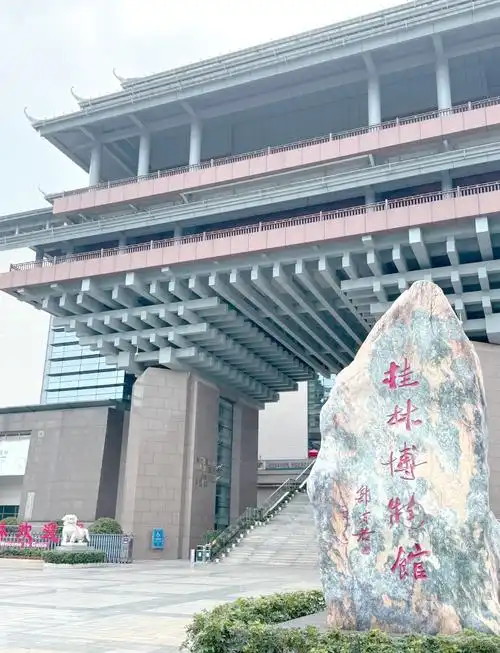
The building, deliberately echoing the timber-clad wind-and-rain bridges of the Dong ethnic minority, recalls the romantic rusticity of Norway's stave churches while embracing contemporary museum scale. Spanning 34,000 square meters with 13,000 square meters of exhibition space, it bears its calligraphic name penned by Guo Moruo, the renowned historian and literary figure often compared to Benedetto Croce. Sloping tiled rooflines and exposed wooden latticework create an unmistakably regional silhouette against Guilin's new skyline.
The crown jewel is the "Jingjiang Legacy: Ming Plum Vases" gallery, where dozens of porcelain vessels unearthed from the Jingjiang princely tombs reveal an extraordinary decorative vocabulary of dragons, phoenixes, and floral motifs rendered in glazes rivaling the imperial kilns of Jingdezhen. For European visitors familiar with Delftware or Meissen porcelain, this collection offers a direct line to the era when global trade began linking Asian craftsmanship to Western markets. No comparable cache of royal Ming funerary porcelain exists under one roof anywhere else in the world.
The "Paintings of Home Life" gallery immerses visitors in the material culture of northern Guangxi's ethnic mosaic—Miao silver headdresses, Zhuang embroidered textiles, and recreated teahouse interiors that recall the folk heritage displays at Stockholm's Skansen open-air museum. The "Friendship Guilin: Foreign Gifts" hall showcases diplomatic presents from Soviet, Eastern European, and Asian leaders, a charming Cold War-era cabinet of curiosities similar to those at Prague Castle. Interactive zones invite hands-on engagement with traditional textile and craft techniques.
Admission is free with valid photo identification, and the museum opens Tuesday through Sunday from 9:00 a.m. to 5:00 p.m., with last entry at 4:30 p.m.; Monday closures are waived during national holidays. Allow two to three hours and follow the suggested route from the introductory hall through the plum vase gallery, foreign gifts hall, and folk customs exhibition for the most satisfying rhythm. English-language panels and audio guides are available at the entrance desk.
Beyond the permanent collection, the museum maintains an ambitious rotating exhibition program ranging from Qing dynasty export art to themed family-friendly installations, ensuring even repeat visitors encounter fresh material. Combined with its location in the cultural heart of Guilin's new district and easy access from the city's karst scenery, the museum rewards travelers seeking depth beyond the iconic Li River cruise—a scholarly counterpoint to the visual spectacle that draws millions to this celebrated landscape each year.
Guilin's strategic location along the Li River has shaped its destiny for over two millennia. The museum's "Li River Through the Ages" exhibition traces this 30,000-year story from the Neolithic Zhengpiyan cave-dwellers through to the wartime capital of China's resistance against Japan in 1938. Comparable to Stockholm's City Museum in its sweep of regional history, this gallery positions Guilin alongside imperial-era European trading hubs like Bruges or Nuremberg. The exhibition contextualizes how a minor southern prefect grew into a cosmopolitan stage where Ming princes, foreign envoys, and ethnic minorities converged.
The building, deliberately echoing the timber-clad wind-and-rain bridges of the Dong ethnic minority, recalls the romantic rusticity of Norway's stave churches while embracing contemporary museum scale. Spanning 34,000 square meters with 13,000 square meters of exhibition space, it bears its calligraphic name penned by Guo Moruo, the renowned historian and literary figure often compared to Benedetto Croce. Sloping tiled rooflines and exposed wooden latticework create an unmistakably regional silhouette against Guilin's new skyline.
The crown jewel is the "Jingjiang Legacy: Ming Plum Vases" gallery, where dozens of porcelain vessels unearthed from the Jingjiang princely tombs reveal an extraordinary decorative vocabulary of dragons, phoenixes, and floral motifs rendered in glazes rivaling the imperial kilns of Jingdezhen. For European visitors familiar with Delftware or Meissen porcelain, this collection offers a direct line to the era when global trade began linking Asian craftsmanship to Western markets. No comparable cache of royal Ming funerary porcelain exists under one roof anywhere else in the world.
The "Paintings of Home Life" gallery immerses visitors in the material culture of northern Guangxi's ethnic mosaic—Miao silver headdresses, Zhuang embroidered textiles, and recreated teahouse interiors that recall the folk heritage displays at Stockholm's Skansen open-air museum. The "Friendship Guilin: Foreign Gifts" hall showcases diplomatic presents from Soviet, Eastern European, and Asian leaders, a charming Cold War-era cabinet of curiosities similar to those at Prague Castle. Interactive zones invite hands-on engagement with traditional textile and craft techniques.
Admission is free with valid photo identification, and the museum opens Tuesday through Sunday from 9:00 a.m. to 5:00 p.m., with last entry at 4:30 p.m.; Monday closures are waived during national holidays. Allow two to three hours and follow the suggested route from the introductory hall through the plum vase gallery, foreign gifts hall, and folk customs exhibition for the most satisfying rhythm. English-language panels and audio guides are available at the entrance desk.
Beyond the permanent collection, the museum maintains an ambitious rotating exhibition program ranging from Qing dynasty export art to themed family-friendly installations, ensuring even repeat visitors encounter fresh material. Combined with its location in the cultural heart of Guilin's new district and easy access from the city's karst scenery, the museum rewards travelers seeking depth beyond the iconic Li River cruise—a scholarly counterpoint to the visual spectacle that draws millions to this celebrated landscape each year.