Zengpiyan Site
⭐ 4.20
Zengpiyan Site, Lingui District, Guilin City, Guangxi Zhuang Autonomous Region, China
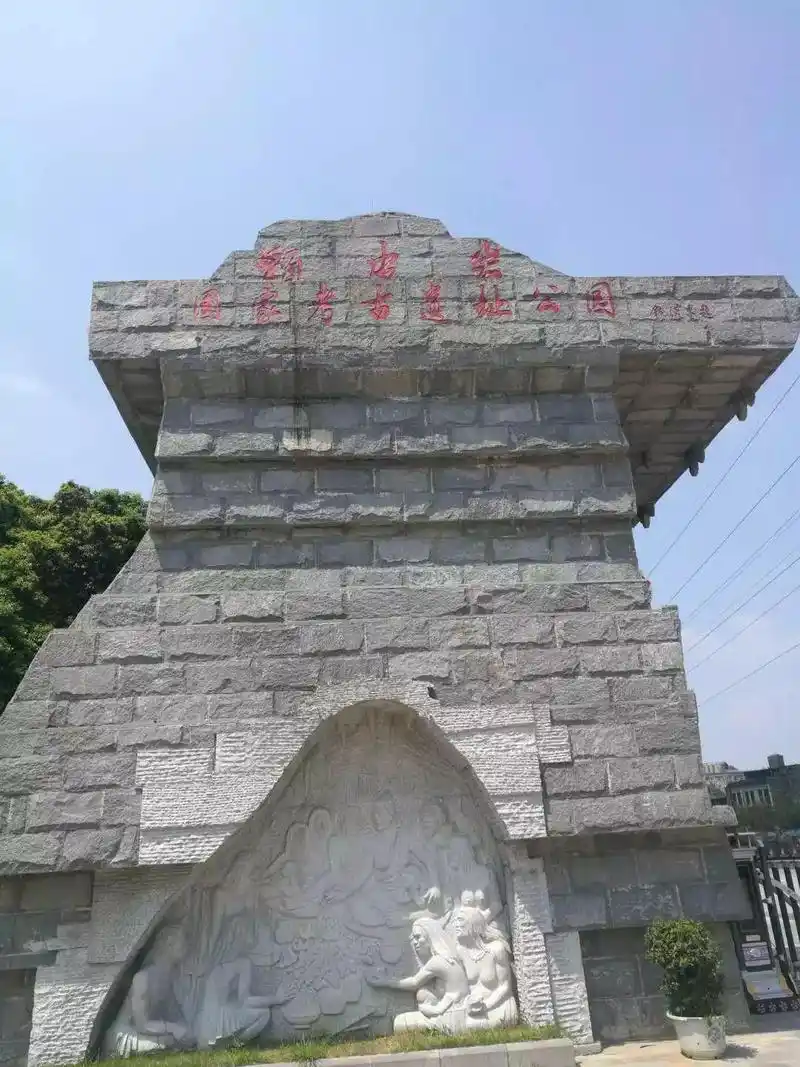 Dating back to the late Paleolithic to early Neolithic transition, Zengpiyan offers a stratigraphic record as significant for East Asia as Çatalhöyük is for the Near East or the Cave of El Castillo is for Europe. The site has yielded continuous cultural layers from approximately 12,000 to 7,000 years ago, making it a benchmark sequence for reconstructing prehistoric chronology in southern China. Designated a Major National Historical and Cultural Site in 2001 and named among China's "100 Greatest Archaeological Discoveries of the Century" in 2021, it is regarded as the yardstick by which other South China Neolithic sites are measured.
The site sits on the southwestern slopes of Dushan Hill in Xiangshan District, set within the dramatic karst landscape that defines the Guilin region. Three connected chambers—Main Cave, Low Cave, and Water Cave—form a compact dwelling space of roughly 300 square meters. Inside, the limestone floor remains cool and often damp, a reminder that the original inhabitants chose this naturally sheltered pocket for safety, stable microclimate, and proximity to river resources. It stands among the best-preserved prehistoric cave dwelling sites in all of southern China.
Zengpiyan's most celebrated finds push back the dawn of Chinese ceramics. A primitive clay vessel dated to about 12,000 years ago is among the oldest pottery fragments known in the country, predating many wares unearthed at better-known sites in the Yangtze basin. Equally striking are carbonized taro remains—the earliest evidence of cultivated tuber crops in South China—offering a window onto the transition from foraging to farming. Together these discoveries trace a pivotal moment when Guilin's ancestors first harnessed fire to harden clay and began cultivating the starchy plants that would nourish them for millennia.
Among the most haunting discoveries are several flexed-squat burials, with skeletons preserved in a tightly crouched position rarely seen in other Chinese Neolithic sites. This unusual mortuary practice shows striking parallels with prehistoric burial customs documented across Southeast Asia and the South Pacific, attracting sustained interest from physical anthropologists. Combined with skeletal morphology studies, the remains provide rare biological evidence for tracing the origins and migrations of modern populations across southern China and into Island Southeast Asia, giving Zengpiyan a significance that extends well beyond conventional archaeology.
The neighboring Zengpiyan Museum brings this distant world vividly to life through a one-to-one recreation of the cave dwelling, displaying clay pots, bone needles, heaps of freshwater snail shells, and carbonized plant specimens recovered during excavation. Younger visitors are especially well served by a simulated archaeology zone, a "time tunnel" multimedia exhibit, and a pottery workshop where they can handle replica sherds and try their hand at mock excavations. The result is an unusually tactile encounter with twelve thousand years of human ingenuity, one that converts an academic subject into a genuinely memorable experience.
The site park is open Tuesday through Sunday from 9:00 a.m. to 5:00 p.m., with last admission at 4:30 p.m.; it is closed on Mondays. Museum admission is roughly 15 RMB, while the surrounding parkland is free to enter. Allow 1.5 to 2.5 hours for a thorough visit. Cave floors are uneven and perpetually damp, so sturdy non-slip shoes and a light jacket are advisable. Visiting in the morning helps avoid crowds, and the site combines naturally with Guilin's Jingjiang Prince's Palace and the city museum for a full day of cultural sightseeing.
Dating back to the late Paleolithic to early Neolithic transition, Zengpiyan offers a stratigraphic record as significant for East Asia as Çatalhöyük is for the Near East or the Cave of El Castillo is for Europe. The site has yielded continuous cultural layers from approximately 12,000 to 7,000 years ago, making it a benchmark sequence for reconstructing prehistoric chronology in southern China. Designated a Major National Historical and Cultural Site in 2001 and named among China's "100 Greatest Archaeological Discoveries of the Century" in 2021, it is regarded as the yardstick by which other South China Neolithic sites are measured.
The site sits on the southwestern slopes of Dushan Hill in Xiangshan District, set within the dramatic karst landscape that defines the Guilin region. Three connected chambers—Main Cave, Low Cave, and Water Cave—form a compact dwelling space of roughly 300 square meters. Inside, the limestone floor remains cool and often damp, a reminder that the original inhabitants chose this naturally sheltered pocket for safety, stable microclimate, and proximity to river resources. It stands among the best-preserved prehistoric cave dwelling sites in all of southern China.
Zengpiyan's most celebrated finds push back the dawn of Chinese ceramics. A primitive clay vessel dated to about 12,000 years ago is among the oldest pottery fragments known in the country, predating many wares unearthed at better-known sites in the Yangtze basin. Equally striking are carbonized taro remains—the earliest evidence of cultivated tuber crops in South China—offering a window onto the transition from foraging to farming. Together these discoveries trace a pivotal moment when Guilin's ancestors first harnessed fire to harden clay and began cultivating the starchy plants that would nourish them for millennia.
Among the most haunting discoveries are several flexed-squat burials, with skeletons preserved in a tightly crouched position rarely seen in other Chinese Neolithic sites. This unusual mortuary practice shows striking parallels with prehistoric burial customs documented across Southeast Asia and the South Pacific, attracting sustained interest from physical anthropologists. Combined with skeletal morphology studies, the remains provide rare biological evidence for tracing the origins and migrations of modern populations across southern China and into Island Southeast Asia, giving Zengpiyan a significance that extends well beyond conventional archaeology.
The neighboring Zengpiyan Museum brings this distant world vividly to life through a one-to-one recreation of the cave dwelling, displaying clay pots, bone needles, heaps of freshwater snail shells, and carbonized plant specimens recovered during excavation. Younger visitors are especially well served by a simulated archaeology zone, a "time tunnel" multimedia exhibit, and a pottery workshop where they can handle replica sherds and try their hand at mock excavations. The result is an unusually tactile encounter with twelve thousand years of human ingenuity, one that converts an academic subject into a genuinely memorable experience.
The site park is open Tuesday through Sunday from 9:00 a.m. to 5:00 p.m., with last admission at 4:30 p.m.; it is closed on Mondays. Museum admission is roughly 15 RMB, while the surrounding parkland is free to enter. Allow 1.5 to 2.5 hours for a thorough visit. Cave floors are uneven and perpetually damp, so sturdy non-slip shoes and a light jacket are advisable. Visiting in the morning helps avoid crowds, and the site combines naturally with Guilin's Jingjiang Prince's Palace and the city museum for a full day of cultural sightseeing.