Liuzhou Old Street
⭐ 4.20
Liuzhou Old Street, Yufeng District, Liuzhou City, Guangxi Zhuang Autonomous Region, China
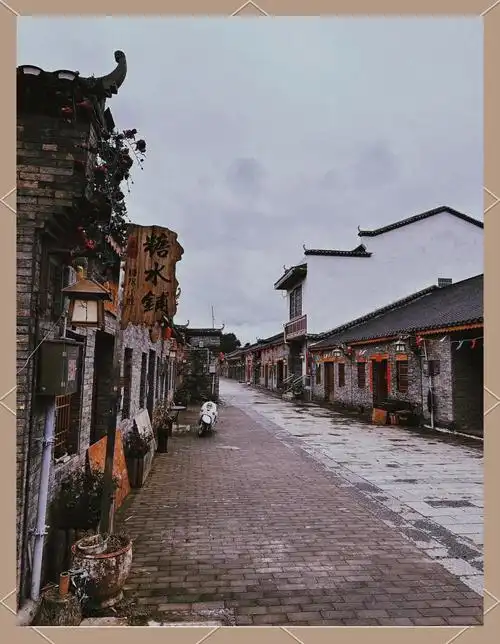 The East Gate Historic District traces its origins to the Tang dynasty (618–907 CE), making it roughly contemporaneous with the founding of medieval Europe's great trading cities like Bruges and Lübeck. Designated in 2014 as one of Guangxi's first protected historic districts, it served as the commercial and defensive core of Liuzhou for over a millennium. Within its compact grid sit Republican-era buildings such as the Liao Lei Mansion and the former telegraph office, silent witnesses to Liuzhou's transformation from a southern frontier outpost into a modern industrial hub—much as Manchester's warehouses document Britain's own industrial revolution.
Architecturally, the street offers a striking visual journey. The East Gate Tower functions as the district's landmark, recalling the fortified gates of medieval European towns like York or Bern. Shuguang West Road features classic Lingnan arcade architecture—covered walkways supported by rows of columns and adorned with ornate carvings—comparable to the verandas found in colonial Havana or Marseille's Vieux-Port. Meanwhile, Huangzhu Alley hides elegant Republican-era villas where grey brick and tiled roofs meet Western-style arched windows and louvered shutters, embodying the same East-meets-West aesthetic as Shanghai's famed Bund.
Culturally, the area sits at the crossroads of three powerful traditions: Lingnan regional culture, the literary legacy of Tang dynasty poet and governor Liu Zongyuan (whose famous "Luochi Temple Stele" was composed here), and revolutionary history. Liu, often compared to a Chinese equivalent of Dante for his political exile writings, lends the district a literary gravitas rare in southern China. The streets later served as a commercial river port and, during the twentieth century, as a revolutionary base, leaving behind multiple heritage sites that layer political memory atop mercantile prosperity.
For food lovers, Huangzhu Alley is the unmissable highlight. Bowls of luosifen—Liuzhou's iconic pungent river-snail rice noodles that have conquered Chinese social media—sit alongside horse meat noodles and the delicate "dewdrop" glutinous rice dumplings, freshly boiled and bursting with sweet filling. Meals cost roughly ¥20–30 per person, making this one of China's great affordable culinary pilgrimages. The atmosphere rivals any European market hall: steaming woks, shouted orders, and plastic stools crowded with regulars who've been eating here for generations.
Practical planning matters in this district. The area is open-air and accessible 24/7 with no admission charge. Allow 1.5–3 hours for a standard visit, or half a day if you intend to eat your way through multiple stalls. Wear comfortable walking shoes—the original flagstones are uneven—and avoid the punishing midday sun between 11:00 and 15:00 by exploring at dawn or dusk, when golden light bathes the Republican facades and the street-food smoke catches the evening lamps. Photographers will find endless material: drying sausages, elderly neighbors playing chess, hand-painted murals, and the warm glow of family kitchens spilling into the lane.
Pair your visit with the nearby Liu Hou Temple (dedicated to Liu Zongyuan), the bustling五星 shopping street, and an evening cruise along the Li River for a complete Liuzhou day. Morning is ideal for the East Gate Tower and the cool quiet of the old lanes; afternoon belongs to the temple and literary gardens; evening belongs to the food stalls; and night belongs to the illuminated river. Few Chinese cities reward this kind of slow, layered exploration as generously as Liuzhou, where two thousand years of history, revolution, poetry, and peppery noodles converge within a few walkable blocks.
The East Gate Historic District traces its origins to the Tang dynasty (618–907 CE), making it roughly contemporaneous with the founding of medieval Europe's great trading cities like Bruges and Lübeck. Designated in 2014 as one of Guangxi's first protected historic districts, it served as the commercial and defensive core of Liuzhou for over a millennium. Within its compact grid sit Republican-era buildings such as the Liao Lei Mansion and the former telegraph office, silent witnesses to Liuzhou's transformation from a southern frontier outpost into a modern industrial hub—much as Manchester's warehouses document Britain's own industrial revolution.
Architecturally, the street offers a striking visual journey. The East Gate Tower functions as the district's landmark, recalling the fortified gates of medieval European towns like York or Bern. Shuguang West Road features classic Lingnan arcade architecture—covered walkways supported by rows of columns and adorned with ornate carvings—comparable to the verandas found in colonial Havana or Marseille's Vieux-Port. Meanwhile, Huangzhu Alley hides elegant Republican-era villas where grey brick and tiled roofs meet Western-style arched windows and louvered shutters, embodying the same East-meets-West aesthetic as Shanghai's famed Bund.
Culturally, the area sits at the crossroads of three powerful traditions: Lingnan regional culture, the literary legacy of Tang dynasty poet and governor Liu Zongyuan (whose famous "Luochi Temple Stele" was composed here), and revolutionary history. Liu, often compared to a Chinese equivalent of Dante for his political exile writings, lends the district a literary gravitas rare in southern China. The streets later served as a commercial river port and, during the twentieth century, as a revolutionary base, leaving behind multiple heritage sites that layer political memory atop mercantile prosperity.
For food lovers, Huangzhu Alley is the unmissable highlight. Bowls of luosifen—Liuzhou's iconic pungent river-snail rice noodles that have conquered Chinese social media—sit alongside horse meat noodles and the delicate "dewdrop" glutinous rice dumplings, freshly boiled and bursting with sweet filling. Meals cost roughly ¥20–30 per person, making this one of China's great affordable culinary pilgrimages. The atmosphere rivals any European market hall: steaming woks, shouted orders, and plastic stools crowded with regulars who've been eating here for generations.
Practical planning matters in this district. The area is open-air and accessible 24/7 with no admission charge. Allow 1.5–3 hours for a standard visit, or half a day if you intend to eat your way through multiple stalls. Wear comfortable walking shoes—the original flagstones are uneven—and avoid the punishing midday sun between 11:00 and 15:00 by exploring at dawn or dusk, when golden light bathes the Republican facades and the street-food smoke catches the evening lamps. Photographers will find endless material: drying sausages, elderly neighbors playing chess, hand-painted murals, and the warm glow of family kitchens spilling into the lane.
Pair your visit with the nearby Liu Hou Temple (dedicated to Liu Zongyuan), the bustling五星 shopping street, and an evening cruise along the Li River for a complete Liuzhou day. Morning is ideal for the East Gate Tower and the cool quiet of the old lanes; afternoon belongs to the temple and literary gardens; evening belongs to the food stalls; and night belongs to the illuminated river. Few Chinese cities reward this kind of slow, layered exploration as generously as Liuzhou, where two thousand years of history, revolution, poetry, and peppery noodles converge within a few walkable blocks.