Liuzhou Confucian Temple
⭐ 4.60
No. 8, Fuzi Road, Yufeng District, Liuzhou City, Guangxi Zhuang Autonomous Region, China
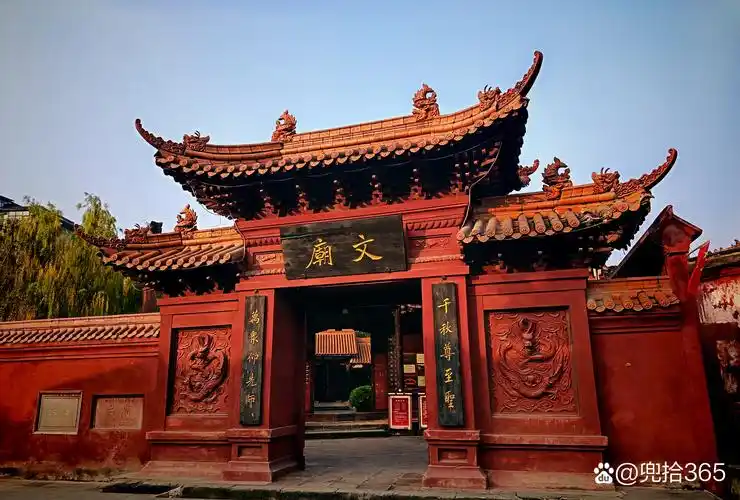 Liuzhou's Confucian Temple has roots reaching back to 628 AD, when it was first built during the golden age of the Tang Dynasty—just two decades before the rise of Charlemagne in Europe. Its most illustrious chapter came under the literary giant Liu Zongyuan, one of China's Eight Great Prose Masters of the Tang, who oversaw its restoration and transformed it into a vital center for Confucian learning across the Lingnan region. The original halls were destroyed by fire in 1928, and the site lay silent for decades until a meticulous two-year reconstruction project reopened the temple in 2011, reviving a thousand-year scholarly tradition for a new generation.
The architecture follows the strict axial symmetry typical of imperial-era Confucian complexes, unfolding from south to north through a sequence of ceremonial gates, moon-shaped reflecting pools, the apricot-blossom preaching platform, and the magnificent 31.8-meter-tall Hall of Great Achievement, whose copper-glazed tiles and elaborately carved beams recall the grandeur of Beijing's Temple of Heaven. Nearby rises the elegant seven-story Wenchang Pagoda, soaring 29 meters above the riverbank—climb it for sweeping panoramas of the Liu River that rival any view from a Tuscan hilltop village.
Beyond its architectural splendor, the temple functions as a living cultural institution. The on-site museum hosts permanent exhibitions tracing Confucius's life and philosophy, while annual celebrations around the philosopher's birthday transform the courtyards with elaborate re-enactments of ancient rites, coming-of-age ceremonies, and first-penmanship rituals for children. These events echo the kind of living heritage experiences travelers might encounter at Kyoto's shrines or Rome's religious festivals, offering an authentic window into China's enduring Confucian legacy.
Practical planning is refreshingly simple. Located at 8 Fuzi Road in Yufeng District, the temple welcomes visitors Tuesday through Sunday from 9:30 AM to 4:30 PM and again from 7:30 to 10:00 PM, with Mondays reserved for maintenance (except during national holidays). Admission is free—simply register with a passport or ID card at the gate. Budget 1.5 to 2 hours for a thorough visit; public buses 12 and 69 stop at Wenmiao Station, and free parking is available on-site for those driving.
The real magic unfolds after dark, when the temple's golden lighting transforms it into a glowing jewel reflected in the river—a sight comparable to Budapest's Parliament seen from the Danube. Photographers should arrive in spring to capture the red walls framed by cascading purple bauhinia blooms. After your visit, stroll along the Liu River promenade to the nearby Yaobu Ancient Town, where you can sample Liuzhou's legendary river-snail rice noodles, turning a cultural pilgrimage into a complete sensory journey through southern China's most underrated riverside city.
Liuzhou's Confucian Temple has roots reaching back to 628 AD, when it was first built during the golden age of the Tang Dynasty—just two decades before the rise of Charlemagne in Europe. Its most illustrious chapter came under the literary giant Liu Zongyuan, one of China's Eight Great Prose Masters of the Tang, who oversaw its restoration and transformed it into a vital center for Confucian learning across the Lingnan region. The original halls were destroyed by fire in 1928, and the site lay silent for decades until a meticulous two-year reconstruction project reopened the temple in 2011, reviving a thousand-year scholarly tradition for a new generation.
The architecture follows the strict axial symmetry typical of imperial-era Confucian complexes, unfolding from south to north through a sequence of ceremonial gates, moon-shaped reflecting pools, the apricot-blossom preaching platform, and the magnificent 31.8-meter-tall Hall of Great Achievement, whose copper-glazed tiles and elaborately carved beams recall the grandeur of Beijing's Temple of Heaven. Nearby rises the elegant seven-story Wenchang Pagoda, soaring 29 meters above the riverbank—climb it for sweeping panoramas of the Liu River that rival any view from a Tuscan hilltop village.
Beyond its architectural splendor, the temple functions as a living cultural institution. The on-site museum hosts permanent exhibitions tracing Confucius's life and philosophy, while annual celebrations around the philosopher's birthday transform the courtyards with elaborate re-enactments of ancient rites, coming-of-age ceremonies, and first-penmanship rituals for children. These events echo the kind of living heritage experiences travelers might encounter at Kyoto's shrines or Rome's religious festivals, offering an authentic window into China's enduring Confucian legacy.
Practical planning is refreshingly simple. Located at 8 Fuzi Road in Yufeng District, the temple welcomes visitors Tuesday through Sunday from 9:30 AM to 4:30 PM and again from 7:30 to 10:00 PM, with Mondays reserved for maintenance (except during national holidays). Admission is free—simply register with a passport or ID card at the gate. Budget 1.5 to 2 hours for a thorough visit; public buses 12 and 69 stop at Wenmiao Station, and free parking is available on-site for those driving.
The real magic unfolds after dark, when the temple's golden lighting transforms it into a glowing jewel reflected in the river—a sight comparable to Budapest's Parliament seen from the Danube. Photographers should arrive in spring to capture the red walls framed by cascading purple bauhinia blooms. After your visit, stroll along the Liu River promenade to the nearby Yaobu Ancient Town, where you can sample Liuzhou's legendary river-snail rice noodles, turning a cultural pilgrimage into a complete sensory journey through southern China's most underrated riverside city.