Longjing Village

⭐ 4.50

Longjing Village, Xihu District, Hangzhou, Zhejiang, China
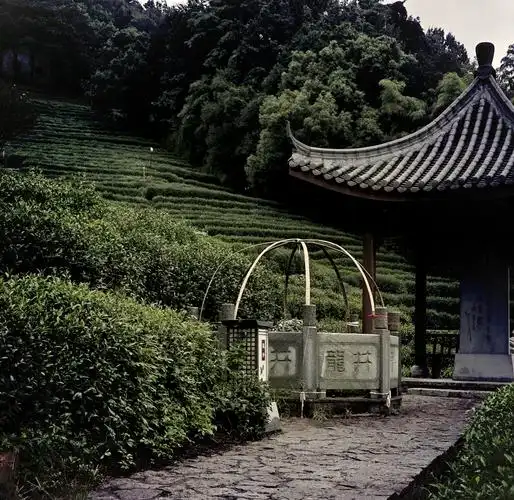
Longjing Village
**A Millennium of Tea Tradition** Longjing Village's story stretches back more than a thousand years, though it was Emperor Qianlong's pilgrimage in 1751 and his sealing of eighteen tea bushes beneath the Lion Peak as "Imperial Tea" that lifted the village into national legend—much as the Mayfair tea auctions once defined London's tea world or the Verlagshaus tradition shaped Vienna's coffee culture. Perched at the head of the four great Lion-Dragon-Cloud-Tiger tea districts, the "Long" designation marks it as the original and most prestigious source of genuine Dragon Well tea. Roughly 800 villagers still hand-plant, hand-pick, and hand-fire each spring's harvest, making this one of the rare places where China's living tea culture can be observed as a working farm rather than a museum exhibit. **A Landscape Painted by Tea Bushes** Spread across some 18 hectares and ringed by mist-wreathed mountains, the village is a study in terraced green: nearly 1,000 mu of tea gardens climb the slopes in undulating ribbons, shifting from tender chartreuse in early spring to deep emerald in summer and perfumed with osmanthus blossoms each autumn. To the north rise the North Peak and Lion Peak; to the south, the celebrated Nine Creeks and Eighteen Gullies drop toward the Qiantang River. Compared with the manicured vineyard hillsides of Tuscany or the lavender fields of Provence, the scenery here is wilder and wispier, threaded with cool streams and lantern-lit stone paths that invite unhurried wandering. **Hidden Heritage in Stone and Spring** Scattered across the village lie the fabled Eight Scenes of Longjing, including the mystic Divine Transport Stone, the still waters of the Cleansing Heart Pool, and the historic Hugong Temple—each anchored in legend and dynasty-era lore. The eighteen Imperial Tea bushes remain the spiritual heart of the village; a small entry fee grants access to the enclosed grove, where the ancient, low-yielding plants survive as national symbols rather than commercial producers. Flagstone lanes link these sites in a sequence that unfolds like an open-air chapter of Chinese history, ideal for photographers chasing atmospheric light and travelers drawn to the romance of forgotten pilgrim routes. **Savoring the Slow Tea Life** A half-day to full-day visit is the ideal tempo. The recommended route runs from the Longjing branch of the China National Tea Museum, along the village's bustling main street, into the Imperial Tea Grove, and onward into the breezy Nine Creeks walking trail—rewarding hikers with cool, shaded paths reminiscent of a gentle stroll in the Scottish Highlands. Inside the village, visitors can settle into a legitimate family teahouse, watch master roasters tumble leaves in heated wok pans by hand, and savor multiple infusions of the buttery, chestnut-nuanced brew. Public areas are free to wander; only the Imperial Tea Grove requires a ticket. **Practical Tips for Visitors** Bus 27 or 87 to the "Longjing Tea House" stop delivers you from central Hangzhou in under an hour; drivers should arrive early, as parking is famously tight. Two seasons stand out: the pre-Qingming harvest weeks in late March and early April, when the prized pre-rain tea is plucked, and the osmanthus-scented days of October. Sturdy non-slip shoes, mosquito repellent, and sunscreen are essential—especially in humid summer months, when mornings and late afternoons are far more comfortable than midday. As a rule of thumb, bypass any roadside touts pushing "freshly roasted tea" and stick to teahouses with clearly posted prices; the village is a working agricultural community, so stepping off-path into tea bushes or plucking leaves is both disrespectful and harmful to livelihoods. **Why Longjing Endures** In a region crowded with UNESCO-listed canals and West Lake pavilions, Longjing Village offers something rarer: a living landscape where history is still brewed fresh each dawn. To linger here with a cup cupped in both hands is to taste a thread of Chinese civilization that runs unbroken from Tang poets to Qianlong's court to the shopkeepers of today—a quietly extraordinary pause for any traveler passing through eastern China.

Traveler reviews

For lunch, I devoured a feast at "Cha Ren Cun" (Tea Person's Village) restaurant: Longjing shrimp where the tea leaves stay crisp and fragrant even after frying, tea-scented ribs that fell off the bone, ...
⭐ 4 · Parker Expand
I splurged on the hands-on tea picking and roasting experience at one of the local tea houses – spending the morning harvesting tender buds in a bamboo basket, then learning the traditional hand-pressing technique over a sizzling wok. There's somethi...
⭐ 4 · Jordan Expand