Kunming Old Street
⭐ 4.50
Kunming Old Street, Wuhua District, Kunming, Yunnan Province, China
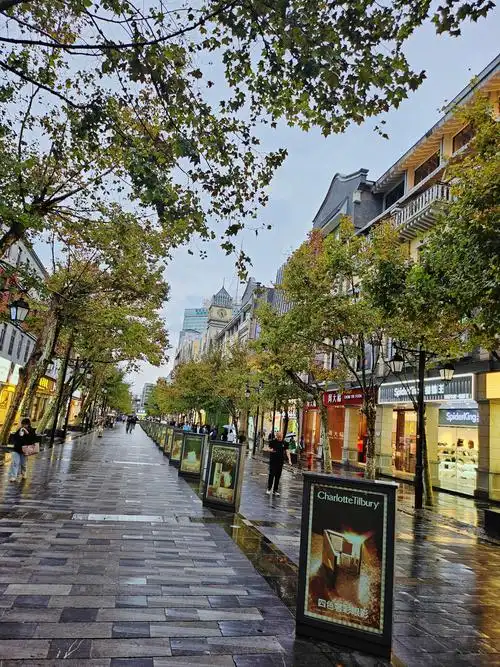 Kunming Old Street was founded in 1119 during the Dali Kingdom, a period contemporary with England's late Anglo-Saxon era and the rise of Italian maritime republics like Genoa and Venice. As a frontier outpost on the ancient Southern Silk Road, Kunming was already a meeting point of cultures when this district first took shape. Today it remains one of China's largest surviving "living" quarters of Ming, Qing, and Republican-era architecture, complete with original flagstone lanes, latticed wooden windows, and walled courtyard compounds. It offers a rare chance to walk through a thousand years of southwestern frontier history in a single afternoon.
The district's architectural character is striking for its cultural pluralism—comparable perhaps to the layered styles found in cities like Marseille or Trieste. Highlights include the Ma Family Compound, a textbook example of the Bai ethnic "Seal Block" courtyard house, and the elegant Wine Cup Tower (Duì Yuè Lóu) with its French colonial–style curved façade. Most imposing is the red-walled Victory Memorial Hall, an early-20th-century civic monument commemorating the end of WWII in Yunnan. Together, these buildings form an outdoor museum of how Han, Bai, and European colonial influences fused on China's southwestern frontier.
Human stories enrich every corner. The Nie Er Former Residence displays manuscripts and personal belongings of the young composer who would later write the music for China's national anthem, just before the Pacific War drew global attention to this corner of the world. Nearby, the Oriental Bookstore, founded in 1926, served as an intellectual haven for scholars from the legendary National Southwestern Associated University—an institution often compared to Britain's wartime evacuation of universities to safer regions. The century-old Fulin Tang pharmacy still fills the air with traditional herbal aromas, a sensory time capsule unchanged for generations.
Practical visiting is refreshingly easy. The district is open free of charge around the clock. Nie Er's Former Residence welcomes visitors Tuesday through Sunday from 9:00 to 16:30 (closed Mondays), while evening courtyard performances at Ma Family Compound require separate tickets. The most convenient approach is by Metro Lines 3 or 5 to Wuyi Road Station, Exit C, followed by a 3-to-5-minute walk to the Guanghua Street entrance. The optimal visiting window runs from 15:00 to 20:00, when soft afternoon light gives way to atmospheric evening illumination.
Kunming Old Street is worth visiting because it offers something rare: an unscripted, pedestrian-scale encounter with the living heritage of southwest China. Unlike museum-frozen heritage sites, the lanes remain inhabited, the pharmacies still dispense remedies, and the teahouses still buzz with conversation. Stroll from Guanghua to Wenming to Qianwang to Jingxing Street, then continue onward in the early evening to Cuihu (Green Lake) Park and the nearby Yunnan Military Academy. The combination forms a perfect half-day immersion into old Kunming, revealing the warmth, depth, and cosmopolitan character of a city that has welcomed travelers and traders for a millennium.
Kunming Old Street was founded in 1119 during the Dali Kingdom, a period contemporary with England's late Anglo-Saxon era and the rise of Italian maritime republics like Genoa and Venice. As a frontier outpost on the ancient Southern Silk Road, Kunming was already a meeting point of cultures when this district first took shape. Today it remains one of China's largest surviving "living" quarters of Ming, Qing, and Republican-era architecture, complete with original flagstone lanes, latticed wooden windows, and walled courtyard compounds. It offers a rare chance to walk through a thousand years of southwestern frontier history in a single afternoon.
The district's architectural character is striking for its cultural pluralism—comparable perhaps to the layered styles found in cities like Marseille or Trieste. Highlights include the Ma Family Compound, a textbook example of the Bai ethnic "Seal Block" courtyard house, and the elegant Wine Cup Tower (Duì Yuè Lóu) with its French colonial–style curved façade. Most imposing is the red-walled Victory Memorial Hall, an early-20th-century civic monument commemorating the end of WWII in Yunnan. Together, these buildings form an outdoor museum of how Han, Bai, and European colonial influences fused on China's southwestern frontier.
Human stories enrich every corner. The Nie Er Former Residence displays manuscripts and personal belongings of the young composer who would later write the music for China's national anthem, just before the Pacific War drew global attention to this corner of the world. Nearby, the Oriental Bookstore, founded in 1926, served as an intellectual haven for scholars from the legendary National Southwestern Associated University—an institution often compared to Britain's wartime evacuation of universities to safer regions. The century-old Fulin Tang pharmacy still fills the air with traditional herbal aromas, a sensory time capsule unchanged for generations.
Practical visiting is refreshingly easy. The district is open free of charge around the clock. Nie Er's Former Residence welcomes visitors Tuesday through Sunday from 9:00 to 16:30 (closed Mondays), while evening courtyard performances at Ma Family Compound require separate tickets. The most convenient approach is by Metro Lines 3 or 5 to Wuyi Road Station, Exit C, followed by a 3-to-5-minute walk to the Guanghua Street entrance. The optimal visiting window runs from 15:00 to 20:00, when soft afternoon light gives way to atmospheric evening illumination.
Kunming Old Street is worth visiting because it offers something rare: an unscripted, pedestrian-scale encounter with the living heritage of southwest China. Unlike museum-frozen heritage sites, the lanes remain inhabited, the pharmacies still dispense remedies, and the teahouses still buzz with conversation. Stroll from Guanghua to Wenming to Qianwang to Jingxing Street, then continue onward in the early evening to Cuihu (Green Lake) Park and the nearby Yunnan Military Academy. The combination forms a perfect half-day immersion into old Kunming, revealing the warmth, depth, and cosmopolitan character of a city that has welcomed travelers and traders for a millennium.