Dianchi Lake
⭐ 4.20
Dianchi National Tourism Resort, Chengong District, Kunming, Yunnan, China
 Long before Kunming became a cosmopolitan hub, the Dianchi basin cradled the bronze-age Dian Kingdom, a civilization that flourished alongside the Roman Republic and Han Dynasty between roughly the 3rd century BC and 1st century AD. Archaeologists have unearthed gold artifacts and bronze drums from its lakeside tombs—treasures now housed in regional museums that rival anything from contemporary Celtic Europe. The fertile plateau supported a sophisticated agrarian society whose legacy lives on in the fishing villages and old docks that still fringe the shoreline. Walking the Haigeng embankment, you trace the same contours that once linked Dian traders to the southern Silk Road.
At 1,886 meters elevation, Dianchi stretches across 330 square kilometers, earning its title "Pearl of the Plateau" with vistas that recall Switzerland's Lake Geneva or Italy's Lake Como—though framed by subtropical rather than alpine peaks. To the west rises Xishan (Western Hills), whose undulating ridgeline has been likened to a reclining goddess since the Tang Dynasty, much like the Sleeping Beauty ridge perched above Montenegro's Adriatic. The pairing of cobalt water, jade slopes, and cerulean sky creates Kunming's most iconic panorama, a composition Chinese painters have sought to capture for a millennium.
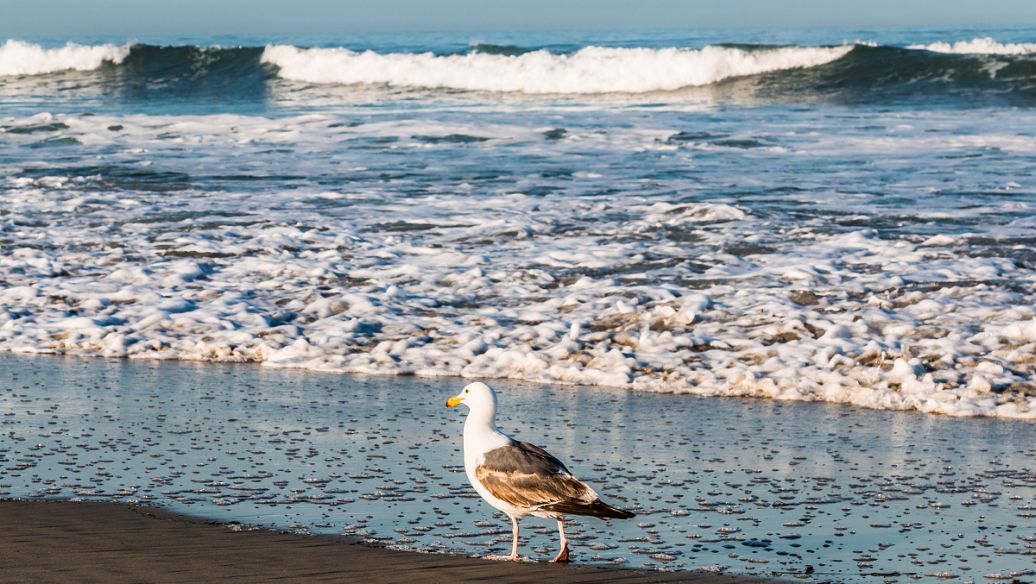
The 2.8-kilometer Haigeng Dam anchors the lake's eastern edge and remains free to visit year-round. Each winter, between November and March, roughly forty thousand black-headed gulls migrate from Siberia, swarming visitors in a spectacle that draws comparisons to the bustling birdlife around Amsterdam's canals. Toss specialized gull feed, snap close-up photos, and stay for sunset when the sky ignites behind the Sleeping Beauty. Summer transforms the wetlands: from June to September, lotus blossoms carpet Haigeng's ponds, while the lakeside greenway becomes a cycling ribbon lined with dawn-redwood trees mirroring in still water.
The true pilgrimage, however, climbs Xishan to Longmen (Dragon Gate), a series of Taoist grottoes carved into a sheer cliff face over several centuries—an achievement that echoes Matera's rock-cut sanctuaries or Petra's facades, though executed at a more intimate scale. A cable car glides across the lake in about twenty minutes one-way, doubling as transport and sightseeing. From the summit, the legendary "Five Hundred Li Dianchi" panorama unfurls below, a sweep of water so vast it rivals the caldera views from Santorini's cliffs. Steps near the top are steep, so elderly visitors or families with young children may prefer returning by cable car.
Just south of Haigeng Dam, the Yunnan Nationalities Village gathers twenty-five of the province's ethnic groups in a single open-air museum, featuring recreated Dai bamboo stilt houses, Bai marble courtyards, and Tibetan prayer halls alongside daily song-and-dance performances. Think of it as a living ethnographic counterpart to Skansen in Stockholm, where architecture and ceremony converge. Beyond the village, ringed wetlands such as Laoyuhe and Baofeng provide boardwalk trails for birding and quiet contemplation, bookable through the local tourism app. The 110-kilometer perimeter greenway forbids motor vehicles, leaving it exclusively to cyclists, joggers, and pedestrians—reminiscent of Copenhagen's harborside lanes but framed by egrets rather than seabirds.
Kunming Metro Line 5 drops visitors directly at Haigeng Dam and the Nationalities Village, though weekends draw heavy crowds—aim for early starts or weekday visits. Target mid-November through mid-March for the gull migration, or pick rain-fresh mornings in August when summer heat softens. UV radiation at this elevation is fierce year-round; pack sunscreen, hats, and a light jacket for evening temperature drops that can reach fifteen degrees even in July. Mosquito repellent and sturdy shoes are essential for wetland walks, while gull feeding demands the official pellet feed sold nearby—never attempt to catch the birds by hand. For a finale, walk south to Haiyan Village at dusk to catch the celebrated "Orange Sea" sunset over Dianchi, a scene that lingers long after the trip ends.
Long before Kunming became a cosmopolitan hub, the Dianchi basin cradled the bronze-age Dian Kingdom, a civilization that flourished alongside the Roman Republic and Han Dynasty between roughly the 3rd century BC and 1st century AD. Archaeologists have unearthed gold artifacts and bronze drums from its lakeside tombs—treasures now housed in regional museums that rival anything from contemporary Celtic Europe. The fertile plateau supported a sophisticated agrarian society whose legacy lives on in the fishing villages and old docks that still fringe the shoreline. Walking the Haigeng embankment, you trace the same contours that once linked Dian traders to the southern Silk Road.
At 1,886 meters elevation, Dianchi stretches across 330 square kilometers, earning its title "Pearl of the Plateau" with vistas that recall Switzerland's Lake Geneva or Italy's Lake Como—though framed by subtropical rather than alpine peaks. To the west rises Xishan (Western Hills), whose undulating ridgeline has been likened to a reclining goddess since the Tang Dynasty, much like the Sleeping Beauty ridge perched above Montenegro's Adriatic. The pairing of cobalt water, jade slopes, and cerulean sky creates Kunming's most iconic panorama, a composition Chinese painters have sought to capture for a millennium.
The 2.8-kilometer Haigeng Dam anchors the lake's eastern edge and remains free to visit year-round. Each winter, between November and March, roughly forty thousand black-headed gulls migrate from Siberia, swarming visitors in a spectacle that draws comparisons to the bustling birdlife around Amsterdam's canals. Toss specialized gull feed, snap close-up photos, and stay for sunset when the sky ignites behind the Sleeping Beauty. Summer transforms the wetlands: from June to September, lotus blossoms carpet Haigeng's ponds, while the lakeside greenway becomes a cycling ribbon lined with dawn-redwood trees mirroring in still water.
The true pilgrimage, however, climbs Xishan to Longmen (Dragon Gate), a series of Taoist grottoes carved into a sheer cliff face over several centuries—an achievement that echoes Matera's rock-cut sanctuaries or Petra's facades, though executed at a more intimate scale. A cable car glides across the lake in about twenty minutes one-way, doubling as transport and sightseeing. From the summit, the legendary "Five Hundred Li Dianchi" panorama unfurls below, a sweep of water so vast it rivals the caldera views from Santorini's cliffs. Steps near the top are steep, so elderly visitors or families with young children may prefer returning by cable car.
Just south of Haigeng Dam, the Yunnan Nationalities Village gathers twenty-five of the province's ethnic groups in a single open-air museum, featuring recreated Dai bamboo stilt houses, Bai marble courtyards, and Tibetan prayer halls alongside daily song-and-dance performances. Think of it as a living ethnographic counterpart to Skansen in Stockholm, where architecture and ceremony converge. Beyond the village, ringed wetlands such as Laoyuhe and Baofeng provide boardwalk trails for birding and quiet contemplation, bookable through the local tourism app. The 110-kilometer perimeter greenway forbids motor vehicles, leaving it exclusively to cyclists, joggers, and pedestrians—reminiscent of Copenhagen's harborside lanes but framed by egrets rather than seabirds.
Kunming Metro Line 5 drops visitors directly at Haigeng Dam and the Nationalities Village, though weekends draw heavy crowds—aim for early starts or weekday visits. Target mid-November through mid-March for the gull migration, or pick rain-fresh mornings in August when summer heat softens. UV radiation at this elevation is fierce year-round; pack sunscreen, hats, and a light jacket for evening temperature drops that can reach fifteen degrees even in July. Mosquito repellent and sturdy shoes are essential for wetland walks, while gull feeding demands the official pellet feed sold nearby—never attempt to catch the birds by hand. For a finale, walk south to Haiyan Village at dusk to catch the celebrated "Orange Sea" sunset over Dianchi, a scene that lingers long after the trip ends.