Guoliang Village
⭐ 4.00
Guoliang Village, Huixian, Xinxiang, Henan, China
 Guoliang Village traces its origins to the twilight of the Western Han dynasty, around the turn of the 2nd century AD, when local legend holds that a rebel named Guo Liang fortified the lofty outpost. The settlement has thus stood for roughly two millennia, weathering the same era that saw Rome’s far‑flung road network sprawl across Europe and the early spread of Buddhism along the Silk Road. In the 1970s, thirteen villagers turned the ancient cliff into a modern marvel by hand‑drilling a 1.25‑kilometre tunnel, a feat that parallels the Roman engineers who carved the Appian Way through the Apennines—proof that human perseverance can still reshape the most stubborn of landscapes.
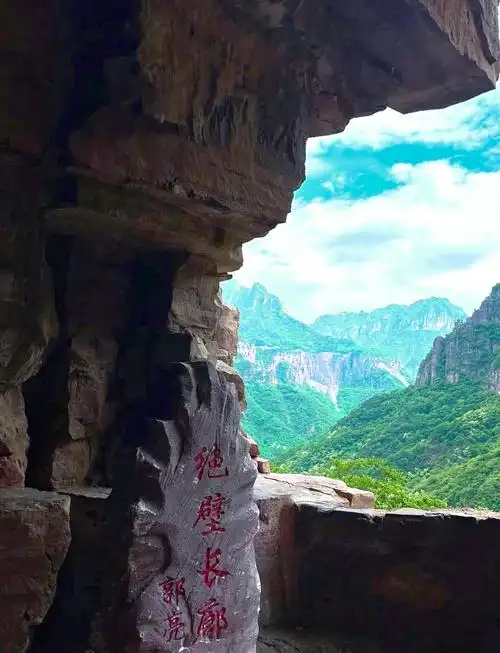
Carved directly into the vertical rock face, the Guoliang Tunnel runs 1,250 metres at a height of about 4 metres and a width of 5–6 metres, with 35 strategically placed skylights that pour shafts of light onto the narrow carriageway. The tunnel’s side walls are rough‑hewn, echoing the hand‑chiseled galleries of the Italian Cinque Terre or the Alpine tunnels of the Simplon Pass, yet its scale is dwarfed by the sheer drop to the valley below. Drivers today glide through a route that once demanded a steel‑hammer and a steel‑rod, a living testament to the tenacity of the thirteen villagers who, between 1972 and 1977, chiselled the cliff inch by inch without the aid of modern machinery.
The cliff‑top settlement itself is a living museum of Ming and Qing stone‑masonry. Eighty‑three households cling to terraces, their grey‑tiled roofs and winding stone alleys recalling the hill‑towns of Tuscany or the white‑washed villages of Santorini, though here the backdrop is a sheer, rust‑red canyon. The village’s cultural heartbeat is its film legacy: more than forty movies, including the comedy “Raise Your Hand” and the drama “The Bell of Qingliang Temple,” were shot here, earning it the nickname “China’s No. 1 Film Village.” Many homestay owners once served as extras, so visitors often hear firsthand anecdotes about on‑set mishaps, adding a vivid, human layer to the already dramatic scenery.
Getting to Guoliang is most convenient from Zhengzhou or Xinxiang; a self‑drive covers the 2.5–3 hour mountain road, while a bus to Huixian followed by a local shuttle whisks you to the village entrance. Entry to the scenic area costs between 80 ¥ and 125 ¥, a fee that already includes a shuttle bus to the tunnel and the cliff‑side viewpoints. Inside the village, family‑run homestays charge 200–400 ¥ per night, and meals run about 50–80 ¥ per person—prices are considered modest but on the higher side for the region, so look for establishments with clear price lists. The best travel window is April to October, when autumn paints the canyon in fiery reds; winter brings snow‑closed roads and bitter cold.
Photographers, painters and adventure‑seekers alike are drawn to Guoliang for its raw, cinematic drama: sunrise over the cliff paints the rock in amber, while the tunnel’s skylights create a fleeting chiaroscuro that feels almost theatrical. Hiking the 720‑step “Heavenly Ladder” and shouting at the “Scream Spring,” where a voice triggers a burst of water, add interactive thrills, and nearby natural wonders such as the Black Dragon Pool and the White Dragon Pool in the South‑Píng area provide tranquil contrast. With its blend of ancient legend, daring engineering and breathtaking vistas, Guoliang offers a once‑in‑a‑lifetime glimpse into a side of China where human spirit and towering nature meet head‑on.
Guoliang Village traces its origins to the twilight of the Western Han dynasty, around the turn of the 2nd century AD, when local legend holds that a rebel named Guo Liang fortified the lofty outpost. The settlement has thus stood for roughly two millennia, weathering the same era that saw Rome’s far‑flung road network sprawl across Europe and the early spread of Buddhism along the Silk Road. In the 1970s, thirteen villagers turned the ancient cliff into a modern marvel by hand‑drilling a 1.25‑kilometre tunnel, a feat that parallels the Roman engineers who carved the Appian Way through the Apennines—proof that human perseverance can still reshape the most stubborn of landscapes.
Carved directly into the vertical rock face, the Guoliang Tunnel runs 1,250 metres at a height of about 4 metres and a width of 5–6 metres, with 35 strategically placed skylights that pour shafts of light onto the narrow carriageway. The tunnel’s side walls are rough‑hewn, echoing the hand‑chiseled galleries of the Italian Cinque Terre or the Alpine tunnels of the Simplon Pass, yet its scale is dwarfed by the sheer drop to the valley below. Drivers today glide through a route that once demanded a steel‑hammer and a steel‑rod, a living testament to the tenacity of the thirteen villagers who, between 1972 and 1977, chiselled the cliff inch by inch without the aid of modern machinery.
The cliff‑top settlement itself is a living museum of Ming and Qing stone‑masonry. Eighty‑three households cling to terraces, their grey‑tiled roofs and winding stone alleys recalling the hill‑towns of Tuscany or the white‑washed villages of Santorini, though here the backdrop is a sheer, rust‑red canyon. The village’s cultural heartbeat is its film legacy: more than forty movies, including the comedy “Raise Your Hand” and the drama “The Bell of Qingliang Temple,” were shot here, earning it the nickname “China’s No. 1 Film Village.” Many homestay owners once served as extras, so visitors often hear firsthand anecdotes about on‑set mishaps, adding a vivid, human layer to the already dramatic scenery.
Getting to Guoliang is most convenient from Zhengzhou or Xinxiang; a self‑drive covers the 2.5–3 hour mountain road, while a bus to Huixian followed by a local shuttle whisks you to the village entrance. Entry to the scenic area costs between 80 ¥ and 125 ¥, a fee that already includes a shuttle bus to the tunnel and the cliff‑side viewpoints. Inside the village, family‑run homestays charge 200–400 ¥ per night, and meals run about 50–80 ¥ per person—prices are considered modest but on the higher side for the region, so look for establishments with clear price lists. The best travel window is April to October, when autumn paints the canyon in fiery reds; winter brings snow‑closed roads and bitter cold.
Photographers, painters and adventure‑seekers alike are drawn to Guoliang for its raw, cinematic drama: sunrise over the cliff paints the rock in amber, while the tunnel’s skylights create a fleeting chiaroscuro that feels almost theatrical. Hiking the 720‑step “Heavenly Ladder” and shouting at the “Scream Spring,” where a voice triggers a burst of water, add interactive thrills, and nearby natural wonders such as the Black Dragon Pool and the White Dragon Pool in the South‑Píng area provide tranquil contrast. With its blend of ancient legend, daring engineering and breathtaking vistas, Guoliang offers a once‑in‑a‑lifetime glimpse into a side of China where human spirit and towering nature meet head‑on.