Muye Park
⭐ 3.60
Muye Park, Muye District, Xinxiang City, Henan Province, China
 The park's name echoes one of antiquity's most consequential battles. Around 1046 BCE, the Zhou forces under King Wu met the corrupt last ruler of the Shang, Di Xin, on the plains just south of present-day Xinxiang. The Zhou victory ended the Shang dynasty and inaugurated the Zhou — a dynasty that, like the Roman Republic-to-Empire arc, would shape its civilization for roughly 800 years. Standing where this turning point unfolded, the park treats the battlefield as a place of memory in the manner of Hastings or Austerlitz in Europe, embedding bronze-age drama into the modern cityscape rather than behind museum glass.
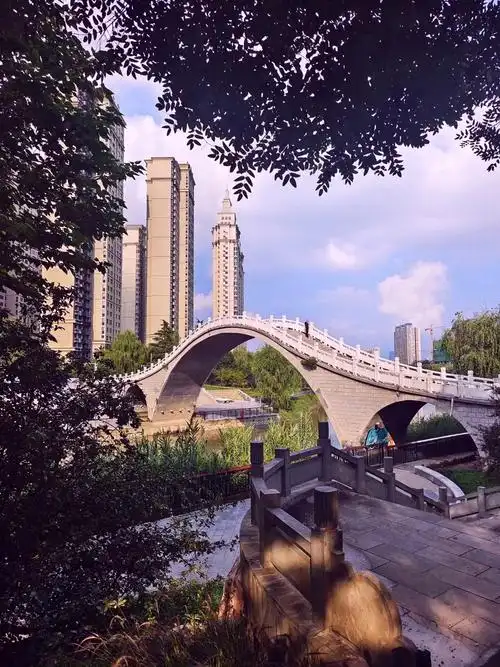
A 2,697-meter shoreline curves around the central Muye Lake, anchoring the park's 167 acres across four themed zones: lakeside leisure, open water views, ecological wetland, and terraced landscapes. Wooden boardwalks cantilever over the water's edge, and arched stone bridges recall the romantic crossings of Suzhou's classical gardens, or, for Western travelers, the ornamental bridges of a Petit Trianon estate. The lake reflects willows, sculptures, and sky, producing layered compositions that shift from dawn mist to golden-hour glow. In the wetland zone, native reeds shelter herons and seasonal migrants, turning a casual stroll into an impromptu nature lesson.
Cultural elements are woven through the landscape rather than confined to a single monument. A colonnade of carved pillars depicts scenes from the Battle of Muye, while eight rearing bronze horses echo the imperial equine art of Han-dynasty tombs. A pavilion called the "Zhongzhou Drum" anchors ceremonies and cultural performances, lending the park the role of an open-air civic salon — think of it as Xinxiang's equivalent of a Roman forum transplanted into wetland. Together, these installations remind visitors that Muye is not just a battlefield relic but a living emblem of the city's identity.
The park sits at 532 Pingyuan Road, Hongqi District, Xinxiang, and is open around the clock, year-round, with no admission fee. Buses 1, 11, and 15 stop at "Muye Park" station, about three minutes' walk from the gate. Drivers can navigate to "Muye Park (Pingyuan Road)"; free parking is available at the entrance. There are no large rides, restaurants, or souvenir shops on site, so bring water, snacks, and sunscreen. The lake circuit takes roughly 40 minutes on foot; allow 1.5 to 2 hours for a relaxed visit. Weekends after noon get crowded — early mornings or post-5 p.m. visits offer quieter experiences and softer light.
The most rewarding time to arrive is between 8 and 10 a.m. for tai chi and birdwatching, or after 5 p.m. when the setting sun paints the water amber. Pair your visit with the Pingyuan Museum, a 5–10 minute stroll away, where Shang-era bronze artifacts and regional archaeology deepen the battlefield narrative begun in the park. For travelers tracing Chinese civilization along any central itinerary, Muye Park offers a rare combination: a genuine site of world-historical consequence, gentled by wetland ecology and the rhythms of contemporary Chinese urban life.
The park's name echoes one of antiquity's most consequential battles. Around 1046 BCE, the Zhou forces under King Wu met the corrupt last ruler of the Shang, Di Xin, on the plains just south of present-day Xinxiang. The Zhou victory ended the Shang dynasty and inaugurated the Zhou — a dynasty that, like the Roman Republic-to-Empire arc, would shape its civilization for roughly 800 years. Standing where this turning point unfolded, the park treats the battlefield as a place of memory in the manner of Hastings or Austerlitz in Europe, embedding bronze-age drama into the modern cityscape rather than behind museum glass.
A 2,697-meter shoreline curves around the central Muye Lake, anchoring the park's 167 acres across four themed zones: lakeside leisure, open water views, ecological wetland, and terraced landscapes. Wooden boardwalks cantilever over the water's edge, and arched stone bridges recall the romantic crossings of Suzhou's classical gardens, or, for Western travelers, the ornamental bridges of a Petit Trianon estate. The lake reflects willows, sculptures, and sky, producing layered compositions that shift from dawn mist to golden-hour glow. In the wetland zone, native reeds shelter herons and seasonal migrants, turning a casual stroll into an impromptu nature lesson.
Cultural elements are woven through the landscape rather than confined to a single monument. A colonnade of carved pillars depicts scenes from the Battle of Muye, while eight rearing bronze horses echo the imperial equine art of Han-dynasty tombs. A pavilion called the "Zhongzhou Drum" anchors ceremonies and cultural performances, lending the park the role of an open-air civic salon — think of it as Xinxiang's equivalent of a Roman forum transplanted into wetland. Together, these installations remind visitors that Muye is not just a battlefield relic but a living emblem of the city's identity.
The park sits at 532 Pingyuan Road, Hongqi District, Xinxiang, and is open around the clock, year-round, with no admission fee. Buses 1, 11, and 15 stop at "Muye Park" station, about three minutes' walk from the gate. Drivers can navigate to "Muye Park (Pingyuan Road)"; free parking is available at the entrance. There are no large rides, restaurants, or souvenir shops on site, so bring water, snacks, and sunscreen. The lake circuit takes roughly 40 minutes on foot; allow 1.5 to 2 hours for a relaxed visit. Weekends after noon get crowded — early mornings or post-5 p.m. visits offer quieter experiences and softer light.
The most rewarding time to arrive is between 8 and 10 a.m. for tai chi and birdwatching, or after 5 p.m. when the setting sun paints the water amber. Pair your visit with the Pingyuan Museum, a 5–10 minute stroll away, where Shang-era bronze artifacts and regional archaeology deepen the battlefield narrative begun in the park. For travelers tracing Chinese civilization along any central itinerary, Muye Park offers a rare combination: a genuine site of world-historical consequence, gentled by wetland ecology and the rhythms of contemporary Chinese urban life.