Tomb of Prince Lu and Tomb Complex
⭐ 3.60
Taishan Town, Huojia County, Xinxiang City, Henan Province, China
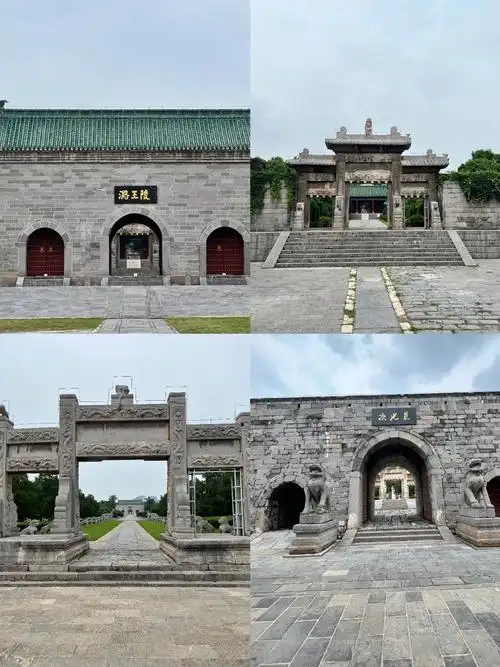 Constructed beginning in 1615 during the late Ming Dynasty, the mausoleum was built for Zhu Yiliu, the only full brother of Emperor Wanli. Such was the emperor's affection that the prince's tomb was lavishly designed to mirror Beijing's imperial Dingling, complete with an expanded spirit way and a sprawling 400-mu complex. Listed among China's fourth batch of nationally protected monuments and placed on the tentative UNESCO list for Imperial Mausoleums of the Ming and Qing Dynasties, it offers scholars and travelers alike a remarkable window into the final, extravagant chapter of imperial China before the dynasty's collapse in 1644.
The complex is a masterpiece of stone architecture, almost entirely constructed from bluestone and white marble. Its imposing ten-meter gatehouse features nine rows of nine bronze door studs—a decorative scheme traditionally reserved for the emperor himself. Inside, the ceremonial halls employ a remarkable "beamless vault" technique, using arched stone ceilings rather than timber, an innovation that has protected the structures from earthquakes and decay for over four centuries. This daring engineering approach recalls the Roman Pantheon's use of solid masonry vaults, showcasing ancient building ingenuity on the opposite side of the world.
The spirit way alone justifies the visit, with sixteen pairs of stone guardian animals and officials—double the standard number for a prince—including magnificently carved qilin, lions, camels, and elephants, alongside two pairs of civil officials leading horses. After more than 400 years, the crisp, lifelike details still astonish visitors. Equally fascinating is the tomb of Consort Zhao, the prince's second wife, whose underground palace spans 230 square meters—larger than her husband's 180-square-meter burial chamber. This singular violation of the Confucian rule that "a consort may not exceed her lord" reflects Emperor Wanli's extraordinary indulgence toward his brother's favored companion, offering a poignant glimpse into the personal politics of the Ming court.
For practical planning, expect an entry fee of around 40–50 RMB, with half-price discounts for students and seniors. Hours run from 8:00 to 17:30 in peak season, slightly shorter in winter. Photography is prohibited inside the underground palace but permitted throughout the exterior grounds and spirit way. The complex has no on-site dining, so bring water and snacks, and wear sturdy flat shoes for the bluestone paths, which demand a two- to three-hour walk.
Reach the site by car or ride-hailing app, as public buses are infrequent and time-consuming; parking is available at the entrance. English-language tours are not regularly offered, so download a translation app in advance or arrange an English-speaking guide through your hotel. Arrive at the 8:30 opening to enjoy cooler morning light and softer shadows on the stonework, and consider combining your visit with a half-day excursion into the dramatic Taihang Mountain landscapes nearby for a fuller cultural and natural experience.
Constructed beginning in 1615 during the late Ming Dynasty, the mausoleum was built for Zhu Yiliu, the only full brother of Emperor Wanli. Such was the emperor's affection that the prince's tomb was lavishly designed to mirror Beijing's imperial Dingling, complete with an expanded spirit way and a sprawling 400-mu complex. Listed among China's fourth batch of nationally protected monuments and placed on the tentative UNESCO list for Imperial Mausoleums of the Ming and Qing Dynasties, it offers scholars and travelers alike a remarkable window into the final, extravagant chapter of imperial China before the dynasty's collapse in 1644.
The complex is a masterpiece of stone architecture, almost entirely constructed from bluestone and white marble. Its imposing ten-meter gatehouse features nine rows of nine bronze door studs—a decorative scheme traditionally reserved for the emperor himself. Inside, the ceremonial halls employ a remarkable "beamless vault" technique, using arched stone ceilings rather than timber, an innovation that has protected the structures from earthquakes and decay for over four centuries. This daring engineering approach recalls the Roman Pantheon's use of solid masonry vaults, showcasing ancient building ingenuity on the opposite side of the world.
The spirit way alone justifies the visit, with sixteen pairs of stone guardian animals and officials—double the standard number for a prince—including magnificently carved qilin, lions, camels, and elephants, alongside two pairs of civil officials leading horses. After more than 400 years, the crisp, lifelike details still astonish visitors. Equally fascinating is the tomb of Consort Zhao, the prince's second wife, whose underground palace spans 230 square meters—larger than her husband's 180-square-meter burial chamber. This singular violation of the Confucian rule that "a consort may not exceed her lord" reflects Emperor Wanli's extraordinary indulgence toward his brother's favored companion, offering a poignant glimpse into the personal politics of the Ming court.
For practical planning, expect an entry fee of around 40–50 RMB, with half-price discounts for students and seniors. Hours run from 8:00 to 17:30 in peak season, slightly shorter in winter. Photography is prohibited inside the underground palace but permitted throughout the exterior grounds and spirit way. The complex has no on-site dining, so bring water and snacks, and wear sturdy flat shoes for the bluestone paths, which demand a two- to three-hour walk.
Reach the site by car or ride-hailing app, as public buses are infrequent and time-consuming; parking is available at the entrance. English-language tours are not regularly offered, so download a translation app in advance or arrange an English-speaking guide through your hotel. Arrive at the 8:30 opening to enjoy cooler morning light and softer shadows on the stonework, and consider combining your visit with a half-day excursion into the dramatic Taihang Mountain landscapes nearby for a fuller cultural and natural experience.