Shuangdong Ancient Architecture Complex
⭐ 4.00
Shuangdong Town, Hanjiang District, Yangzhou City, Jiangsu Province, China
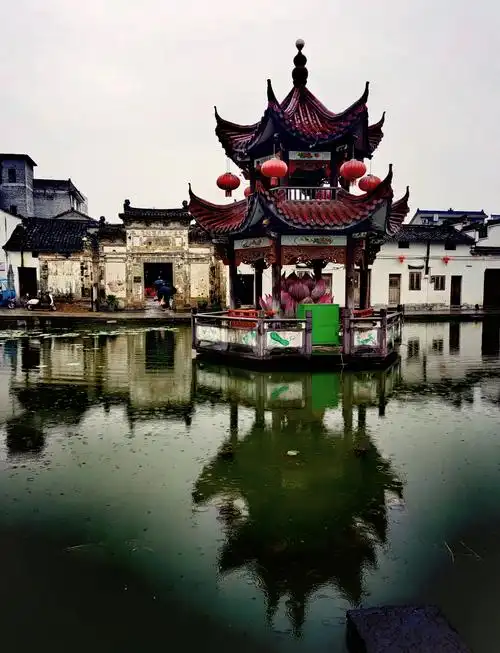 Yangzhou rose to wealth as the hub of China's salt trade and a key port on the Grand Canal—now a UNESCO World Heritage site and the world's longest artificial waterway, comparable in ambition to the Roman aqueducts. By the Ming and Qing dynasties (14th–19th centuries), the city had become one of China's wealthiest commercial centers, where salt merchants—often likened to the Medici of Florence—built mansions rivaling European noble palaces. The Shuangdong district crystallized in the Tang dynasty and reached its current form in the 1500s, surviving wars and modernization remarkably intact.
The district's aesthetic is classic Jiangnan elegance: gray brick walls, charcoal-tile roofs topped with distinctive horse-head gables, and mortared cobblestone streets. Side lanes branch off the main arteries in a fishbone configuration—a layout that will feel familiar to anyone who has wandered Venice or the medieval lanes of Carcassonne. The undisputed crown jewel is Ge Garden, where a single compound contains four rockeries representing the four seasons, each built with different stones—an artistic tour de force with no real parallel in Western garden design.
Around Ge Garden, smaller salt-merchant residences such as Wang Xiaoyuan, Yipu, and Hu Garden reveal the intimate scale of Yangzhou's merchant courtyards. Compact family homes unfold into a series of pavilions, verandas, and miniature rockeries. Their carved brick and woodwork rivals the finest European Rococo interiors for craftsmanship, if not for scale. The Tang-era city-wall fragment at Dongmen offers a literal cross-section of history, with Song and Ming foundations stacked beneath one's feet—a Pompeii-like archaeological time capsule in the heart of a bustling city.
Unlike a sealed museum district, Shuangdong remains a living neighborhood where locals hang laundry between Ming-era walls and the air still carries the cadence of Yangzhou storytelling (pinghua) and Yang opera. The thousand-year-old brand Xie Fuchun still sells traditional cosmetics on the main street, and during festivals lantern fairs and puppet shows transform the lanes into a stage. Visitors increasingly rent Hanfu robes for atmospheric photos, an experience that recalls a Renaissance Venice Carnival pageant set in 18th-century China.
The public streets are open free around the clock, but individual sites charge admission (Ge Garden about ¥45 / US$6). Most shops and attractions operate 8:30 AM to 5:30 PM, with some extending to 9 PM. Reach the district via Bus 25 to the Dongguan Gudu stop, or take the Old Town Mini-Bus Line 1 to Dongquanmen. From Yangzhou East High-Speed Rail Station, a taxi takes around 30 minutes to reach the historic core.
Arrive before 8 AM or after 5 PM to escape crowds and summer heat. At dusk, lanterns flicker on above the nearby Grand Canal—arguably the most romantic scene in the city, comparable to a Venetian evening. A recommended route: Dongmen ruins → Ge Garden → wander side alleys → sample snacks at old-name shops → finish with a quiet coffee on Dongquanmen. Wear flat non-slip shoes: the cobblestones are uneven and unforgiving. Skip overpriced main-street souvenirs; the best Huaiyang dumplings hide down side lanes.
Yangzhou rose to wealth as the hub of China's salt trade and a key port on the Grand Canal—now a UNESCO World Heritage site and the world's longest artificial waterway, comparable in ambition to the Roman aqueducts. By the Ming and Qing dynasties (14th–19th centuries), the city had become one of China's wealthiest commercial centers, where salt merchants—often likened to the Medici of Florence—built mansions rivaling European noble palaces. The Shuangdong district crystallized in the Tang dynasty and reached its current form in the 1500s, surviving wars and modernization remarkably intact.
The district's aesthetic is classic Jiangnan elegance: gray brick walls, charcoal-tile roofs topped with distinctive horse-head gables, and mortared cobblestone streets. Side lanes branch off the main arteries in a fishbone configuration—a layout that will feel familiar to anyone who has wandered Venice or the medieval lanes of Carcassonne. The undisputed crown jewel is Ge Garden, where a single compound contains four rockeries representing the four seasons, each built with different stones—an artistic tour de force with no real parallel in Western garden design.
Around Ge Garden, smaller salt-merchant residences such as Wang Xiaoyuan, Yipu, and Hu Garden reveal the intimate scale of Yangzhou's merchant courtyards. Compact family homes unfold into a series of pavilions, verandas, and miniature rockeries. Their carved brick and woodwork rivals the finest European Rococo interiors for craftsmanship, if not for scale. The Tang-era city-wall fragment at Dongmen offers a literal cross-section of history, with Song and Ming foundations stacked beneath one's feet—a Pompeii-like archaeological time capsule in the heart of a bustling city.
Unlike a sealed museum district, Shuangdong remains a living neighborhood where locals hang laundry between Ming-era walls and the air still carries the cadence of Yangzhou storytelling (pinghua) and Yang opera. The thousand-year-old brand Xie Fuchun still sells traditional cosmetics on the main street, and during festivals lantern fairs and puppet shows transform the lanes into a stage. Visitors increasingly rent Hanfu robes for atmospheric photos, an experience that recalls a Renaissance Venice Carnival pageant set in 18th-century China.
The public streets are open free around the clock, but individual sites charge admission (Ge Garden about ¥45 / US$6). Most shops and attractions operate 8:30 AM to 5:30 PM, with some extending to 9 PM. Reach the district via Bus 25 to the Dongguan Gudu stop, or take the Old Town Mini-Bus Line 1 to Dongquanmen. From Yangzhou East High-Speed Rail Station, a taxi takes around 30 minutes to reach the historic core.
Arrive before 8 AM or after 5 PM to escape crowds and summer heat. At dusk, lanterns flicker on above the nearby Grand Canal—arguably the most romantic scene in the city, comparable to a Venetian evening. A recommended route: Dongmen ruins → Ge Garden → wander side alleys → sample snacks at old-name shops → finish with a quiet coffee on Dongquanmen. Wear flat non-slip shoes: the cobblestones are uneven and unforgiving. Skip overpriced main-street souvenirs; the best Huaiyang dumplings hide down side lanes.