China Lacquerware Museum
⭐ 4.60
Lacquerware Museum, Guangling District, Yangzhou City, Jiangsu Province, China
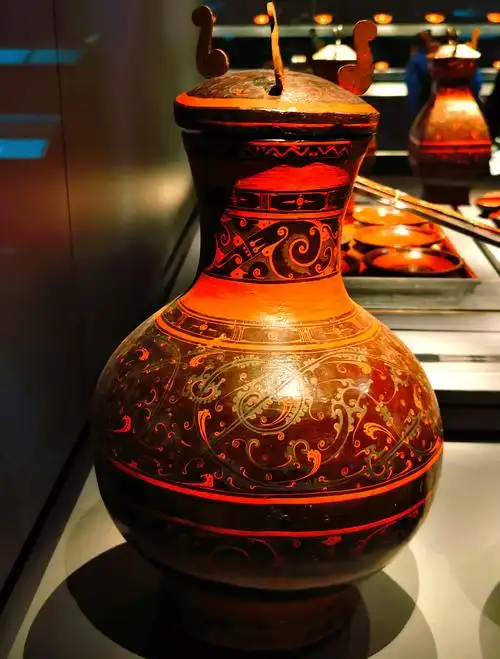 Yangzhou's lacquerware tradition stretches back over two millennia to the Warring States period, flourishing through the cosmopolitan Tang and Song dynasties before reaching its zenith under the Ming and Qing. As a key node on the Grand Canal—itself a UNESCO World Heritage Site since 2014—Yangzhou served as a meeting point for imperial craftsmen, southern sea traders bringing precious mother-of-pearl shells, and literati connoisseurs. The signature "ten supreme techniques," including dotted mother-of-pearl inlay, carved cinnabar lacquer, and gemstone mosaic, place Yangzhou alongside Beijing's carved lacquer and Fuzhou's bodiless lacquerware as one of China's "Three Great Lacquerware" traditions. Comparable in significance to how European royal courts once patronized Sèvres porcelain or Venetian glassblowing, this craft represents national intangible heritage of the highest order.
The Intangible Cultural Heritage Treasure Hall, opened in January 2024 by the historic Yangzhou Lacquerware Factory, is the authoritative showcase for the craft. Its undisputed centerpiece is the three-meter-tall "Panorama of Rivers and Mountains," a breathtaking scroll where millions of slivers of mother-of-pearl—each thinner than a human hair—are painstakingly inlaid to form an entire landscape. The effect echoes the jewel-encrusted brilliance of medieval European reliquaries or Fabergé eggs. Also on display are monumental carved-cinnabar "Peace Ode" screens, Ming-dynasty carved lacquer masterpieces, and jade-inlaid vessels, each demonstrating the meticulous "Yangzhou Craftsmanship" synonymous with refinement and visual poetry.
The Treasure Hall sits within the North Moat Cultural Tourism District (near 10 Yanfu East Road), part of a sprawling "five-museum complex" that blends traditional gallery layouts with digital multimedia interpretation. Its design subtly evokes classical Chinese garden architecture—pavilions, courtyards, water features—while incorporating modern lighting that protects delicate lacquer surfaces. Across the canal at 12 Matai Road, the Lacquerware Art Experience Hall offers a striking contrast: a sleek, contemporary space built around immersive participation rather than static contemplation. The two buildings, visible to each other across the water, are designed to be visited in sequence.
Lacquerware occupies a unique place in Chinese material culture, blending painting, sculpture, and metallurgy into a single art form. The dotted mother-of-pearl technique seen in Yangzhou has no exact Western parallel, though it shares DNA with Florentine pietra dura work in the Medici Chapel or the marquetry traditions of Boulle furniture. Beyond aesthetics, the craft embodies Confucian values of discipline and Daoist appreciation for natural materials. Witnessing master artisans at work—often demonstrating around 10 a.m. and 2 p.m.—offers rare insight into techniques changed little since the Ming dynasty, when the Yongle Emperor's court actively collected Yangzhou pieces.
The Treasure Hall is free but requires advance reservation; closed Mondays, with two to three hours recommended for a thorough visit. The Experience Hall's admission varies, and hands-on workshops—painting, coloring, basic inlay—should be booked one day ahead; allow one to two hours there. Plan accordingly: mornings at the Treasure Hall for contemplative viewing, afternoons across the river for active participation. Flash photography and tripods are prohibited throughout; some special exhibitions may ban all photography. Both venues typically open from 9 a.m., but artisan demonstrations occur at 10 a.m. and 2 p.m.
This twin-venue arrangement reflects a growing museum philosophy: combining conservation with creative participation, much like Tate Modern's Turbine Hall installations paired with Tate Britain's heritage galleries. For Western travelers familiar with the Asian collections of London's V&A or Paris's Guimet, the Yangzhou experience offers something rarer—the chance to see working masters of an unbroken two-thousand-year craft tradition in the very city where it flourished. Combine the visit with the adjacent historic Dongguan Street and a Grand Canal cruise to grasp why Yangzhou, for centuries, ranked among the world's wealthiest and most cultured trading hubs, often likened to Venice or Bruges in its heyday.
Yangzhou's lacquerware tradition stretches back over two millennia to the Warring States period, flourishing through the cosmopolitan Tang and Song dynasties before reaching its zenith under the Ming and Qing. As a key node on the Grand Canal—itself a UNESCO World Heritage Site since 2014—Yangzhou served as a meeting point for imperial craftsmen, southern sea traders bringing precious mother-of-pearl shells, and literati connoisseurs. The signature "ten supreme techniques," including dotted mother-of-pearl inlay, carved cinnabar lacquer, and gemstone mosaic, place Yangzhou alongside Beijing's carved lacquer and Fuzhou's bodiless lacquerware as one of China's "Three Great Lacquerware" traditions. Comparable in significance to how European royal courts once patronized Sèvres porcelain or Venetian glassblowing, this craft represents national intangible heritage of the highest order.
The Intangible Cultural Heritage Treasure Hall, opened in January 2024 by the historic Yangzhou Lacquerware Factory, is the authoritative showcase for the craft. Its undisputed centerpiece is the three-meter-tall "Panorama of Rivers and Mountains," a breathtaking scroll where millions of slivers of mother-of-pearl—each thinner than a human hair—are painstakingly inlaid to form an entire landscape. The effect echoes the jewel-encrusted brilliance of medieval European reliquaries or Fabergé eggs. Also on display are monumental carved-cinnabar "Peace Ode" screens, Ming-dynasty carved lacquer masterpieces, and jade-inlaid vessels, each demonstrating the meticulous "Yangzhou Craftsmanship" synonymous with refinement and visual poetry.
The Treasure Hall sits within the North Moat Cultural Tourism District (near 10 Yanfu East Road), part of a sprawling "five-museum complex" that blends traditional gallery layouts with digital multimedia interpretation. Its design subtly evokes classical Chinese garden architecture—pavilions, courtyards, water features—while incorporating modern lighting that protects delicate lacquer surfaces. Across the canal at 12 Matai Road, the Lacquerware Art Experience Hall offers a striking contrast: a sleek, contemporary space built around immersive participation rather than static contemplation. The two buildings, visible to each other across the water, are designed to be visited in sequence.
Lacquerware occupies a unique place in Chinese material culture, blending painting, sculpture, and metallurgy into a single art form. The dotted mother-of-pearl technique seen in Yangzhou has no exact Western parallel, though it shares DNA with Florentine pietra dura work in the Medici Chapel or the marquetry traditions of Boulle furniture. Beyond aesthetics, the craft embodies Confucian values of discipline and Daoist appreciation for natural materials. Witnessing master artisans at work—often demonstrating around 10 a.m. and 2 p.m.—offers rare insight into techniques changed little since the Ming dynasty, when the Yongle Emperor's court actively collected Yangzhou pieces.
The Treasure Hall is free but requires advance reservation; closed Mondays, with two to three hours recommended for a thorough visit. The Experience Hall's admission varies, and hands-on workshops—painting, coloring, basic inlay—should be booked one day ahead; allow one to two hours there. Plan accordingly: mornings at the Treasure Hall for contemplative viewing, afternoons across the river for active participation. Flash photography and tripods are prohibited throughout; some special exhibitions may ban all photography. Both venues typically open from 9 a.m., but artisan demonstrations occur at 10 a.m. and 2 p.m.
This twin-venue arrangement reflects a growing museum philosophy: combining conservation with creative participation, much like Tate Modern's Turbine Hall installations paired with Tate Britain's heritage galleries. For Western travelers familiar with the Asian collections of London's V&A or Paris's Guimet, the Yangzhou experience offers something rarer—the chance to see working masters of an unbroken two-thousand-year craft tradition in the very city where it flourished. Combine the visit with the adjacent historic Dongguan Street and a Grand Canal cruise to grasp why Yangzhou, for centuries, ranked among the world's wealthiest and most cultured trading hubs, often likened to Venice or Bruges in its heyday.