Wenchang Pavilion
⭐ 3.80
No. 118, Wenchang Middle Road, Guangling District, Yangzhou, Jiangsu, China
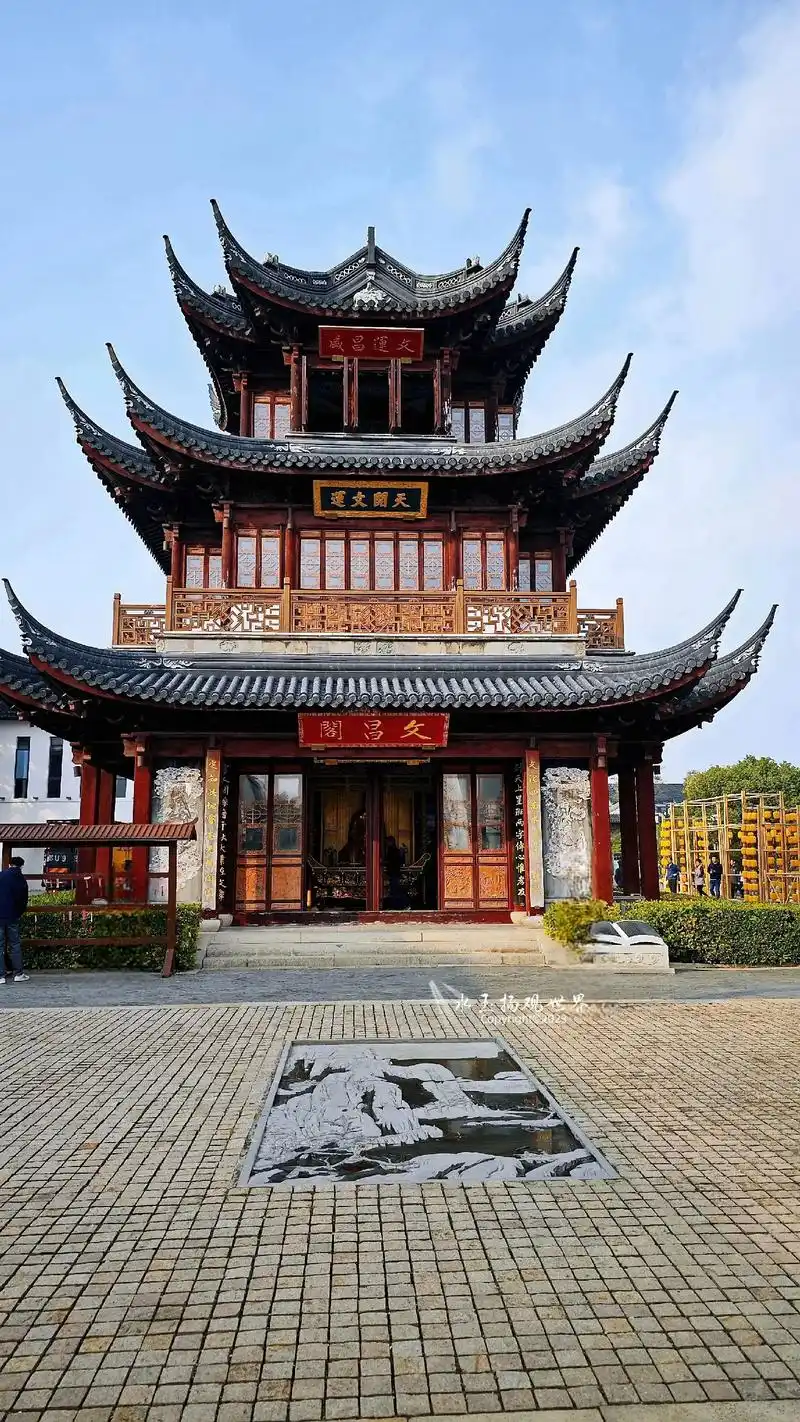 The Wenchang Pavilion dates to 1585, making it a contemporary of the late Renaissance in Europe, when Shakespeare's London was just taking shape and the Spanish Armada had yet to be defeated. It originally belonged to a sprawling Confucian academy complex dedicated to the God of Literature, who scholars prayed to before taking the brutal imperial examinations—the Chinese equivalent of a career-defining Oxford finals or a civil service exam. While the academy itself vanished long ago, this single tower survived centuries of upheaval, repaired four times during the Qing Dynasty under emperors Kangxi, Qianlong, Daoguang, and Tongzhi. It thus stands as a tangible witness to Yangzhou's enduring reverence for learning—a tradition that earned the city its nickname "Hometown of Literary Stars."
Architecturally, the pavilion is a textbook example of late Ming tower design and offers a fascinating point of comparison for Western visitors familiar with European campaniles or church spires. Its octagonal plan, triple tiered eaves, and crowning dome topped with a gourd-shaped finial strongly recall the Hall of Prayer for Good Harvests in Beijing, often likened to a stone-age megalith rendered in wood and tile. Built entirely of brick and timber, the 24-meter structure features arched openings at street level that allow traffic to flow through its base, while the upper floors carry decorative lattice windows for light and ventilation. Such a well-preserved Ming-era tower is exceptionally rare in the Jiangnan region south of the Yangtze.
Culturally, the pavilion has always been more than a building. Generations of aspiring scholars climbed here to burn incense and pray for success in the dreaded civil examinations, hoping that the literary deity might smile upon their essays. Today it functions as Yangzhou's geometric and symbolic center—a visual anchor used by locals for giving directions and a proud emblem of civic identity. Its inclusion in the UNESCO-linked Grand Canal heritage network further underscores its national significance, linking the tower to one of the world's greatest historical engineering feats.
For practical planning, visitors should know that the pavilion cannot be entered and is best appreciated from the surrounding roundabout. There is no admission fee, and the site is accessible 24 hours a day. Daytime visits reward careful observers with crisp views of the brickwork, sweeping eaves, and intricate bracket sets, while evenings from roughly 7:00 to 9:00 PM bring dramatic illumination that photographers will love. Be cautious: the roundabout is constantly active with traffic, so stand only on the designated safety zones and never step into the road for a better angle.
Most travelers spend just 10 to 20 minutes at the pavilion, which makes it an ideal quick stop before diving deeper into Yangzhou's charms. From here, the historic Dongguan Street and Dongquanmen district are an easy walk away, where you can sample morning tea at the legendary Yechun Teahouse or browse the artisan boutiques along Siwangting Road. With more time, extend northward to the celebrated Slender West Lake—a Chinese answer to Venice's romantic canals—and the exquisite classical gardens of He Garden and Ge Garden, both UNESCO-listed treasures. Combining the pavilion with these nearby sites offers a satisfying half-day immersion into Yangzhou's layered history, refined culture, and lively street life.
The Wenchang Pavilion dates to 1585, making it a contemporary of the late Renaissance in Europe, when Shakespeare's London was just taking shape and the Spanish Armada had yet to be defeated. It originally belonged to a sprawling Confucian academy complex dedicated to the God of Literature, who scholars prayed to before taking the brutal imperial examinations—the Chinese equivalent of a career-defining Oxford finals or a civil service exam. While the academy itself vanished long ago, this single tower survived centuries of upheaval, repaired four times during the Qing Dynasty under emperors Kangxi, Qianlong, Daoguang, and Tongzhi. It thus stands as a tangible witness to Yangzhou's enduring reverence for learning—a tradition that earned the city its nickname "Hometown of Literary Stars."
Architecturally, the pavilion is a textbook example of late Ming tower design and offers a fascinating point of comparison for Western visitors familiar with European campaniles or church spires. Its octagonal plan, triple tiered eaves, and crowning dome topped with a gourd-shaped finial strongly recall the Hall of Prayer for Good Harvests in Beijing, often likened to a stone-age megalith rendered in wood and tile. Built entirely of brick and timber, the 24-meter structure features arched openings at street level that allow traffic to flow through its base, while the upper floors carry decorative lattice windows for light and ventilation. Such a well-preserved Ming-era tower is exceptionally rare in the Jiangnan region south of the Yangtze.
Culturally, the pavilion has always been more than a building. Generations of aspiring scholars climbed here to burn incense and pray for success in the dreaded civil examinations, hoping that the literary deity might smile upon their essays. Today it functions as Yangzhou's geometric and symbolic center—a visual anchor used by locals for giving directions and a proud emblem of civic identity. Its inclusion in the UNESCO-linked Grand Canal heritage network further underscores its national significance, linking the tower to one of the world's greatest historical engineering feats.
For practical planning, visitors should know that the pavilion cannot be entered and is best appreciated from the surrounding roundabout. There is no admission fee, and the site is accessible 24 hours a day. Daytime visits reward careful observers with crisp views of the brickwork, sweeping eaves, and intricate bracket sets, while evenings from roughly 7:00 to 9:00 PM bring dramatic illumination that photographers will love. Be cautious: the roundabout is constantly active with traffic, so stand only on the designated safety zones and never step into the road for a better angle.
Most travelers spend just 10 to 20 minutes at the pavilion, which makes it an ideal quick stop before diving deeper into Yangzhou's charms. From here, the historic Dongguan Street and Dongquanmen district are an easy walk away, where you can sample morning tea at the legendary Yechun Teahouse or browse the artisan boutiques along Siwangting Road. With more time, extend northward to the celebrated Slender West Lake—a Chinese answer to Venice's romantic canals—and the exquisite classical gardens of He Garden and Ge Garden, both UNESCO-listed treasures. Combining the pavilion with these nearby sites offers a satisfying half-day immersion into Yangzhou's layered history, refined culture, and lively street life.