Yangzhou Eight Eccentrics Memorial Hall
⭐ 4.30
No. 158, Siwangting Road, Guangling District, Yangzhou, Jiangsu, China
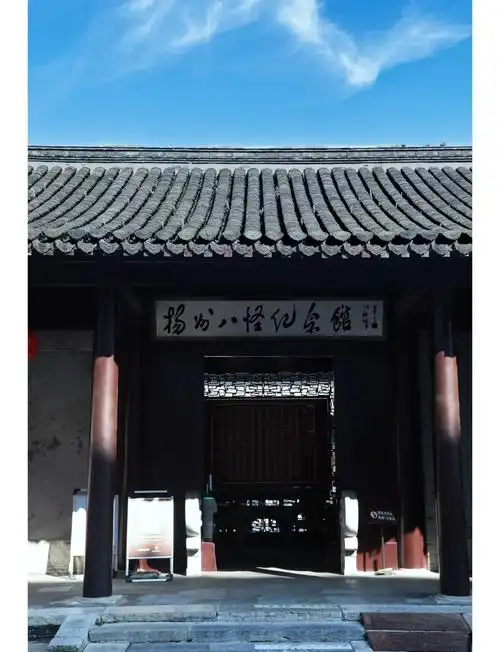 The hall occupies what was once Xifang Temple, or Western Temple, founded during the late Ming Dynasty around the late 16th century—a period when European Renaissance masters were still working in Italy and Shakespeare was beginning his career in England. The site's main hall is thus roughly contemporary with Elizabethan England, though its surviving timber structure predates most European wood-framed buildings of comparable scale still standing today. Designated a national key cultural relic protection site, the hall ranks among Yangzhou's most treasured architectural survivors and a quiet witness to four centuries of change.
The Main Hall, or Daxiong Baodian, is a striking example of Ming-era religious architecture built with an exposed-beam construction method that reveals the timber skeleton overhead. Its columns and beams are crafted from nanmu (Phoebe zhennan), a fragrant wood so prized in imperial China that it was reserved for palace halls and the most sacred temples. The building retains traces of original Ming polychrome painting and stands as one of the oldest surviving nanmu structures in the region—a fragrant counterpart to Europe's great oak-timbered Gothic cathedrals.
The museum's heart is its tribute to the Yangzhou Eight Eccentrics, a loose brotherhood of 18th-century Qing Dynasty painters who rejected the rigid canons of the official Qing academy in favor of raw, personal expression. Where orthodox painters sought polished perfection, these artists embraced strange compositions, exuberant calligraphy, and unconventional personalities. Their revered leader, the elderly recluse Jin Nong, painted bamboo and plum blossoms with a childlike directness that anticipates European modernism. The artists are honored today through fifteen life-size sculptures and detailed biographical panels.
A highlight is the recreated studio of Jin Nong himself, restored to resemble a temple abbot's quarters with separate painting room, bedroom, and parlor—offering an intimate glimpse of how this impoverished but devoted artist worked into old age. Behind the hall, a courtyard garden unfolds around a venerable 800-year-old ginkgo tree, with bamboo-shaded pavilions, the Crane Pool, and a stele gallery featuring the celebrated inscription "It is rare to be confused"—a phrase as cherished in China as "Carpe Diem" is in the West.
The museum opens daily from 8:30 AM to 5:00 PM, with last entry at 4:30 PM. Tickets run about 22 yuan in peak season and 15 yuan in low season, remarkably affordable by Western museum standards. Allow one to one and a half hours to appreciate the site fully. Photography is generally prohibited inside the historic hall, especially flash photography, to protect the precious Ming-era paintings. Those seeking authentic masterworks should also visit the Yangzhou Twin Museum nearby.
Just fifty meters outside the entrance stands a Tang Dynasty scholar tree, said to be the very specimen that inspired the famous Tang tale "A Dream of the Southern Branch"—China's own "Rip Van Winkle" parable. Pairing the visit with a stroll through Yangzhou's old quarter reveals why this once-thriving salt-trade hub attracted such a remarkable gathering of artistic nonconformists. For travelers drawn to the quieter, more contemplative side of Chinese culture, this hidden gem offers an intimate encounter with art, history, and the slow passage of centuries.
The hall occupies what was once Xifang Temple, or Western Temple, founded during the late Ming Dynasty around the late 16th century—a period when European Renaissance masters were still working in Italy and Shakespeare was beginning his career in England. The site's main hall is thus roughly contemporary with Elizabethan England, though its surviving timber structure predates most European wood-framed buildings of comparable scale still standing today. Designated a national key cultural relic protection site, the hall ranks among Yangzhou's most treasured architectural survivors and a quiet witness to four centuries of change.
The Main Hall, or Daxiong Baodian, is a striking example of Ming-era religious architecture built with an exposed-beam construction method that reveals the timber skeleton overhead. Its columns and beams are crafted from nanmu (Phoebe zhennan), a fragrant wood so prized in imperial China that it was reserved for palace halls and the most sacred temples. The building retains traces of original Ming polychrome painting and stands as one of the oldest surviving nanmu structures in the region—a fragrant counterpart to Europe's great oak-timbered Gothic cathedrals.
The museum's heart is its tribute to the Yangzhou Eight Eccentrics, a loose brotherhood of 18th-century Qing Dynasty painters who rejected the rigid canons of the official Qing academy in favor of raw, personal expression. Where orthodox painters sought polished perfection, these artists embraced strange compositions, exuberant calligraphy, and unconventional personalities. Their revered leader, the elderly recluse Jin Nong, painted bamboo and plum blossoms with a childlike directness that anticipates European modernism. The artists are honored today through fifteen life-size sculptures and detailed biographical panels.
A highlight is the recreated studio of Jin Nong himself, restored to resemble a temple abbot's quarters with separate painting room, bedroom, and parlor—offering an intimate glimpse of how this impoverished but devoted artist worked into old age. Behind the hall, a courtyard garden unfolds around a venerable 800-year-old ginkgo tree, with bamboo-shaded pavilions, the Crane Pool, and a stele gallery featuring the celebrated inscription "It is rare to be confused"—a phrase as cherished in China as "Carpe Diem" is in the West.
The museum opens daily from 8:30 AM to 5:00 PM, with last entry at 4:30 PM. Tickets run about 22 yuan in peak season and 15 yuan in low season, remarkably affordable by Western museum standards. Allow one to one and a half hours to appreciate the site fully. Photography is generally prohibited inside the historic hall, especially flash photography, to protect the precious Ming-era paintings. Those seeking authentic masterworks should also visit the Yangzhou Twin Museum nearby.
Just fifty meters outside the entrance stands a Tang Dynasty scholar tree, said to be the very specimen that inspired the famous Tang tale "A Dream of the Southern Branch"—China's own "Rip Van Winkle" parable. Pairing the visit with a stroll through Yangzhou's old quarter reveals why this once-thriving salt-trade hub attracted such a remarkable gathering of artistic nonconformists. For travelers drawn to the quieter, more contemplative side of Chinese culture, this hidden gem offers an intimate encounter with art, history, and the slow passage of centuries.