Ancient Canal
⭐ 4.40
Ancient Canal Scenic Area, Hanjiang District, Yangzhou City, Jiangsu Province, China
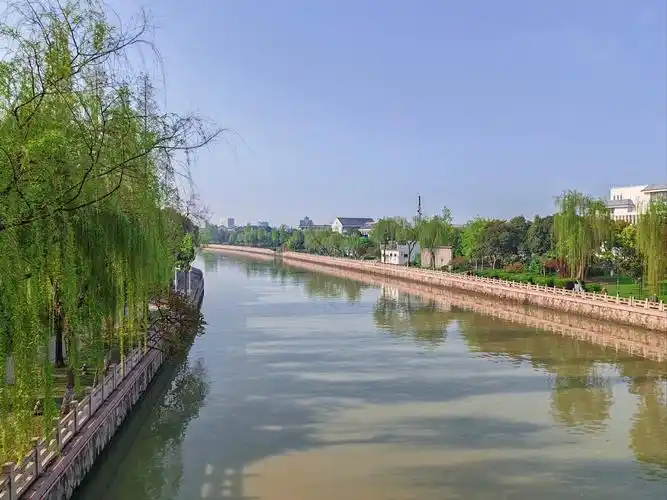 The Yangzhou segment holds the distinction of being the Grand Canal's founding stretch. In 486 BCE—nearly a century before Rome completed its first aqueduct—King Fuchai of Wu ordered laborers to dig the Han Channel, connecting the Yangtze to the Huai River. When Emperor Yang of Sui unified the system seven centuries later, he created a 1,700-kilometer waterway linking Beijing to Hangzhou, surpassing anything Europe would build until the Industrial Age. Two and a half millennia of continuous navigation make this the world's oldest and longest artificial waterway still in use, earning UNESCO World Heritage status in 2014 alongside Venice's lagoon landscapes.
Along the 30-kilometer urban course, monuments crowd the banks like pages of an open history book. The Tang-dynasty Dongguan Ferry, where tribute grain once moved southward, evokes Venice's Rialto in commercial importance. Nearby, the slender Wenfeng Pagoda rises above tiled rooftops, while Liberation Bridge carries modern traffic over silt-dark water. The Ming-era "Three Bends" demonstrate hydraulic genius comparable to Dutch land reclamation—engineered flood channels still regulating flow today. Salt-merchant compounds with carved gate-towers and moon-shaped doorways recall trading houses in Bruges or Lübeck, while garden walls dipping into the water mirror Suzhou's classical charm.
For centuries, Yangzhou thrived as the Grand Canal's wealthiest entrepôt, its fortunes tied to the salt monopoly that produced merchant princes wealthier than Renaissance bankers. Their philanthropy shaped the city's gardens, theaters, and cuisine. Poet Li Bai caroused here in the Tang era; Emperor Qianlong made repeated inspection tours, treating Yangzhou as China's Versailles-on-Water. The canal carried not just grain but southern silks northward and northern ideas southward, making Yangzhou a cultural crucible where Mandarin opera, Huaiyang cuisine, and merchant arts all flourished. Intangible heritage—Yangzhou opera, puppet theater, and Qing-dynasty ballad singing—still echoes along the towpaths.
Evening is the magic hour. Painted pleasure boats depart between 19:00 and 21:00, with standard 45-to-90-minute cruises priced at 60–100 RMB and deluxe versions featuring holographic performances and live actors at roughly 160 RMB. Reserve ahead and request the upper deck of a double-decker for unobstructed views. The award-winning China Grand Canal Museum, set within the Three Bends scenic area, is free but requires advance booking—allow two to three hours. Daytime visitors can walk or cycle the free riverside promenades, which link the museum to the historic Dongguan Street pedestrian quarter.
Yangzhou Taizhou International Airport offers direct connections to major Chinese cities; taxis reach most attractions within 20–40 minutes. Within town, ride-hailing is cheap and reliable. Summer weekends bring crowds—target weekday afternoons for a calmer museum visit. Wear comfortable shoes for cobbled Dongguan Street, and bring a light jacket for evening river breezes. The museum's English signage is good, though boat tour commentary may be Mandarin-only; download a translation app or book a guided excursion through your hotel.
A perfect day begins at 14:00 with the Grand Canal Museum, followed by tea and snacks on ancient Dongguan Street. Climb Dongguan Gate Tower as the sun dips, then board the night cruise as lanterns flicker on. Travelers with extra time can detour south to Guazhou Ferry, where the Yangtze once met the canal, or book a "living heritage" cruise featuring Qing opera and puppetry. Few places compress 2,500 years of Chinese commerce, poetry, and engineering into one photogenic waterway—Yangzhou is where the Middle Kingdom's liquid spine still pulses with life.
The Yangzhou segment holds the distinction of being the Grand Canal's founding stretch. In 486 BCE—nearly a century before Rome completed its first aqueduct—King Fuchai of Wu ordered laborers to dig the Han Channel, connecting the Yangtze to the Huai River. When Emperor Yang of Sui unified the system seven centuries later, he created a 1,700-kilometer waterway linking Beijing to Hangzhou, surpassing anything Europe would build until the Industrial Age. Two and a half millennia of continuous navigation make this the world's oldest and longest artificial waterway still in use, earning UNESCO World Heritage status in 2014 alongside Venice's lagoon landscapes.
Along the 30-kilometer urban course, monuments crowd the banks like pages of an open history book. The Tang-dynasty Dongguan Ferry, where tribute grain once moved southward, evokes Venice's Rialto in commercial importance. Nearby, the slender Wenfeng Pagoda rises above tiled rooftops, while Liberation Bridge carries modern traffic over silt-dark water. The Ming-era "Three Bends" demonstrate hydraulic genius comparable to Dutch land reclamation—engineered flood channels still regulating flow today. Salt-merchant compounds with carved gate-towers and moon-shaped doorways recall trading houses in Bruges or Lübeck, while garden walls dipping into the water mirror Suzhou's classical charm.
For centuries, Yangzhou thrived as the Grand Canal's wealthiest entrepôt, its fortunes tied to the salt monopoly that produced merchant princes wealthier than Renaissance bankers. Their philanthropy shaped the city's gardens, theaters, and cuisine. Poet Li Bai caroused here in the Tang era; Emperor Qianlong made repeated inspection tours, treating Yangzhou as China's Versailles-on-Water. The canal carried not just grain but southern silks northward and northern ideas southward, making Yangzhou a cultural crucible where Mandarin opera, Huaiyang cuisine, and merchant arts all flourished. Intangible heritage—Yangzhou opera, puppet theater, and Qing-dynasty ballad singing—still echoes along the towpaths.
Evening is the magic hour. Painted pleasure boats depart between 19:00 and 21:00, with standard 45-to-90-minute cruises priced at 60–100 RMB and deluxe versions featuring holographic performances and live actors at roughly 160 RMB. Reserve ahead and request the upper deck of a double-decker for unobstructed views. The award-winning China Grand Canal Museum, set within the Three Bends scenic area, is free but requires advance booking—allow two to three hours. Daytime visitors can walk or cycle the free riverside promenades, which link the museum to the historic Dongguan Street pedestrian quarter.
Yangzhou Taizhou International Airport offers direct connections to major Chinese cities; taxis reach most attractions within 20–40 minutes. Within town, ride-hailing is cheap and reliable. Summer weekends bring crowds—target weekday afternoons for a calmer museum visit. Wear comfortable shoes for cobbled Dongguan Street, and bring a light jacket for evening river breezes. The museum's English signage is good, though boat tour commentary may be Mandarin-only; download a translation app or book a guided excursion through your hotel.
A perfect day begins at 14:00 with the Grand Canal Museum, followed by tea and snacks on ancient Dongguan Street. Climb Dongguan Gate Tower as the sun dips, then board the night cruise as lanterns flicker on. Travelers with extra time can detour south to Guazhou Ferry, where the Yangtze once met the canal, or book a "living heritage" cruise featuring Qing opera and puppetry. Few places compress 2,500 years of Chinese commerce, poetry, and engineering into one photogenic waterway—Yangzhou is where the Middle Kingdom's liquid spine still pulses with life.