Ge Garden
⭐ 4.70
No. 1, Geyuan Road, Dongguan Subdistrict, Guangling District, Yangzhou City, Jiangsu Province, China
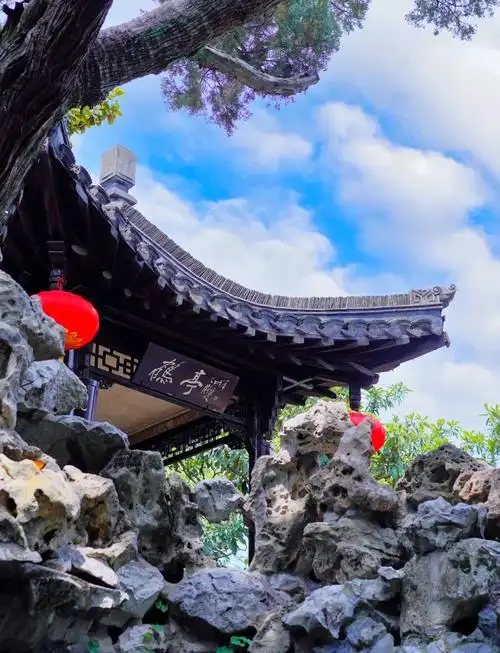 Step into Ge Garden and you travel back to the early 1800s, when Yangzhou ranked alongside Venice and Amsterdam as one of the world's great trading capitals. Vast fortunes flowed from the government's salt monopoly, and merchants like Huang Zhijun—whose wealth rivaled contemporary European banking dynasties—lavished fortunes on private retreats. Construction of Ge Garden spanned more than a decade during the reigns of Emperors Jiaqing and Daoguang, transforming an earlier property called Shouzhi Garden into what scholars now consider the finest surviving example of Yangzhou merchant园林 culture. Compare its social function to a Palladian villa in the Veneto: both signal aristocratic taste through landscape as much as architecture.
The layout follows a classic Chinese "residence-before-garden" arrangement. The southern section presents the merchant's three-courtyard mansion, a warren of finely carved halls and reception rooms whose brick and wood reliefs encode auspicious motifs such as the "Five Bats Granting Longevity." Beyond lies the garden proper: a sanctuary of meandering paths, elegant pavilions, and—most striking—dense bamboo groves. Seventy-plus varieties flourish here, from the slender "Filial Piety Bamboo" to rare square-stemmed specimens, justifying the garden's name and echoing Su Dongpo's famous verse: "Better a meal without meat than a home without bamboo."
The garden's undisputed masterpiece is the "Four Seasons Rockery," a tour de force of piled-stone sculpture that has been called the only example of its kind in China. Spring is evoked by slender笋石 (spear-shaped stones) thrusting from bamboo groves like fresh shoots after rain; Summer rises in mounds of pitted Taihu limestone, their hollows suggesting surging clouds and ocean waves; Autumn erupts in towering cliffs of tawny yellow stone, layered to recall a mountain ablaze with foliage; Winter is conjured from white Xuan stones dusted like snow, pierced by a clever "Wind-Sound Cave" where air whistles to mimic the north wind. The four compositions transition seamlessly, a poetic device reminiscent of how Versailles' gardens translate absolute monarchy into landscape geometry.
Practicalities make a visit remarkably easy. Ge Garden sits at 10 Yanfu East Road in Guangling District, open 7:15 a.m. to 6:00 p.m. from March through November (slightly reduced hours in winter). Admission runs 45–48 yuan, free for visitors over 65. Tourist buses 1 and 2, plus route 61, stop at Ge Garden Station; the north gate offers limited parking, but the south gate is the more atmospheric entrance. Allow 90 minutes to two hours. Hiring a guide or renting an audio tour is strongly recommended—without explanation, the rockery's symbolism is easily missed. Early morning, ideally around 7:30, brings soft light, cool air, and thin crowds.
For an ideal day, enter through the north gate and exit south, then wander directly into neighboring Dongguan Street, one of Yangzhou's oldest pedestrian thoroughfares. Snack on Huangqiao sesame biscuits, sample traditional Xieguchun cosmetics, and watch artisans at work in restored Ming- and Qing-era shopfronts. Few Chinese cities preserve such a layered sense of merchant-era atmosphere; Ge Garden is the jewel at its heart, offering Western visitors an intimate, walkable encounter with the aesthetic ideals that shaped imperial China—ideals every bit as refined as those of Renaissance Italy or Mughal India, yet refreshingly unfamiliar to European eyes.
Step into Ge Garden and you travel back to the early 1800s, when Yangzhou ranked alongside Venice and Amsterdam as one of the world's great trading capitals. Vast fortunes flowed from the government's salt monopoly, and merchants like Huang Zhijun—whose wealth rivaled contemporary European banking dynasties—lavished fortunes on private retreats. Construction of Ge Garden spanned more than a decade during the reigns of Emperors Jiaqing and Daoguang, transforming an earlier property called Shouzhi Garden into what scholars now consider the finest surviving example of Yangzhou merchant园林 culture. Compare its social function to a Palladian villa in the Veneto: both signal aristocratic taste through landscape as much as architecture.
The layout follows a classic Chinese "residence-before-garden" arrangement. The southern section presents the merchant's three-courtyard mansion, a warren of finely carved halls and reception rooms whose brick and wood reliefs encode auspicious motifs such as the "Five Bats Granting Longevity." Beyond lies the garden proper: a sanctuary of meandering paths, elegant pavilions, and—most striking—dense bamboo groves. Seventy-plus varieties flourish here, from the slender "Filial Piety Bamboo" to rare square-stemmed specimens, justifying the garden's name and echoing Su Dongpo's famous verse: "Better a meal without meat than a home without bamboo."
The garden's undisputed masterpiece is the "Four Seasons Rockery," a tour de force of piled-stone sculpture that has been called the only example of its kind in China. Spring is evoked by slender笋石 (spear-shaped stones) thrusting from bamboo groves like fresh shoots after rain; Summer rises in mounds of pitted Taihu limestone, their hollows suggesting surging clouds and ocean waves; Autumn erupts in towering cliffs of tawny yellow stone, layered to recall a mountain ablaze with foliage; Winter is conjured from white Xuan stones dusted like snow, pierced by a clever "Wind-Sound Cave" where air whistles to mimic the north wind. The four compositions transition seamlessly, a poetic device reminiscent of how Versailles' gardens translate absolute monarchy into landscape geometry.
Practicalities make a visit remarkably easy. Ge Garden sits at 10 Yanfu East Road in Guangling District, open 7:15 a.m. to 6:00 p.m. from March through November (slightly reduced hours in winter). Admission runs 45–48 yuan, free for visitors over 65. Tourist buses 1 and 2, plus route 61, stop at Ge Garden Station; the north gate offers limited parking, but the south gate is the more atmospheric entrance. Allow 90 minutes to two hours. Hiring a guide or renting an audio tour is strongly recommended—without explanation, the rockery's symbolism is easily missed. Early morning, ideally around 7:30, brings soft light, cool air, and thin crowds.
For an ideal day, enter through the north gate and exit south, then wander directly into neighboring Dongguan Street, one of Yangzhou's oldest pedestrian thoroughfares. Snack on Huangqiao sesame biscuits, sample traditional Xieguchun cosmetics, and watch artisans at work in restored Ming- and Qing-era shopfronts. Few Chinese cities preserve such a layered sense of merchant-era atmosphere; Ge Garden is the jewel at its heart, offering Western visitors an intimate, walkable encounter with the aesthetic ideals that shaped imperial China—ideals every bit as refined as those of Renaissance Italy or Mughal India, yet refreshingly unfamiliar to European eyes.