Slender West Lake
⭐ 4.70
Slender West Lake Scenic Area, Hanjiang District, Yangzhou, Jiangsu, China
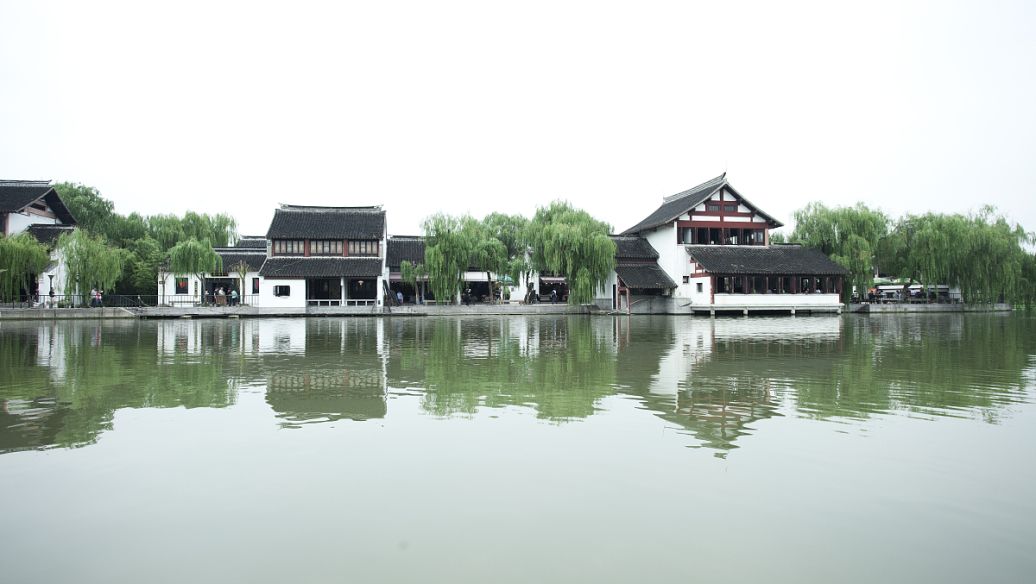 Slender West Lake's golden age coincided with the 17th–18th century heyday of Yangzhou's salt trade, when wealthy merchants competed to build the most extravagant estates along its shores—much like the merchant palaces of Bruges or Venice during their commercial peaks. The Qianlong Emperor, one of China's longest-reigning rulers, made six imperial pilgrimages here between 1751 and 1784, leaving behind royal lodges, inscribed poetry, and a lasting cultural cachet. In 2014, the lake was inscribed on the UNESCO World Heritage List as a core component of the Grand Canal, the world's largest artificial waterway, linking the site to a 1,400-year engineering legacy that rivals the Roman aqueducts in scale.
The lake's genius lies in its "borrowed scenery" tradition, where pavilions, bridges, and towers frame each other across the water in carefully choreographed vistas. The five-pavilion Wuting Bridge, with its lotus-bud rooflines and fifteen arches that capture shifting moonlight, recalls the geometric play of Versailles' fountains in miniature. The White Tower mimics Beijing's Beihai Park pagoda—local lore claims a salt merchant built it overnight from piles of salt to impress an approaching emperor. The single-arched Twenty-Four Bridge incorporates the mystical number throughout its dimensions, while the Fishing Terrace's three circular openings compose a perfect triple-frame view of Wuting Bridge and the White Tower—a technique akin to a Renaissance painting within a painting.
Literary associations permeate every corner of the lake. Tang dynasty poet Du Mu's haunting verses about the Twenty-Four Bridge beneath a bright moon have shaped Chinese romantic imagination for over a millennium. Song dynasty literary giants Ouyang Xiu and Su Shi left poetic traces here during their Yangzhou postings, adding a continuous thread of scholar-official culture. Republican-era additions like Xu Garden preserve Song dynasty "flower-and-rock" relic stones transported via the imperial barge system. The site thus layers three imperial dynasties and a merchant elite into a single landscape—comparable to how Versailles concentrates French absolutism or how Venice's palazzi encode mercantile wealth into stone and water.
The scenic area opens 7:00–18:00 during peak season, with a 100 RMB entrance fee (free for visitors over 70). Real-name reservation with a specific time slot is required—book through the official WeChat mini-program or major travel platforms before arrival. Bring your passport for ID checks and keep small cash handy. Electric carts and wheelchairs are rentable inside, though paddle boats and ornate pleasure craft offer a more atmospheric way to traverse the water. August visitors should arrive at opening time to escape midday heat; lotus blooms peak this month, creating spectacular pink reflections across the lake.
For first-time visitors, enter through the South Gate and follow the classic route: Long Causeway's Spring Willows → Xu Garden → Lesser Golden Hill → Fishing Terrace → Wuting Bridge → boat crossing to Twenty-Four Bridge → White Tower → Xichun Terrace, exiting at the North Gate in roughly three to four hours. Photography enthusiasts should position themselves at the Fishing Terrace's circular openings for the iconic "one frame, two landmarks" composition. Evening brings the "Half the Moonlight" illumination show (separate ticket)—an atmospheric way to escape summer heat while seeing the gardens glowing against the night sky, an experience that richly rewards those who linger past sunset.
Slender West Lake's golden age coincided with the 17th–18th century heyday of Yangzhou's salt trade, when wealthy merchants competed to build the most extravagant estates along its shores—much like the merchant palaces of Bruges or Venice during their commercial peaks. The Qianlong Emperor, one of China's longest-reigning rulers, made six imperial pilgrimages here between 1751 and 1784, leaving behind royal lodges, inscribed poetry, and a lasting cultural cachet. In 2014, the lake was inscribed on the UNESCO World Heritage List as a core component of the Grand Canal, the world's largest artificial waterway, linking the site to a 1,400-year engineering legacy that rivals the Roman aqueducts in scale.
The lake's genius lies in its "borrowed scenery" tradition, where pavilions, bridges, and towers frame each other across the water in carefully choreographed vistas. The five-pavilion Wuting Bridge, with its lotus-bud rooflines and fifteen arches that capture shifting moonlight, recalls the geometric play of Versailles' fountains in miniature. The White Tower mimics Beijing's Beihai Park pagoda—local lore claims a salt merchant built it overnight from piles of salt to impress an approaching emperor. The single-arched Twenty-Four Bridge incorporates the mystical number throughout its dimensions, while the Fishing Terrace's three circular openings compose a perfect triple-frame view of Wuting Bridge and the White Tower—a technique akin to a Renaissance painting within a painting.
Literary associations permeate every corner of the lake. Tang dynasty poet Du Mu's haunting verses about the Twenty-Four Bridge beneath a bright moon have shaped Chinese romantic imagination for over a millennium. Song dynasty literary giants Ouyang Xiu and Su Shi left poetic traces here during their Yangzhou postings, adding a continuous thread of scholar-official culture. Republican-era additions like Xu Garden preserve Song dynasty "flower-and-rock" relic stones transported via the imperial barge system. The site thus layers three imperial dynasties and a merchant elite into a single landscape—comparable to how Versailles concentrates French absolutism or how Venice's palazzi encode mercantile wealth into stone and water.
The scenic area opens 7:00–18:00 during peak season, with a 100 RMB entrance fee (free for visitors over 70). Real-name reservation with a specific time slot is required—book through the official WeChat mini-program or major travel platforms before arrival. Bring your passport for ID checks and keep small cash handy. Electric carts and wheelchairs are rentable inside, though paddle boats and ornate pleasure craft offer a more atmospheric way to traverse the water. August visitors should arrive at opening time to escape midday heat; lotus blooms peak this month, creating spectacular pink reflections across the lake.
For first-time visitors, enter through the South Gate and follow the classic route: Long Causeway's Spring Willows → Xu Garden → Lesser Golden Hill → Fishing Terrace → Wuting Bridge → boat crossing to Twenty-Four Bridge → White Tower → Xichun Terrace, exiting at the North Gate in roughly three to four hours. Photography enthusiasts should position themselves at the Fishing Terrace's circular openings for the iconic "one frame, two landmarks" composition. Evening brings the "Half the Moonlight" illumination show (separate ticket)—an atmospheric way to escape summer heat while seeing the gardens glowing against the night sky, an experience that richly rewards those who linger past sunset.