Wenshu Monastery
⭐ 4.80
Wenshu Monastery, Wenshuyuan Street, Jinniu District, Chengdu City, Sichuan Province, China
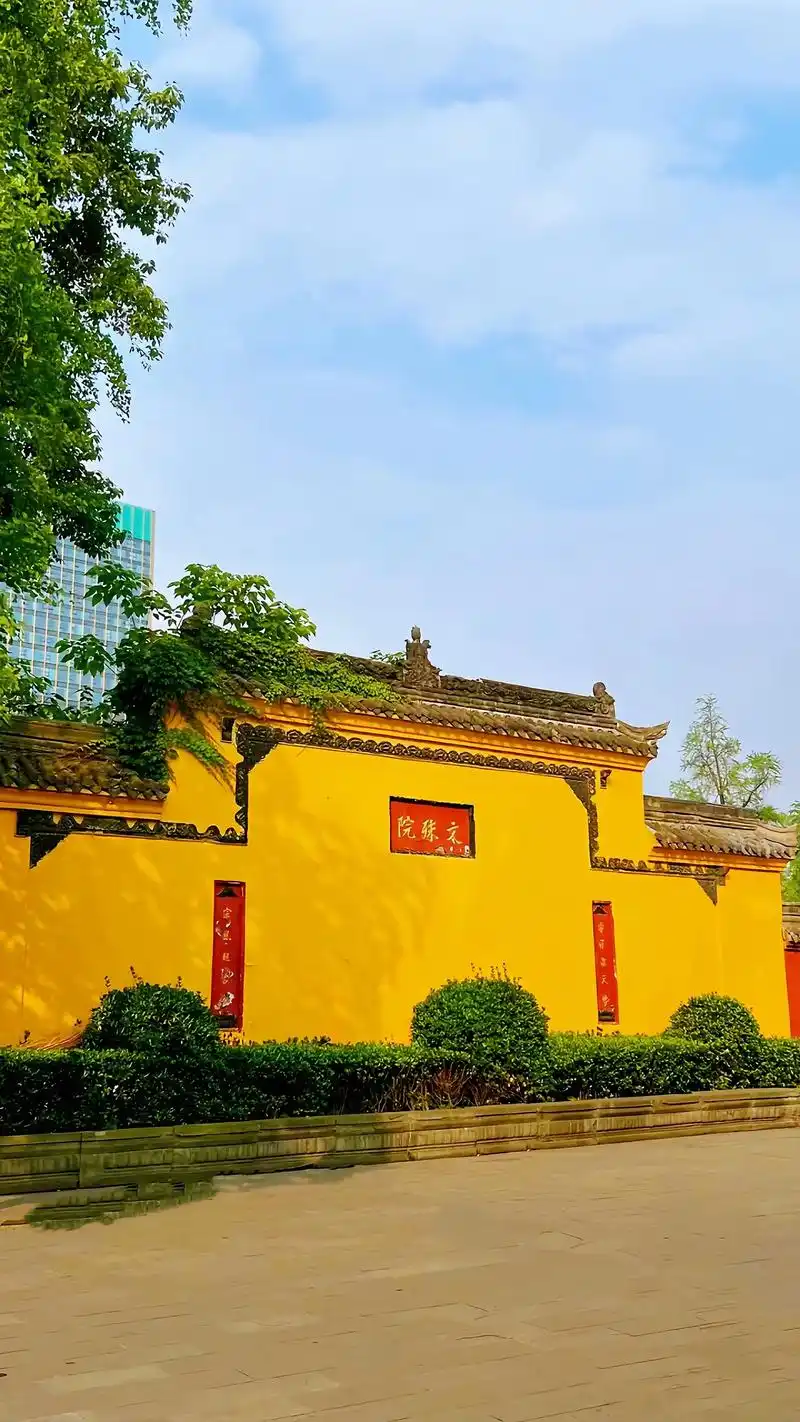 Founded during the Sui Dynasty (581–618), when Emperor Yang was constructing the Grand Canal, Wenshu Monastery predates Charlemagne's coronation by a century and has witnessed the full sweep of imperial China. The complex was rebuilt across the Tang, Song, Yuan, and Ming eras before taking its present form in 1691—the same year Louis XIV was transforming Versailles. Its alternate name "Kong Lin" (Empty Forest) was bestowed by the Kangxi Emperor himself, echoing the way European monarchs founded sacred sites bearing their legacy. Designated a national key Buddhist temple, it remains the most complete Qing-era Chan monastery in western Sichuan.
The temple follows a strict north-south axial layout typical of imperial Chinese sacred architecture—comparable in precision to the geometric harmony of Versailles' gardens or the processional grandeur of St. Peter's Basilica. Six main halls rise in succession: the Heavenly Kings Hall, the Three Sages Hall, the Mahavira Hall, the Dharma Hall, and the Sutra Library, flanked by bell and drum towers and the elegant Thousand Buddhas Pagoda. Sweeping eaves, intricate dougong brackets, and painted beams marry the grandeur of northern temples with the lyrical refinement of Jiangnan gardens—a craftsmanship that recalls Renaissance cathedrals yet speaks with a distinctly Chinese voice.
Wenshu's treasures rival those of any European treasury. Its centerpiece is a fragment of the skull relic of Xuanzang (602–664), the intrepid Tang monk whose 17-year pilgrimage to India inspired the classic novel Journey to the West—much as Marco Polo's later voyages shaped Western imagination. The monastery also guards the Kangxi Emperor's "Empty Forest" calligraphy, authentic works by Song Dynasty master Mi Fu, and astonishing Ming Dynasty scriptures written in the calligrapher's own blood. Over a thousand finely crafted statues exemplify the highest standards of Qing Buddhist sculpture, while ongoing meditation retreats keep the temple a living center of international Buddhist exchange.
The monastery stands at 66 Wenshu Yuan Street, Qingyang District—a three-minute walk from Exit K of Wenshu Yuan Station on Metro Line 1, easily reached from anywhere in central Chengdu. Admission is completely free, a refreshing contrast to the steep fees at most European cathedrals and abbeys. The temple welcomes visitors daily from 8:00 AM to 5:00 PM, with last entry at 4:30 PM, year-round; simply present your passport. Photography is prohibited inside the halls, modest attire is appreciated, and visitors receive three complimentary incense sticks at the mountain gate. Plan to spend roughly 1.5 to 2 hours, with early mornings offering the most tranquil atmosphere.
Begin at the photogenic red-walled mountain gate, then follow the recommended route: collect your incense, proceed through the six great halls, circumambulate the Thousand Buddhas Pagoda, and finish at the fragrant Xiang Yuan teahouse. Here, Sichuan-style gaiwan tea costs just 15–48 yuan per person, and vegetarian Buddhist fare runs 20–35 yuan, accompanied by free calligraphy practice of Buddhist sutras. After exploring, step next door into Wenshu Fang, a lively heritage district where you can sample Chengdu street snacks like sweet water noodles, Zhang's cold jelly noodles, and imperial pastries—an ideal way to balance sacred tranquility with the warm bustle of Sichuan life.
Founded during the Sui Dynasty (581–618), when Emperor Yang was constructing the Grand Canal, Wenshu Monastery predates Charlemagne's coronation by a century and has witnessed the full sweep of imperial China. The complex was rebuilt across the Tang, Song, Yuan, and Ming eras before taking its present form in 1691—the same year Louis XIV was transforming Versailles. Its alternate name "Kong Lin" (Empty Forest) was bestowed by the Kangxi Emperor himself, echoing the way European monarchs founded sacred sites bearing their legacy. Designated a national key Buddhist temple, it remains the most complete Qing-era Chan monastery in western Sichuan.
The temple follows a strict north-south axial layout typical of imperial Chinese sacred architecture—comparable in precision to the geometric harmony of Versailles' gardens or the processional grandeur of St. Peter's Basilica. Six main halls rise in succession: the Heavenly Kings Hall, the Three Sages Hall, the Mahavira Hall, the Dharma Hall, and the Sutra Library, flanked by bell and drum towers and the elegant Thousand Buddhas Pagoda. Sweeping eaves, intricate dougong brackets, and painted beams marry the grandeur of northern temples with the lyrical refinement of Jiangnan gardens—a craftsmanship that recalls Renaissance cathedrals yet speaks with a distinctly Chinese voice.
Wenshu's treasures rival those of any European treasury. Its centerpiece is a fragment of the skull relic of Xuanzang (602–664), the intrepid Tang monk whose 17-year pilgrimage to India inspired the classic novel Journey to the West—much as Marco Polo's later voyages shaped Western imagination. The monastery also guards the Kangxi Emperor's "Empty Forest" calligraphy, authentic works by Song Dynasty master Mi Fu, and astonishing Ming Dynasty scriptures written in the calligrapher's own blood. Over a thousand finely crafted statues exemplify the highest standards of Qing Buddhist sculpture, while ongoing meditation retreats keep the temple a living center of international Buddhist exchange.
The monastery stands at 66 Wenshu Yuan Street, Qingyang District—a three-minute walk from Exit K of Wenshu Yuan Station on Metro Line 1, easily reached from anywhere in central Chengdu. Admission is completely free, a refreshing contrast to the steep fees at most European cathedrals and abbeys. The temple welcomes visitors daily from 8:00 AM to 5:00 PM, with last entry at 4:30 PM, year-round; simply present your passport. Photography is prohibited inside the halls, modest attire is appreciated, and visitors receive three complimentary incense sticks at the mountain gate. Plan to spend roughly 1.5 to 2 hours, with early mornings offering the most tranquil atmosphere.
Begin at the photogenic red-walled mountain gate, then follow the recommended route: collect your incense, proceed through the six great halls, circumambulate the Thousand Buddhas Pagoda, and finish at the fragrant Xiang Yuan teahouse. Here, Sichuan-style gaiwan tea costs just 15–48 yuan per person, and vegetarian Buddhist fare runs 20–35 yuan, accompanied by free calligraphy practice of Buddhist sutras. After exploring, step next door into Wenshu Fang, a lively heritage district where you can sample Chengdu street snacks like sweet water noodles, Zhang's cold jelly noodles, and imperial pastries—an ideal way to balance sacred tranquility with the warm bustle of Sichuan life.