Chengdu Du Fu Thatched Cottage Museum
⭐ 4.50
No. 37, Qinghua Road, Chengdu City, Sichuan Province, China
 The year 759 CE was a turning point in Tang Dynasty China, often compared to the Italian Renaissance for its explosion of artistic brilliance. Famine, war, and the devastating An Lushan Rebellion forced Du Fu, then 47, to abandon his post and flee westward to Chengdu. There, on the banks of the Huanhua Stream, he built a modest thatched cottage where he would live for nearly four years, composing more than 200 of his now-legendary poems, including "My Thatched Roof Is Ruined by the Autumn Wind" and "Happy Rain on a Spring Night." His verses from this humble dwelling later earned him the title "Poet Saint," placing him alongside Dante and Shakespeare in the pantheon of world literature.
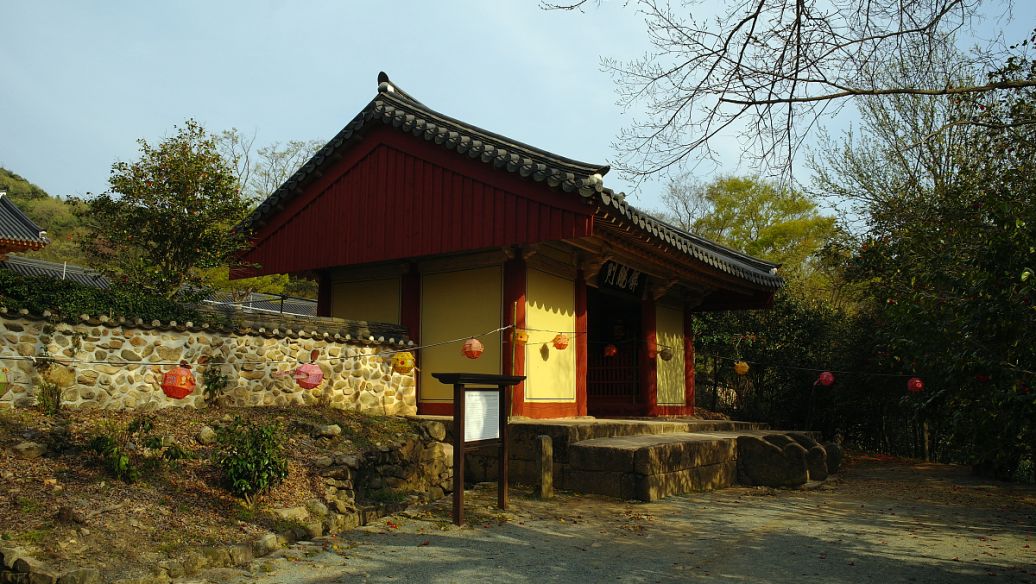
The site's layout follows a traditional north-south axis reminiscent of a small Ming-era academy, yet with the rustic warmth of western Sichuan vernacular architecture. Grey-tiled roofs and whitewashed walls frame a sequence of elegant halls—the Gate, the Hall of the Poet Historian, and the Shrine of the Minister of Works—each linked by covered walkways. A faithful reconstruction of Du Fu's original thatched hut evokes the hardships of his exile, while the on-site Stele Corridor displays centuries of calligraphic tributes carved in wood. The surrounding garden marries Sichuan boldness with Jiangnan delicacy: towering bamboo groves, plum trees, and red walls that glow like liquid cinnabar in afternoon light.
Beyond its architectural charm, the museum functions as a cultural pilgrimage site in the truest sense. The magnificent Daya Hall traces the entire arc of Chinese poetic tradition, while a rotating collection of over a thousand treasures includes rare Song- and Yuan-era editions of Du Fu's works and exquisite paintings inspired by his verses. Each year, on the seventh day of the lunar new year—the ancient "Human Day"—locals still flock here to honor the poet, a tradition unbroken for centuries and akin to the literary festivals still held at Petrarch's house in Arquà, Italy.
A visit is refreshingly straightforward. The museum sits at 38 Qinghua Road in the Qingyang District and is open year-round: 8 a.m. to 8 p.m. in summer, 8 a.m. to 6:30 p.m. in winter. Admission is 50 RMB (half price for students), with free entry for children under a certain height. Bilingual audio guides and English-language guided tours are available and strongly recommended—Du Fu's poetry rewards context. Take Metro Line 4 to Caotang North Road Station (Exit B), then walk about 900 meters, or ride buses 35, 58, or 82 directly to the Du Fu Thatched Cottage stop. The exit flows seamlessly into the neighboring, free Huanhua Stream Park, perfect for a reflective stroll.
For the best experience, arrive on a weekday morning when the crowds thin and the morning mist still hangs over the stream. Wear flat shoes—the grounds are paved with uneven bluestone—and consider light-colored clothing or even traditional Hanfu to harmonize with the poetic atmosphere. Bring water, as refreshment options inside are limited, and pack mosquito repellent and sun protection in summer. Plan two to three hours for a thorough visit, allowing time to pause in the bamboo groves where, if you listen carefully, you can almost hear Du Fu reciting his verses across twelve centuries. This is not merely a museum—it is a doorway into the soul of Tang Dynasty China.
The year 759 CE was a turning point in Tang Dynasty China, often compared to the Italian Renaissance for its explosion of artistic brilliance. Famine, war, and the devastating An Lushan Rebellion forced Du Fu, then 47, to abandon his post and flee westward to Chengdu. There, on the banks of the Huanhua Stream, he built a modest thatched cottage where he would live for nearly four years, composing more than 200 of his now-legendary poems, including "My Thatched Roof Is Ruined by the Autumn Wind" and "Happy Rain on a Spring Night." His verses from this humble dwelling later earned him the title "Poet Saint," placing him alongside Dante and Shakespeare in the pantheon of world literature.
The site's layout follows a traditional north-south axis reminiscent of a small Ming-era academy, yet with the rustic warmth of western Sichuan vernacular architecture. Grey-tiled roofs and whitewashed walls frame a sequence of elegant halls—the Gate, the Hall of the Poet Historian, and the Shrine of the Minister of Works—each linked by covered walkways. A faithful reconstruction of Du Fu's original thatched hut evokes the hardships of his exile, while the on-site Stele Corridor displays centuries of calligraphic tributes carved in wood. The surrounding garden marries Sichuan boldness with Jiangnan delicacy: towering bamboo groves, plum trees, and red walls that glow like liquid cinnabar in afternoon light.
Beyond its architectural charm, the museum functions as a cultural pilgrimage site in the truest sense. The magnificent Daya Hall traces the entire arc of Chinese poetic tradition, while a rotating collection of over a thousand treasures includes rare Song- and Yuan-era editions of Du Fu's works and exquisite paintings inspired by his verses. Each year, on the seventh day of the lunar new year—the ancient "Human Day"—locals still flock here to honor the poet, a tradition unbroken for centuries and akin to the literary festivals still held at Petrarch's house in Arquà, Italy.
A visit is refreshingly straightforward. The museum sits at 38 Qinghua Road in the Qingyang District and is open year-round: 8 a.m. to 8 p.m. in summer, 8 a.m. to 6:30 p.m. in winter. Admission is 50 RMB (half price for students), with free entry for children under a certain height. Bilingual audio guides and English-language guided tours are available and strongly recommended—Du Fu's poetry rewards context. Take Metro Line 4 to Caotang North Road Station (Exit B), then walk about 900 meters, or ride buses 35, 58, or 82 directly to the Du Fu Thatched Cottage stop. The exit flows seamlessly into the neighboring, free Huanhua Stream Park, perfect for a reflective stroll.
For the best experience, arrive on a weekday morning when the crowds thin and the morning mist still hangs over the stream. Wear flat shoes—the grounds are paved with uneven bluestone—and consider light-colored clothing or even traditional Hanfu to harmonize with the poetic atmosphere. Bring water, as refreshment options inside are limited, and pack mosquito repellent and sun protection in summer. Plan two to three hours for a thorough visit, allowing time to pause in the bamboo groves where, if you listen carefully, you can almost hear Du Fu reciting his verses across twelve centuries. This is not merely a museum—it is a doorway into the soul of Tang Dynasty China.