Jinli Ancient Street

⭐ 4.20

No. 1, Wuhouci Street, Wuhou District, Chengdu City, Sichuan Province, China
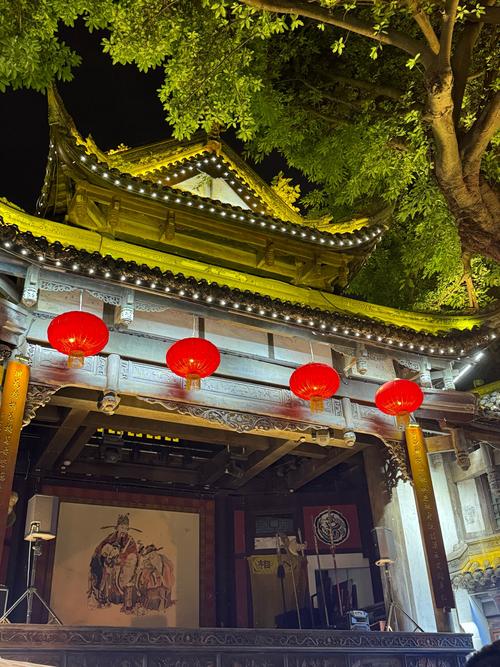
Jinli Ancient Street
Though built in 2004 rather than a surviving relic, Jinli is modeled on the late Qing and early Republican streetscapes that once buzzed around Chengdu's historic temples. Its name recalls the city's ancient title "Jinguan Cheng," or Brocade Capital, bestowed during the Three Kingdoms era (220–280 AD) when Emperor Liu Bei made Chengdu his Shu kingdom's seat and the brilliant strategist Zhuge Liang served as his chancellor. The shrine beside it honors Zhuge, a figure often likened to Europe's medieval court advisors. Together, shrine and street form a cultural complex tying modern visitors to a period roughly contemporary with Rome's late empire. The lane stretches about 550 meters along a winding flagstone path, flanked by traditional western Sichuan houses with dark grey tiles, crimson eaves, and weathered brick facades arranged in lively asymmetry. By day, the timber-framed shopfronts and small courtyards recall the narrow merchant quarters of Italian hill towns. After dusk, however, the street transforms: roughly ten thousand red lanterns ignite in unison, casting warm crimson light across the stones and creating a tunnel of glow that has become one of Chengdu's signature nighttime spectacles, comparable in atmosphere to a candlelit Bruges alleyway. Jinli functions as the city's folk culture showcase, gathering treasured arts in one walkable strip. Performances of bian lian face-changing, fire-breathing, shadow puppet theater, sugar painting, and clay sculpture unfold throughout the day at small stages. Themed landscaping, including the Zhuge Well and Adou Well, weaves Three Kingdoms references into the urban fabric. Seasonal festivals—Lunar New Year temple fairs, Mid-Autumn lantern celebrations—draw large crowds and turn the street into a citywide gathering point, giving travelers a curated sampler of Sichuanese heritage without visiting multiple rural sites. The street sits at 231 Wuhouci Avenue in Chengdu's Wuhou District, directly adjacent to the Wuhou Shrine Museum, and remains open around the clock free of charge, with decorative lantern lighting operating until 22:00. The nearest subway stop is Gaoshengqiao on Lines 3 and 5, about a ten-minute walk away, and numerous bus routes also serve the area. Most vendors accept Alipay, WeChat Pay, and the digital yuan, though carrying small cash remains useful for smaller stalls and performers. Time your visit between 17:30 and 20:30 to catch the lantern illumination at its peak, ideally after touring the Wuhou Shrine next door to avoid midday heat and tour-bus crowds. Allow two to three hours for eating, sightseeing, and catching an opera performance. The flagstones can be slick after rain, so flat non-slip shoes are recommended. Foreign palates should request "less spicy" (shao la) when ordering, as even milder Sichuan dishes carry noticeable heat compared to most Western cuisines, and a light layer is wise in cooler months when the narrow lane channels brisk evening breezes.

Traveler reviews

Jinli Ancient Street, also known as 'Jinguan City,' is one of the oldest and most commercially vibrant old streets in Western Shu history. It got its name from the brocade-weaving industry during the Qin, Han, and Three Kingdoms periods and is hailed as the 'Chengdu version of the Riverside Scene at Qingming Festival.' Today's street stretches about 550 meters in the residential style of late Qing and early Republican western Sichuan, separated from the Wuhou Shrine by only a wall, and is free to enter. The block blends Three Kingdoms culture and Sichuan folk customs, divided into four sections: snacks, bars, inns, and handicrafts. Here visitors can taste tangyou guozi (sugar-oil fruits) and bobochi (skewers in...
⭐ 5 · Reese Monroe Expand
This is a free-to-enter old street in the western Sichuan style, located in the heart of Chengdu next to the famous Wuhou Shrine. Transportation is conven...
⭐ 5 · Quinn Park Expand