Xunliao Bay
⭐ 4.00
Xunliao Bay Scenic Area, Huidong County, Huizhou City, Guangdong Province, China
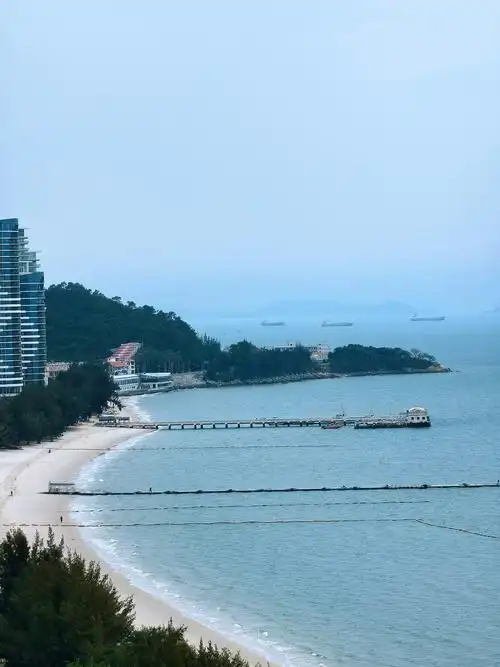 Xunliao Bay's sheltered position has drawn seafarers for centuries, placing it along the ancient Maritime Silk Route that linked Guangzhou's prosperous trading ports to Southeast Asia, India, and beyond. The Hakka fishermen who settled here centuries ago left behind a living legacy of Mazu worship—a sea goddess cult shared with coastal communities from Fujian to Taiwan, paralleling the protective role of Stella Maris or the Madonna del Parto in Mediterranean fishing villages. Today, the working fleet still mends nets along the harbor, offering visitors a glimpse of traditions that long predate Hong Kong's emergence as a global trade hub just across the Pearl River Delta.
The bay's signature geological feature is the Mo-zi-shi (Grinding Stone) Park, where millennia of wave action have sculpted granite outcrops into surreal shapes reminiscent of Portugal's Algarve sea stacks or the weathered pillars of Corsica's Calanche. These free-access formations draw photographers and families alike, with tide pools perfect for clambering children. Further offshore, Delta Island rises like a smaller cousin to Thailand's Phi Phi, ringed by coral gardens and warm, gin-clear water that reveals snorkeling conditions comparable to the Red Sea's shallows. There are no grand temples or colonial-era buildings here; the architecture is the dramatic coastline itself, framed against mountains that glow emerald after summer rains.
Local culture reflects broader Lingnan (Cantonese south) heritage, blending Hakka and Teochew influences with seafaring folklore. During the annual Mazu festival, lion dancers and lantern processions honor the patron saint of sailors—an evocative parallel to coastal Catholic festivals in Portugal or southern Italy. Visitors can sample live-caught seafood prepared with ginger, scallions, and the salty-sweet tang of light soy, alongside Hakka classics like stuffed tofu and salt-baked chicken. The region also produces fine lychees and dried oysters, prized exports since Qing-dynasty times.
Xunliao Bay is best visited in May–June or September–October, when typhoon season and summer humidity subside and water temperatures hover comfortably around 24–27°C. Travelers arriving by high-speed rail should alight at Huidong Station, then transfer by local bus or taxi (roughly 40 minutes); driving from Shenzhen takes about two hours and offers flexibility. During weekends and the October National Day holiday, book beachfront hotels weeks in advance—options range from international chains to boutique resorts with private balconies overlooking the bay. Beach gear, snorkeling equipment, and sun protection are widely available for rent.
Beyond lounging on its famous platinum sands, visitors can charter sailing yachts, jet skis, or paragliders from the well-equipped marina, or join local fishermen for inshore angling excursions. The bay's gentle slope makes it one of South China's safest swimming beaches for children, while more adventurous travelers can book glass-bottom boat trips to Delta Island's coral-fringed coves. Evening entertainment includes seafood street markets and beachfront bars where live Cantonese pop drifts over the surf—a pleasant, low-key alternative to Hong Kong's frenetic nightlife. Whether traveling as a family, couple, or photography enthusiast, Xunliao Bay delivers an authentic slice of coastal China without the crowds of more famous destinations.
Xunliao Bay's sheltered position has drawn seafarers for centuries, placing it along the ancient Maritime Silk Route that linked Guangzhou's prosperous trading ports to Southeast Asia, India, and beyond. The Hakka fishermen who settled here centuries ago left behind a living legacy of Mazu worship—a sea goddess cult shared with coastal communities from Fujian to Taiwan, paralleling the protective role of Stella Maris or the Madonna del Parto in Mediterranean fishing villages. Today, the working fleet still mends nets along the harbor, offering visitors a glimpse of traditions that long predate Hong Kong's emergence as a global trade hub just across the Pearl River Delta.
The bay's signature geological feature is the Mo-zi-shi (Grinding Stone) Park, where millennia of wave action have sculpted granite outcrops into surreal shapes reminiscent of Portugal's Algarve sea stacks or the weathered pillars of Corsica's Calanche. These free-access formations draw photographers and families alike, with tide pools perfect for clambering children. Further offshore, Delta Island rises like a smaller cousin to Thailand's Phi Phi, ringed by coral gardens and warm, gin-clear water that reveals snorkeling conditions comparable to the Red Sea's shallows. There are no grand temples or colonial-era buildings here; the architecture is the dramatic coastline itself, framed against mountains that glow emerald after summer rains.
Local culture reflects broader Lingnan (Cantonese south) heritage, blending Hakka and Teochew influences with seafaring folklore. During the annual Mazu festival, lion dancers and lantern processions honor the patron saint of sailors—an evocative parallel to coastal Catholic festivals in Portugal or southern Italy. Visitors can sample live-caught seafood prepared with ginger, scallions, and the salty-sweet tang of light soy, alongside Hakka classics like stuffed tofu and salt-baked chicken. The region also produces fine lychees and dried oysters, prized exports since Qing-dynasty times.
Xunliao Bay is best visited in May–June or September–October, when typhoon season and summer humidity subside and water temperatures hover comfortably around 24–27°C. Travelers arriving by high-speed rail should alight at Huidong Station, then transfer by local bus or taxi (roughly 40 minutes); driving from Shenzhen takes about two hours and offers flexibility. During weekends and the October National Day holiday, book beachfront hotels weeks in advance—options range from international chains to boutique resorts with private balconies overlooking the bay. Beach gear, snorkeling equipment, and sun protection are widely available for rent.
Beyond lounging on its famous platinum sands, visitors can charter sailing yachts, jet skis, or paragliders from the well-equipped marina, or join local fishermen for inshore angling excursions. The bay's gentle slope makes it one of South China's safest swimming beaches for children, while more adventurous travelers can book glass-bottom boat trips to Delta Island's coral-fringed coves. Evening entertainment includes seafood street markets and beachfront bars where live Cantonese pop drifts over the surf—a pleasant, low-key alternative to Hong Kong's frenetic nightlife. Whether traveling as a family, couple, or photography enthusiast, Xunliao Bay delivers an authentic slice of coastal China without the crowds of more famous destinations.