Tushan Historical Site
⭐ 3.80
Tushan Historical Site, Huicheng District, Huizhou City, Guangdong Province, China
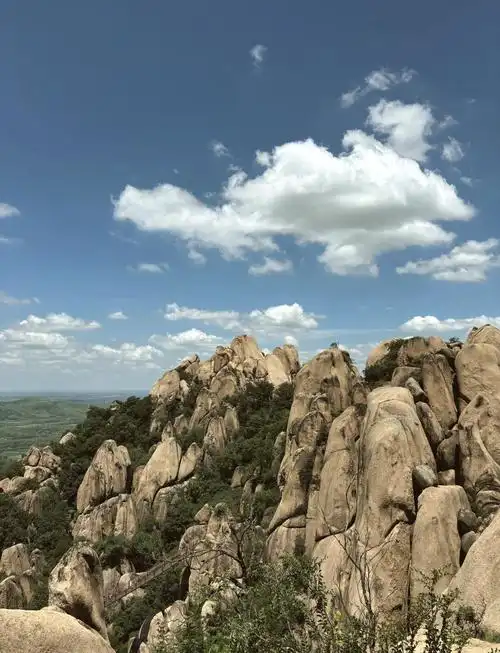 Tu Mountain's significance begins with its extraordinary longevity as a seat of government. When the Sui Dynasty established the Xunzhou General Administration here in 589 AD, Europe was entering the early medieval period following the collapse of Roman authority in the West. For the next 1,400 years, roughly equivalent to the entire span from the fall of the Western Roman Empire to the Industrial Revolution, this location served continuously as the prefecture seat governing eastern Guangdong. Such unbroken administrative continuity is rare in world history, comparable to cities like Rome, Constantinople, or Kyoto, where successive dynasties chose to maintain governance in the same place.
At the literal foundation of this story lies a Sui Dynasty well, drilled in 590 AD, just one year after the prefecture was established. Still the oldest surviving artificial water source in Huizhou's urban core, it marks the origin point of the city itself. To stand beside it is to look into a moment contemporary with the rise of the Anglo-Saxon kingdoms in Britain or the conversion of pagan tribes across northern Europe. The well has never stopped functioning as a reminder of how this modest water source sustained dynasties, soldiers, scholars, and poets through imperial China's longest epochs.
The architectural remains at Tu Mountain read like a vertical timeline of Chinese history. The Yelitai Pavilion, an open-sided hall, commemorates local officials from the Han Dynasty onward who, according to tradition, worked their land in their spare time, a Confucian ideal of virtuous governance that echoes the Stoic virtues admired in the Roman Empire. The fragmented Ming Dynasty city walls recall the defensive fortifications familiar to visitors who have toured Carcassonne or Avignon, while the Sun Yat-sen Memorial Hall reflects the early twentieth-century revolutionary moment, when modern China began to take shape under the leadership of a figure sometimes called the George Washington of Asia.
The cultural weight of Tu Mountain is inseparable from the Song Dynasty poet Su Shi, also known as Su Dongpo, one of China's most beloved literary figures. Exiled to Huizhou around 1080 AD, he composed some of his most celebrated verses here, often contemplating the same landscape visitors see today. His presence links the site to a literary golden age comparable to the Elizabethan era in England or the Song cultural flowering that shaped East Asian aesthetics for centuries. Walking the grounds, you follow in the footsteps of a writer whose works are still memorized by Chinese schoolchildren nearly a millennium later.
In recent years, archaeologists have uncovered substantial remains of the prefecture government office, or yamen, beneath the park. A new exhibition hall now displays these foundations alongside artifacts that illuminate daily administration, taxation, and justice across multiple dynasties. This kind of layered archaeological park, where you can simultaneously view Song poetry sites, Ming military architecture, and Republican-era memorials, parallels open-air experiences like Pompeii in Italy or the Roman ruins at Chester in Britain. The interpretive displays are presented in Chinese, so bringing a translation app is advisable for non-Mandarin speakers.
Tu Mountain Ancient Sites sit inside Zhongshan Park, a short walk from Huizhou's West Lake and easily reached by bus or taxi from the city's high-speed rail station, which connects to Guangzhou in under an hour. The park itself is free to enter, and most pavilions and walls can be viewed at any daytime hour, though the yamen exhibition hall has specific opening times and typically closes on Mondays. Allow two to three hours for a relaxed visit, longer if you enjoy photography or reading inscriptions. For travelers interested in imperial Chinese history, dynastic transitions, or the cultural legacy of Su Shi, this quiet, rarely crowded site delivers an experience that larger, more famous landmarks often cannot match.
Tu Mountain's significance begins with its extraordinary longevity as a seat of government. When the Sui Dynasty established the Xunzhou General Administration here in 589 AD, Europe was entering the early medieval period following the collapse of Roman authority in the West. For the next 1,400 years, roughly equivalent to the entire span from the fall of the Western Roman Empire to the Industrial Revolution, this location served continuously as the prefecture seat governing eastern Guangdong. Such unbroken administrative continuity is rare in world history, comparable to cities like Rome, Constantinople, or Kyoto, where successive dynasties chose to maintain governance in the same place.
At the literal foundation of this story lies a Sui Dynasty well, drilled in 590 AD, just one year after the prefecture was established. Still the oldest surviving artificial water source in Huizhou's urban core, it marks the origin point of the city itself. To stand beside it is to look into a moment contemporary with the rise of the Anglo-Saxon kingdoms in Britain or the conversion of pagan tribes across northern Europe. The well has never stopped functioning as a reminder of how this modest water source sustained dynasties, soldiers, scholars, and poets through imperial China's longest epochs.
The architectural remains at Tu Mountain read like a vertical timeline of Chinese history. The Yelitai Pavilion, an open-sided hall, commemorates local officials from the Han Dynasty onward who, according to tradition, worked their land in their spare time, a Confucian ideal of virtuous governance that echoes the Stoic virtues admired in the Roman Empire. The fragmented Ming Dynasty city walls recall the defensive fortifications familiar to visitors who have toured Carcassonne or Avignon, while the Sun Yat-sen Memorial Hall reflects the early twentieth-century revolutionary moment, when modern China began to take shape under the leadership of a figure sometimes called the George Washington of Asia.
The cultural weight of Tu Mountain is inseparable from the Song Dynasty poet Su Shi, also known as Su Dongpo, one of China's most beloved literary figures. Exiled to Huizhou around 1080 AD, he composed some of his most celebrated verses here, often contemplating the same landscape visitors see today. His presence links the site to a literary golden age comparable to the Elizabethan era in England or the Song cultural flowering that shaped East Asian aesthetics for centuries. Walking the grounds, you follow in the footsteps of a writer whose works are still memorized by Chinese schoolchildren nearly a millennium later.
In recent years, archaeologists have uncovered substantial remains of the prefecture government office, or yamen, beneath the park. A new exhibition hall now displays these foundations alongside artifacts that illuminate daily administration, taxation, and justice across multiple dynasties. This kind of layered archaeological park, where you can simultaneously view Song poetry sites, Ming military architecture, and Republican-era memorials, parallels open-air experiences like Pompeii in Italy or the Roman ruins at Chester in Britain. The interpretive displays are presented in Chinese, so bringing a translation app is advisable for non-Mandarin speakers.
Tu Mountain Ancient Sites sit inside Zhongshan Park, a short walk from Huizhou's West Lake and easily reached by bus or taxi from the city's high-speed rail station, which connects to Guangzhou in under an hour. The park itself is free to enter, and most pavilions and walls can be viewed at any daytime hour, though the yamen exhibition hall has specific opening times and typically closes on Mondays. Allow two to three hours for a relaxed visit, longer if you enjoy photography or reading inscriptions. For travelers interested in imperial Chinese history, dynastic transitions, or the cultural legacy of Su Shi, this quiet, rarely crowded site delivers an experience that larger, more famous landmarks often cannot match.