Songshan Lake Scenic Area
⭐ 4.60
Songshan Lake Scenic Area, Dongguan City, Guangdong Province, China
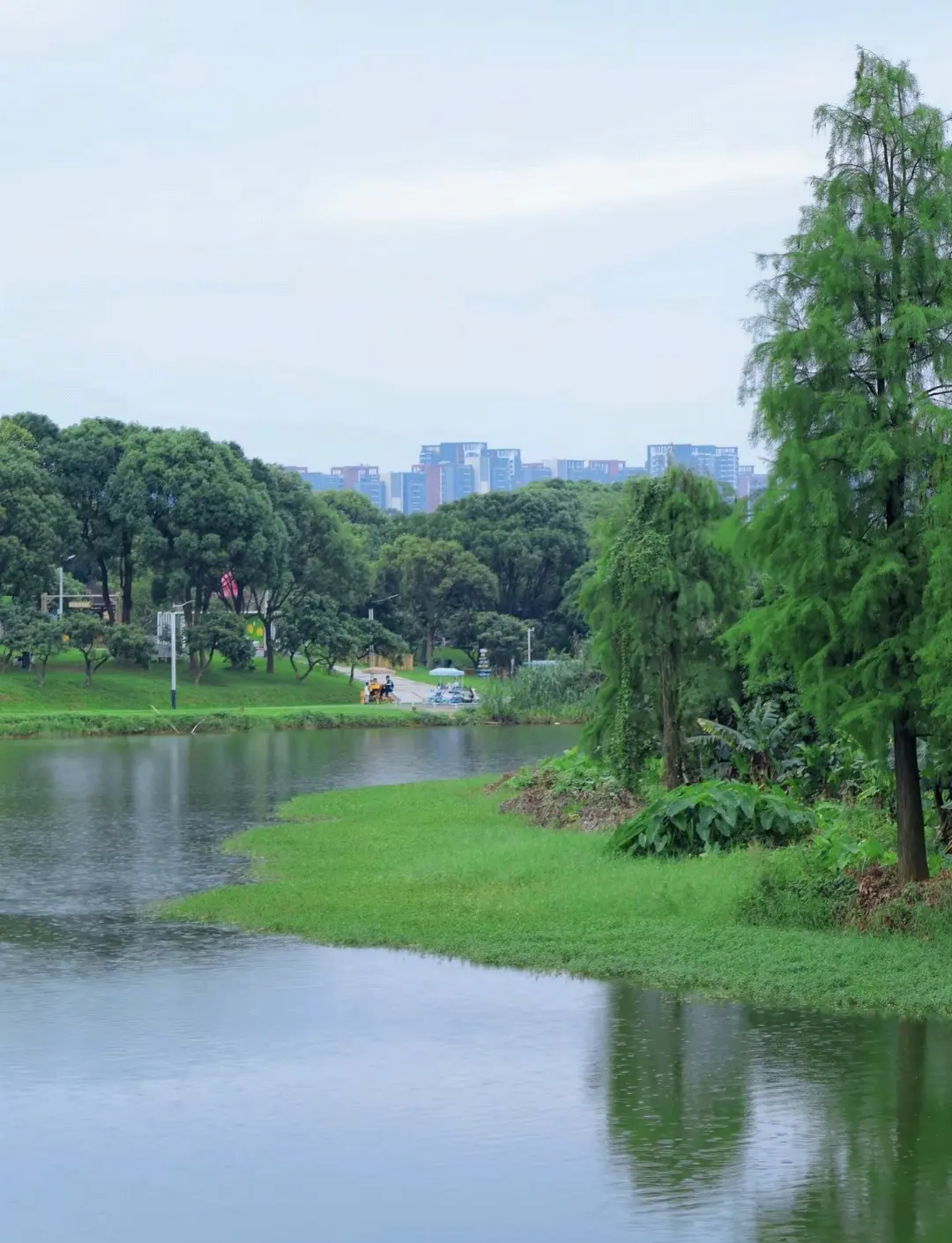 Songshan Lake represents one of southern China's most ambitious ecological restoration projects. In 2001, authorities converted the low-lying farmland where the borders of Dalang, Dalingshan, and Liaobu meet into a hundred-square-kilometer artificial lake ecosystem. The site earned provincial resort status in 2004 and climbed to national AAAA designation by 2013, when it was also recognized as a National Urban Wetland Park. Comparable in scope to Germany's Edersee reservoir region or the engineered lakes of England's Lake District, this transformation turned exhausted agricultural land into a thriving wetland, with the ethereal "Songhu Misty Rain" scene claiming top honors among Dongguan's Eight Views—a poetic ranking system dating back centuries.
The lake's centerpiece unfolds across 8 square kilometers of shimmering water, fringed by a winding 35-kilometer greenway that links lychee orchards, sun-drenched beaches, misty pavilions, and elegant arched bridges. Morning fog transforms the vista into a living scroll painting reminiscent of traditional Chinese ink landscapes, while evening sunsets bathe the water in golden hues—a magnet for landscape photographers. The architectural choreography recalls Venice's lagoon reflections, though the surrounding cypress and banyan trees anchor it firmly in Lingnan regional character.
Perhaps the most surreal sight lies along the eastern shore, where Huawei's European-inspired campus rises like a transplanted slice of Bavaria or Tuscany. Red-brick towers, arched colonnades, and Gothic spires cluster along a "Brookside Village" reminiscent of a fairy-tale Alpine hamlet, complete with a Charles Bridge replica, a Cambridge-inspired footbridge, and a vintage red train shuttling between buildings. The campus remains an active research facility, so visitors may only admire the exteriors from a designated viewing area—similar to how one might glimpse the outer walls of Oxford's dreaming spires without entering the colleges.
Practical access is refreshingly straightforward: the park itself is free, though the core zones require advance reservation through the "Enjoy Songshan Lake" mini-program. The Songshan Lake Science Park caters to families with the "Neutron Playground" children's science exhibit and an observation tower atop Science Tower, while Taoyuan Park's Songfeng Pavilion offers a 96.8-meter elevation viewpoint for sweeping panoramas. The Youlanli cultural block houses the elegant Zhongshu Bookstore, an art museum, and a hands-on mathematics exploration gallery—perfect rainy-day diversions.
Cycling is the definitive way to experience the area; bike rentals at the main entrance run roughly 20–30 yuan (US$3–4) per hour, with a 20-kilometer scenic loop threading past golden beaches and central park lawns. Seasonal highlights include golden trumpet trees and cherry blossoms from March to April, refreshing lake breezes from June through August (plan outings after 4 p.m. to escape the heat), and kapok blossoms in November and December. Drivers should navigate to "Songshan Lake Scenic Area Parking" and arrive before 9 a.m. on weekends, while rail travelers can alight at Songshan Lake North Station and transfer to a dedicated tourist bus.
Songshan Lake represents one of southern China's most ambitious ecological restoration projects. In 2001, authorities converted the low-lying farmland where the borders of Dalang, Dalingshan, and Liaobu meet into a hundred-square-kilometer artificial lake ecosystem. The site earned provincial resort status in 2004 and climbed to national AAAA designation by 2013, when it was also recognized as a National Urban Wetland Park. Comparable in scope to Germany's Edersee reservoir region or the engineered lakes of England's Lake District, this transformation turned exhausted agricultural land into a thriving wetland, with the ethereal "Songhu Misty Rain" scene claiming top honors among Dongguan's Eight Views—a poetic ranking system dating back centuries.
The lake's centerpiece unfolds across 8 square kilometers of shimmering water, fringed by a winding 35-kilometer greenway that links lychee orchards, sun-drenched beaches, misty pavilions, and elegant arched bridges. Morning fog transforms the vista into a living scroll painting reminiscent of traditional Chinese ink landscapes, while evening sunsets bathe the water in golden hues—a magnet for landscape photographers. The architectural choreography recalls Venice's lagoon reflections, though the surrounding cypress and banyan trees anchor it firmly in Lingnan regional character.
Perhaps the most surreal sight lies along the eastern shore, where Huawei's European-inspired campus rises like a transplanted slice of Bavaria or Tuscany. Red-brick towers, arched colonnades, and Gothic spires cluster along a "Brookside Village" reminiscent of a fairy-tale Alpine hamlet, complete with a Charles Bridge replica, a Cambridge-inspired footbridge, and a vintage red train shuttling between buildings. The campus remains an active research facility, so visitors may only admire the exteriors from a designated viewing area—similar to how one might glimpse the outer walls of Oxford's dreaming spires without entering the colleges.
Practical access is refreshingly straightforward: the park itself is free, though the core zones require advance reservation through the "Enjoy Songshan Lake" mini-program. The Songshan Lake Science Park caters to families with the "Neutron Playground" children's science exhibit and an observation tower atop Science Tower, while Taoyuan Park's Songfeng Pavilion offers a 96.8-meter elevation viewpoint for sweeping panoramas. The Youlanli cultural block houses the elegant Zhongshu Bookstore, an art museum, and a hands-on mathematics exploration gallery—perfect rainy-day diversions.
Cycling is the definitive way to experience the area; bike rentals at the main entrance run roughly 20–30 yuan (US$3–4) per hour, with a 20-kilometer scenic loop threading past golden beaches and central park lawns. Seasonal highlights include golden trumpet trees and cherry blossoms from March to April, refreshing lake breezes from June through August (plan outings after 4 p.m. to escape the heat), and kapok blossoms in November and December. Drivers should navigate to "Songshan Lake Scenic Area Parking" and arrive before 9 a.m. on weekends, while rail travelers can alight at Songshan Lake North Station and transfer to a dedicated tourist bus.