Guangyang Ancient City Ruins
⭐ 3.50
Guangyang Ancient City Ruins, Guangyang District, Langfang City, Hebei Province, China
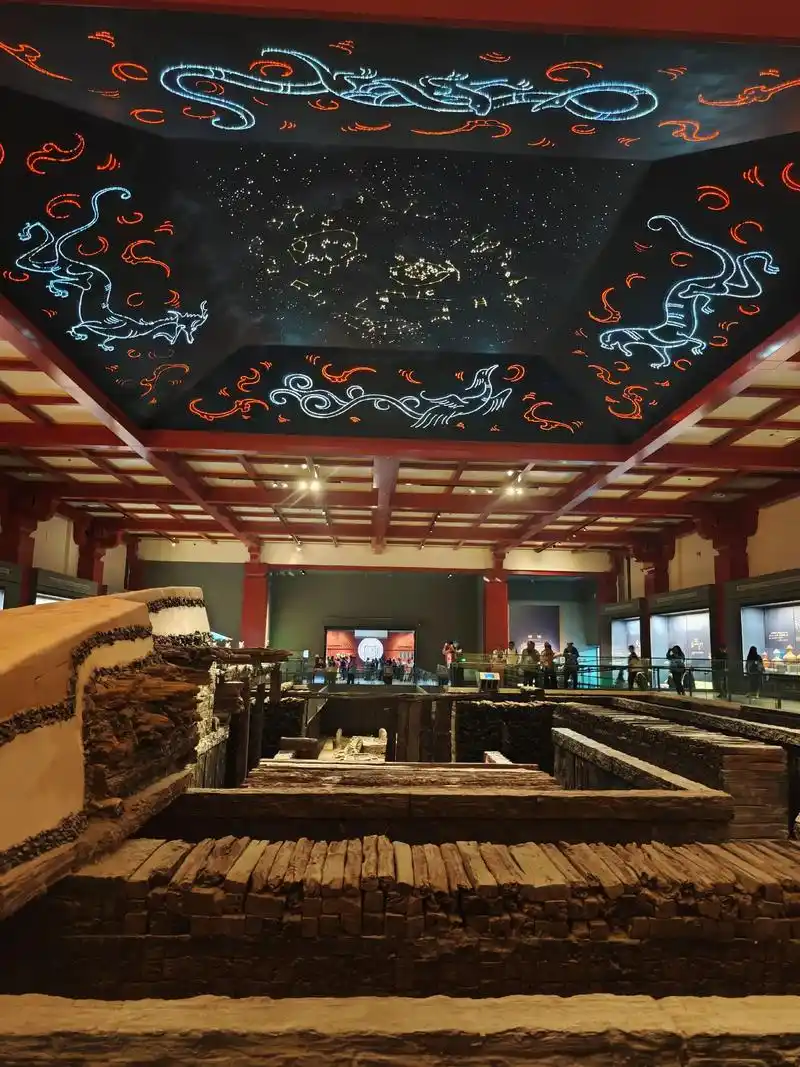 The Western Han dynasty (206 BCE–9 CE) was China's counterpart to Rome's late Republic and early Empire. While Augustus reorganized Italy into municipalities, Emperor Gaozu and his successors carved their realm into commanderies and counties—Guangyang being one such frontier unit. Founded in the twilight of the Warring States era, the county sat in a strategic corridor between the ancient states of Yan and Zhao, a region long contested by cavalry warfare. Its establishment reflects how the new Han regime extended centralized administration into the northern frontier, much as Rome extended Latin law into its provinces. The site was abandoned in the early Eastern Han, roughly contemporary with the birth of Jesus in distant Judea.
The fortress follows classic Han-era design: a near-perfect square of rammed earth, each side stretching about 670 meters—comparable in scale to a small Roman castrum enlarged for urban use. Builders used the same layered compaction technique found across the empire, stacking clay in thin lifts and pounding each layer solid. Today only about 40 meters of the western wall's northern section survive, rising roughly 4 meters high—a fragment modest beside Pompeii's walls, but evocative in the same way, sketching a vanished community's outline. A cruciform street plan and traces of a moat remain faintly visible across the interior. Recovered artifacts—Wu Zhu bronze coins and ceramic roof tiles—confirm both date and civic function.
Guangyang's importance lies less in drama than in documentation. The site provides tangible archaeological evidence for an administrative unit that existed primarily on paper in dynastic histories. The name "Guangyang" itself has remarkable longevity, reappearing under later dynasties including the Sui and Ming, and finally lending itself to modern Langfang's Guangyang District. This continuity offers a striking parallel to European place-names—from Lutetia to Londinium—that persist across two millennia despite changing political regimes. For scholars of early Chinese state-building, the ruins are an open-air textbook illustrating how the Western Han county system actually worked on the ground.
The site remains in raw, undeveloped condition—no entrance fee, interpretive panels, English signage, or visitor facilities. Travelers can reach Beiguangyangcheng Village via the Beijing Subway Fangshan Line, alighting at Guangyang City Station and walking the short distance to the village edge. From there, a roadside marker and the surviving wall segment can be observed from outside the fenced core area, which is strictly off-limits. Anyone planning a dedicated visit should consult the Beijing Municipal Cultural Relics Bureau website for current access policies and must observe the PRC Cultural Relics Protection Law—climbing, digging, or close-up photography inside the protected zone is prohibited.
Serious travelers should pair this site with the Dabaotai Han Tomb Museum and the Langfang Museum, which together provide interpretive context the bare ruins lack—displaying Han-era burial goods, administrative records, and regional archaeology that bring the silent walls to life. Visiting Guangyang rewards those who enjoy obscure sites: the experience resembles exploring a lesser-known Roman municipium in remote Italy or a forgotten Byzantine fort in the Balkans, where imagination must do much of the restoration. For history-minded visitors seeking to see, rather than merely read about, the foundations of Chinese imperial administration, Guangyang offers a quietly compelling stop.
The Western Han dynasty (206 BCE–9 CE) was China's counterpart to Rome's late Republic and early Empire. While Augustus reorganized Italy into municipalities, Emperor Gaozu and his successors carved their realm into commanderies and counties—Guangyang being one such frontier unit. Founded in the twilight of the Warring States era, the county sat in a strategic corridor between the ancient states of Yan and Zhao, a region long contested by cavalry warfare. Its establishment reflects how the new Han regime extended centralized administration into the northern frontier, much as Rome extended Latin law into its provinces. The site was abandoned in the early Eastern Han, roughly contemporary with the birth of Jesus in distant Judea.
The fortress follows classic Han-era design: a near-perfect square of rammed earth, each side stretching about 670 meters—comparable in scale to a small Roman castrum enlarged for urban use. Builders used the same layered compaction technique found across the empire, stacking clay in thin lifts and pounding each layer solid. Today only about 40 meters of the western wall's northern section survive, rising roughly 4 meters high—a fragment modest beside Pompeii's walls, but evocative in the same way, sketching a vanished community's outline. A cruciform street plan and traces of a moat remain faintly visible across the interior. Recovered artifacts—Wu Zhu bronze coins and ceramic roof tiles—confirm both date and civic function.
Guangyang's importance lies less in drama than in documentation. The site provides tangible archaeological evidence for an administrative unit that existed primarily on paper in dynastic histories. The name "Guangyang" itself has remarkable longevity, reappearing under later dynasties including the Sui and Ming, and finally lending itself to modern Langfang's Guangyang District. This continuity offers a striking parallel to European place-names—from Lutetia to Londinium—that persist across two millennia despite changing political regimes. For scholars of early Chinese state-building, the ruins are an open-air textbook illustrating how the Western Han county system actually worked on the ground.
The site remains in raw, undeveloped condition—no entrance fee, interpretive panels, English signage, or visitor facilities. Travelers can reach Beiguangyangcheng Village via the Beijing Subway Fangshan Line, alighting at Guangyang City Station and walking the short distance to the village edge. From there, a roadside marker and the surviving wall segment can be observed from outside the fenced core area, which is strictly off-limits. Anyone planning a dedicated visit should consult the Beijing Municipal Cultural Relics Bureau website for current access policies and must observe the PRC Cultural Relics Protection Law—climbing, digging, or close-up photography inside the protected zone is prohibited.
Serious travelers should pair this site with the Dabaotai Han Tomb Museum and the Langfang Museum, which together provide interpretive context the bare ruins lack—displaying Han-era burial goods, administrative records, and regional archaeology that bring the silent walls to life. Visiting Guangyang rewards those who enjoy obscure sites: the experience resembles exploring a lesser-known Roman municipium in remote Italy or a forgotten Byzantine fort in the Balkans, where imagination must do much of the restoration. For history-minded visitors seeking to see, rather than merely read about, the foundations of Chinese imperial administration, Guangyang offers a quietly compelling stop.