Langfang Museum
⭐ 4.30
No. 43, Aimin East Avenue, Guangyang District, Langfang City, Hebei Province, China
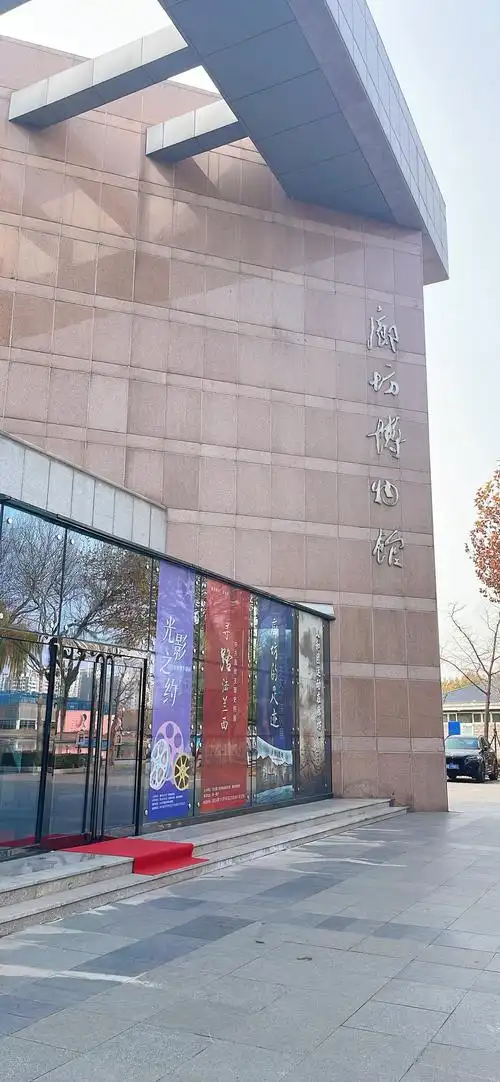 Langfang Museum, opened in 2005 and designated a National Second-Class institution in 2024, traces 7,000 years of regional history—from Neolithic settlements through the late Qing Dynasty. This span mirrors the timeline separating Europe's Stonehenge builders from Victorian-era Londoners. Set in Hebei Province within the historic Beijing-Tianjin-Hebei corridor, the museum illuminates life on the imperial frontier through an "immersive regional history" approach, weaving artifacts into narrative displays. For Western visitors focused on Beijing's imperial grandeur, it offers a refreshing perspective on local heritage and the everyday cultural layers of northern China.
The museum's modern steel-frame structure is softened by Han Dynasty-inspired meander patterns on the façade and a serene central water feature symbolizing the "river of history." Echoing contemporary European museums like the Louvre's glass pyramid or the British Museum's Great Court, minimalist modern volumes enclose carefully curated historical treasures. The first floor showcases the Tang lamp in its own gallery, while the second and third floors house chronological and thematic exhibitions. Bright, well-ventilated interiors and clear circulation make for an unhurried, photogenic visit.
The undisputed highlight is the Tang Dynasty Longfu Temple Perpetual Lamp Tower, a 3.4-meter white marble masterpiece from the 8th or 9th century—roughly contemporary with Charlemagne's Holy Roman Empire. Recognized as the earliest known Tang stone lamp bearing an inscribed date, this National First-Class relic is both visually arresting and historically invaluable. Beyond the lamp, displays feature Bronze Age bronzes from the ancient Yan-Zhao kingdoms, refined ceramics, and a vivid recreation of the 1900 Battle of Langfang, where Boxers famously halted an eight-nation Allied force—a moment as dramatic as any colonial-era conflict of the period.
Admission is free, but visitors should reserve via the official WeChat account or scan a QR code at the entrance. The museum closes Mondays, opening Tuesday through Sunday from 9:00 AM to 5:00 PM (last entry 4:30 PM). Allow two to three hours for a thorough visit. Free parking is available for three hours, and bus routes 12 and 26 stop at "Cultural Center Station." From Beijing, the 805 express bus offers a direct connection. Photography without flash is permitted, and the museum enforces a quiet atmosphere—phones should be set to silent.
Families appreciate the children's experience center, with hands-on activities like simulated archaeology and artifact puzzles, plus occasional themed interactive zones such as the Khitan hunting exhibit. Free volunteer-led tours run at 10:30 AM and 3:30 PM on Saturdays and Sundays—use a translation app for non-Chinese speakers. Just steps away, the Langfang Cultural Arts Center and the Shuiyunjian heritage-style commercial district invite an extended afternoon. For Western travelers seeking a calm, contemplative alternative to crowded headline attractions, this underrated museum delivers a satisfying cultural experience far richer than its modest footprint suggests.
Langfang Museum, opened in 2005 and designated a National Second-Class institution in 2024, traces 7,000 years of regional history—from Neolithic settlements through the late Qing Dynasty. This span mirrors the timeline separating Europe's Stonehenge builders from Victorian-era Londoners. Set in Hebei Province within the historic Beijing-Tianjin-Hebei corridor, the museum illuminates life on the imperial frontier through an "immersive regional history" approach, weaving artifacts into narrative displays. For Western visitors focused on Beijing's imperial grandeur, it offers a refreshing perspective on local heritage and the everyday cultural layers of northern China.
The museum's modern steel-frame structure is softened by Han Dynasty-inspired meander patterns on the façade and a serene central water feature symbolizing the "river of history." Echoing contemporary European museums like the Louvre's glass pyramid or the British Museum's Great Court, minimalist modern volumes enclose carefully curated historical treasures. The first floor showcases the Tang lamp in its own gallery, while the second and third floors house chronological and thematic exhibitions. Bright, well-ventilated interiors and clear circulation make for an unhurried, photogenic visit.
The undisputed highlight is the Tang Dynasty Longfu Temple Perpetual Lamp Tower, a 3.4-meter white marble masterpiece from the 8th or 9th century—roughly contemporary with Charlemagne's Holy Roman Empire. Recognized as the earliest known Tang stone lamp bearing an inscribed date, this National First-Class relic is both visually arresting and historically invaluable. Beyond the lamp, displays feature Bronze Age bronzes from the ancient Yan-Zhao kingdoms, refined ceramics, and a vivid recreation of the 1900 Battle of Langfang, where Boxers famously halted an eight-nation Allied force—a moment as dramatic as any colonial-era conflict of the period.
Admission is free, but visitors should reserve via the official WeChat account or scan a QR code at the entrance. The museum closes Mondays, opening Tuesday through Sunday from 9:00 AM to 5:00 PM (last entry 4:30 PM). Allow two to three hours for a thorough visit. Free parking is available for three hours, and bus routes 12 and 26 stop at "Cultural Center Station." From Beijing, the 805 express bus offers a direct connection. Photography without flash is permitted, and the museum enforces a quiet atmosphere—phones should be set to silent.
Families appreciate the children's experience center, with hands-on activities like simulated archaeology and artifact puzzles, plus occasional themed interactive zones such as the Khitan hunting exhibit. Free volunteer-led tours run at 10:30 AM and 3:30 PM on Saturdays and Sundays—use a translation app for non-Chinese speakers. Just steps away, the Langfang Cultural Arts Center and the Shuiyunjian heritage-style commercial district invite an extended afternoon. For Western travelers seeking a calm, contemplative alternative to crowded headline attractions, this underrated museum delivers a satisfying cultural experience far richer than its modest footprint suggests.