Zengbu Park
⭐ 4.20
Zengbu Park, Baiyun District, Guangzhou City, Guangdong Province, China
 **A Republican-Era Garden Born in Turbulent Times**
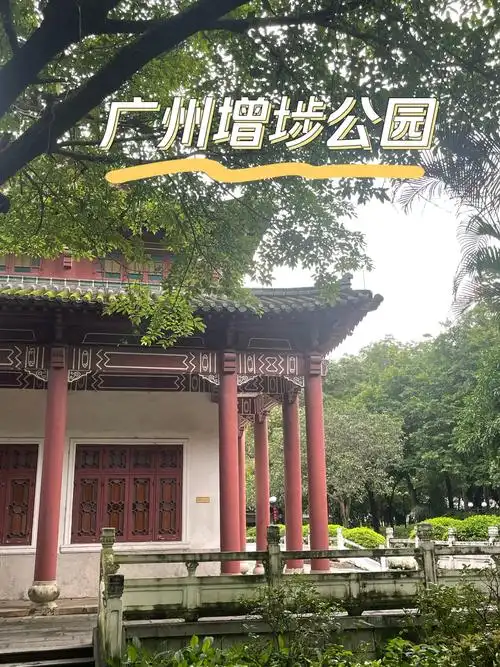
Zengbu Park's origins lie in the heady 1930s, when Guangzhou—then known in the West as Canton—was emerging as a cradle of modern China. Local merchant Huang Guanzhang commissioned the private "Duishan Garden" in 1933, an era when wealthy Chinese patrons across the treaty ports were building private estates in styles blending traditional Chinese craftsmanship with Western Beaux-Arts symmetry, much like the Anglo-Chinese hybrids appearing in colonial Hong Kong or Shanghai's French Concession. The garden's principal hall was explicitly modeled on Sun Yat-sen's Memorial Hall, completed that same decade, lending it a civic gravitas similar to the neoclassical government buildings rising in Washington or Berlin during the interwar years. After 1949, the property was absorbed into state use.
**Architecture: The "Little Sun Yat-sen Hall" and Its Curious Window**
The surviving Republican-era complex features red-walled, green-tiled halls crowned with double-eaved hipped roofs, winding corridors, and octagonal pavilions—a vocabulary any visitor to Beijing's Temple of Heaven or Kyoto's imperial gardens will recognize, yet executed on a domestic scale. The undisputed star is a single clock-shaped wooden window, the only known surviving example in Guangzhou. Its hinged frame swings open like a face on a watch, casting shifting light patterns across the wall when morning sun streams through—reminiscent of the sundial motifs adorning Italian Renaissance villas or the rose windows of medieval European cathedrals. Photographers should aim for 3–6 PM, when raking light dramatizes the textures of weathered plaster and aged timber.
**Industrial Ghosts: Where Mao-Era Factories Meet Republican Elegance**
From the late 1950s onward, the garden served as a calcium-carbide plant, and two stark concrete industrial towers were erected alongside the elegant older buildings. Today, their rough massing stands beside timeworn red-letter slogans painted across brick walls—a juxtaposition that recalls Europe's creative reuse of industrial sites, from Berlin's Tempelhof airfield-turned-park to Manchester's Castlefield district or Düsseldorf's Landschaftspark Duisburg-Nord. For Western travelers familiar with how post-industrial Europe has reclaimed its factories as cultural spaces, Zengbu Park offers a striking Chinese parallel: a place where socialist-era labor history and bourgeois Republican refinement coexist within a single frame.
**A Landscape of Quiet Contrasts**
Spread across roughly 40,000 square meters, the park unfolds through winding paths linking rockeries, ponds, and venerable old trees—banyans and kapok whose tangled roots suggest centuries of patient growth. More than 10,000 square meters of open lawn, repurposed from the former factory's raw-material storage yard, invite picnicking under summer canopies. The atmosphere is unusually hushed for a major Chinese city; locals affectionately call it "Guangzhou's loneliest park." Visitors from bustling metropolises like London or New York will appreciate the rare sensation of strolling through greenery uninterrupted by crowds, while the soft chirping of cicadas and distant swallows evokes a Mediterranean garden's quietude.
**Practical Information for Visitors**
Zengbu Park sits at 8 Fuzhou Road, Liwan District. Take Metro Line 5 or Line 8 to Xicun Station, Exit D, then walk 10–12 minutes. The park is open daily from 6:30 AM to 9:30 PM, with free admission and no reservation required. There are no shops or vending machines inside, so bring water and snacks—mosquito repellent is also strongly recommended, especially between May and October. Some moss-covered flagstones become slippery after rain, so wear sturdy non-slip footwear. A suggested two-hour route moves from the entrance through the Republican-era buildings for window photography, into the Lingnan-style water gardens, past the industrial towers, and finally to the riverside lawn for rest.
**Why Zengbu Park Deserves a Detour**
In a city celebrated for the Canton Tower, the colonial Shamian Island, and Chen Clan Ancestral Hall, Zengbu Park offers something rarer: an intimate, untouristy encounter with the layered contradictions of modern Chinese history. It rewards travelers who enjoy peeling back surfaces—those who, rather than ticking off monuments, savor the quiet dialogue between an art-deco merchant's garden, Mao-era factory walls, and a clock-shaped window that has outlived the world that built it. Combine your visit with a five-minute walk to the neighboring T.I.T. Original Creative Park, where industrial-chic cafés extend the afternoon's reflective mood into a full day of exploring Guangzhou's understated cultural corners.
**A Republican-Era Garden Born in Turbulent Times**
Zengbu Park's origins lie in the heady 1930s, when Guangzhou—then known in the West as Canton—was emerging as a cradle of modern China. Local merchant Huang Guanzhang commissioned the private "Duishan Garden" in 1933, an era when wealthy Chinese patrons across the treaty ports were building private estates in styles blending traditional Chinese craftsmanship with Western Beaux-Arts symmetry, much like the Anglo-Chinese hybrids appearing in colonial Hong Kong or Shanghai's French Concession. The garden's principal hall was explicitly modeled on Sun Yat-sen's Memorial Hall, completed that same decade, lending it a civic gravitas similar to the neoclassical government buildings rising in Washington or Berlin during the interwar years. After 1949, the property was absorbed into state use.
**Architecture: The "Little Sun Yat-sen Hall" and Its Curious Window**
The surviving Republican-era complex features red-walled, green-tiled halls crowned with double-eaved hipped roofs, winding corridors, and octagonal pavilions—a vocabulary any visitor to Beijing's Temple of Heaven or Kyoto's imperial gardens will recognize, yet executed on a domestic scale. The undisputed star is a single clock-shaped wooden window, the only known surviving example in Guangzhou. Its hinged frame swings open like a face on a watch, casting shifting light patterns across the wall when morning sun streams through—reminiscent of the sundial motifs adorning Italian Renaissance villas or the rose windows of medieval European cathedrals. Photographers should aim for 3–6 PM, when raking light dramatizes the textures of weathered plaster and aged timber.
**Industrial Ghosts: Where Mao-Era Factories Meet Republican Elegance**
From the late 1950s onward, the garden served as a calcium-carbide plant, and two stark concrete industrial towers were erected alongside the elegant older buildings. Today, their rough massing stands beside timeworn red-letter slogans painted across brick walls—a juxtaposition that recalls Europe's creative reuse of industrial sites, from Berlin's Tempelhof airfield-turned-park to Manchester's Castlefield district or Düsseldorf's Landschaftspark Duisburg-Nord. For Western travelers familiar with how post-industrial Europe has reclaimed its factories as cultural spaces, Zengbu Park offers a striking Chinese parallel: a place where socialist-era labor history and bourgeois Republican refinement coexist within a single frame.
**A Landscape of Quiet Contrasts**
Spread across roughly 40,000 square meters, the park unfolds through winding paths linking rockeries, ponds, and venerable old trees—banyans and kapok whose tangled roots suggest centuries of patient growth. More than 10,000 square meters of open lawn, repurposed from the former factory's raw-material storage yard, invite picnicking under summer canopies. The atmosphere is unusually hushed for a major Chinese city; locals affectionately call it "Guangzhou's loneliest park." Visitors from bustling metropolises like London or New York will appreciate the rare sensation of strolling through greenery uninterrupted by crowds, while the soft chirping of cicadas and distant swallows evokes a Mediterranean garden's quietude.
**Practical Information for Visitors**
Zengbu Park sits at 8 Fuzhou Road, Liwan District. Take Metro Line 5 or Line 8 to Xicun Station, Exit D, then walk 10–12 minutes. The park is open daily from 6:30 AM to 9:30 PM, with free admission and no reservation required. There are no shops or vending machines inside, so bring water and snacks—mosquito repellent is also strongly recommended, especially between May and October. Some moss-covered flagstones become slippery after rain, so wear sturdy non-slip footwear. A suggested two-hour route moves from the entrance through the Republican-era buildings for window photography, into the Lingnan-style water gardens, past the industrial towers, and finally to the riverside lawn for rest.
**Why Zengbu Park Deserves a Detour**
In a city celebrated for the Canton Tower, the colonial Shamian Island, and Chen Clan Ancestral Hall, Zengbu Park offers something rarer: an intimate, untouristy encounter with the layered contradictions of modern Chinese history. It rewards travelers who enjoy peeling back surfaces—those who, rather than ticking off monuments, savor the quiet dialogue between an art-deco merchant's garden, Mao-era factory walls, and a clock-shaped window that has outlived the world that built it. Combine your visit with a five-minute walk to the neighboring T.I.T. Original Creative Park, where industrial-chic cafés extend the afternoon's reflective mood into a full day of exploring Guangzhou's understated cultural corners.