Panxi Restaurant
⭐ 4.20
No. 13, Dishifu Road, Liwan District, Guangzhou, Guangdong, China
 Panxi Restaurant was established in 1947, during the closing chapter of China's Republican era—a period of profound cultural ferment that produced some of the nation's most distinctive architectural and culinary innovations. Its 1960 reconstruction under the visionary architect Mo Bozhi transformed the property into a landmark fusion of Lingnan garden design and modern hospitality, much as Edwin Lutyens reshaped British country estates into cultural institutions during the same era. Designated a "National Special-Class Restaurant," Panxi has hosted dignitaries from across the globe and was inscribed on Guangzhou's "100 Protected Historic Buildings" register in 2020, cementing its status as a living monument to the city's evolving food culture.
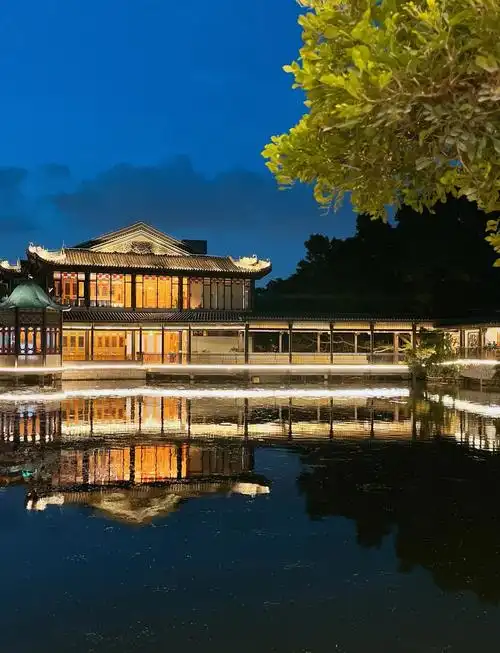
The architecture represents a masterful interpretation of the Lingnan garden tradition, comparable in spirit to Italy's Villa d'Este or the ornamental pavilions of Potsdam—yet distinctly South Chinese in character. Mo Bozhi arranged water halls, winding corridors, and a central lake pavilion across two-thirds of the grounds, leaving the remaining space for dining rooms that open onto these scenic vistas. By day the layout resembles an ink-wash scroll painting; by night, with lanterns reflected in the still water, the atmosphere evokes the theatrical staging of a Peking opera or perhaps a moonlit scene from a Canaletto canvas. Photographers and design enthusiasts will find exceptional subject matter around every turning path.
Beyond its architectural splendor, Panxi is celebrated as a guardian of Cantonese dim sum, recognized as an Intangible Cultural Heritage of China. The kitchen's signature "shaped" dumplings—delectable morsels molded into rabbits, peacocks, and other whimsical forms—have charmed visiting statesmen, while classics such as water chestnut cake, shrimp congee in the Liwan boatman style, crispy rice-noodle rolls, and roast goose showcase centuries of refined technique. The famous "Ker Beef" dish, named after a diplomat who praised it during an official visit, illustrates how Panxi's tables have served as unexpected venues for international diplomacy.
Practical visiting details are straightforward: the restaurant sits at 151 Longjin West Road in the Liwan District, roughly a ten-minute walk from Zhongshan Ba Station on Metro Line 5. Morning tea is served from 7:30 a.m. to 2:30 p.m., with evening service running 5:00 to 9:30 p.m. Expect to spend around 75–90 RMB per person for dim sum, or 100–130 RMB for a fuller banquet meal. Reservations are strongly advised one to three days ahead on weekends and holidays, particularly if you hope to secure a coveted lakefront table or private room; weekday visits offer a calmer, more contemplative pace.
For an ideal half-day itinerary, arrive by 9 a.m. to claim a scenic seat and linger over a leisurely tea service, then wander the gardens to admire the pavilions and ornamental rockeries at your own rhythm. Afterward, stroll onward into neighboring Liwan Lake Park and follow the historic Lizhiwan Canal toward Yongqing Fang, a beautifully restored Xiguan quarter of pastel-hued lanes and traditional Cantonese homes—creating a satisfying "tea, garden, and alleyway" loop that captures the soul of old Guangzhou. In summer, bring mosquito repellent and comfortable walking shoes, as the watery landscape, while irresistible to photographers, does attract the occasional biting insect alongside its many charms.
Panxi Restaurant was established in 1947, during the closing chapter of China's Republican era—a period of profound cultural ferment that produced some of the nation's most distinctive architectural and culinary innovations. Its 1960 reconstruction under the visionary architect Mo Bozhi transformed the property into a landmark fusion of Lingnan garden design and modern hospitality, much as Edwin Lutyens reshaped British country estates into cultural institutions during the same era. Designated a "National Special-Class Restaurant," Panxi has hosted dignitaries from across the globe and was inscribed on Guangzhou's "100 Protected Historic Buildings" register in 2020, cementing its status as a living monument to the city's evolving food culture.
The architecture represents a masterful interpretation of the Lingnan garden tradition, comparable in spirit to Italy's Villa d'Este or the ornamental pavilions of Potsdam—yet distinctly South Chinese in character. Mo Bozhi arranged water halls, winding corridors, and a central lake pavilion across two-thirds of the grounds, leaving the remaining space for dining rooms that open onto these scenic vistas. By day the layout resembles an ink-wash scroll painting; by night, with lanterns reflected in the still water, the atmosphere evokes the theatrical staging of a Peking opera or perhaps a moonlit scene from a Canaletto canvas. Photographers and design enthusiasts will find exceptional subject matter around every turning path.
Beyond its architectural splendor, Panxi is celebrated as a guardian of Cantonese dim sum, recognized as an Intangible Cultural Heritage of China. The kitchen's signature "shaped" dumplings—delectable morsels molded into rabbits, peacocks, and other whimsical forms—have charmed visiting statesmen, while classics such as water chestnut cake, shrimp congee in the Liwan boatman style, crispy rice-noodle rolls, and roast goose showcase centuries of refined technique. The famous "Ker Beef" dish, named after a diplomat who praised it during an official visit, illustrates how Panxi's tables have served as unexpected venues for international diplomacy.
Practical visiting details are straightforward: the restaurant sits at 151 Longjin West Road in the Liwan District, roughly a ten-minute walk from Zhongshan Ba Station on Metro Line 5. Morning tea is served from 7:30 a.m. to 2:30 p.m., with evening service running 5:00 to 9:30 p.m. Expect to spend around 75–90 RMB per person for dim sum, or 100–130 RMB for a fuller banquet meal. Reservations are strongly advised one to three days ahead on weekends and holidays, particularly if you hope to secure a coveted lakefront table or private room; weekday visits offer a calmer, more contemplative pace.
For an ideal half-day itinerary, arrive by 9 a.m. to claim a scenic seat and linger over a leisurely tea service, then wander the gardens to admire the pavilions and ornamental rockeries at your own rhythm. Afterward, stroll onward into neighboring Liwan Lake Park and follow the historic Lizhiwan Canal toward Yongqing Fang, a beautifully restored Xiguan quarter of pastel-hued lanes and traditional Cantonese homes—creating a satisfying "tea, garden, and alleyway" loop that captures the soul of old Guangzhou. In summer, bring mosquito repellent and comfortable walking shoes, as the watery landscape, while irresistible to photographers, does attract the occasional biting insect alongside its many charms.