Lanling Cultural Park
⭐ 2.80
Lanling Cultural Park, Tianning District, Changzhou City, Jiangsu Province, China
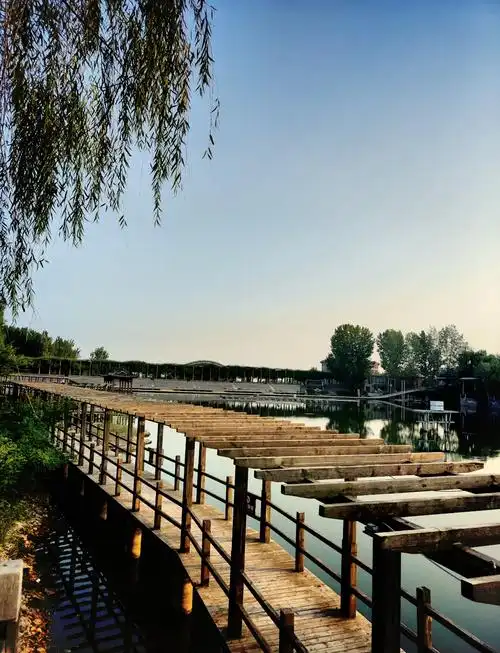 Lanyin carries the legacy of Changzhou's ancient name, Lanling, a title echoing back to the Spring and Autumn period when this region of the Yangtze Delta was a frontier settlement of the Wu kingdom. Comparable in spirit to London's hidden garden squares or Lisbon's tucked-away pocket parks, it represents the kind of organically evolved urban green space that has served generations of neighbors. Designated a National 1A scenic area, it remains entirely free and accessible around the clock, a rare privilege for visitors accustomed to ticketed European attractions like Tivoli Gardens in Copenhagen.
The park employs classical Jiangnan garden principles—think of the intimate, water-centered compositions found at Suzhou's UNESCO-listed Humble Administrator's Garden, but at a domestic, neighborhood scale. Designers preserved the original topography and hydrology, including the spring-fed Qingshui Pool on the north side and the ancient Shanhai Zhen Boulder on the south, the latter mythologized as bearing the footprint of Lü Dongbin, one of the Eight Immortals of Daoist tradition. Over 150 species of trees and shrubs create distinct seasonal moods, from spring blossoms to golden autumn foliage.
The orchid motif defines the park's cultural identity. Winding covered corridors display calligraphy and paintings on orchid themes, including verses by Qing dynasty poet Zhao Yi. For Western visitors, this literary tradition parallels the European reverence for cultivated blooms seen in Monet's Giverny or Keats's poetry—orchids here symbolize refinement and noble character rather than exotic rarity. The name "lan" simultaneously references local horticultural heritage and the Confucian ideal of virtuous purity.
Practical access is straightforward: take bus routes 1, 31, 220, 225, or 226 to either Lanyin (Century Pearl Garden) or Lanyin (Zhongtian Sports Center) stops. Parking is severely limited in this historic neighborhood, so public transport is strongly advised. Signage is predominantly Chinese, so a smartphone translation app is recommended. The park's central tree-shaded plaza hosts spontaneous tai chi, choir singing, and square dancing in early mornings and evenings—offering travelers an unfiltered glimpse of contemporary Jiangnan urban life.
Visit between 7–9 AM or 5–7 PM for the best light and comfortable temperatures, when locals are most active. Summer visitors should bring water, sun protection, and light clothing. Combine Lanyin with a half-day itinerary including the nearby Qingguo Lane Historic District—a Ming-era lane of ancestral halls and literary mansions often compared to Lijiang's old town—and Jinyuan (Near Garden), a compact Qing dynasty private garden. Together they reveal the layered urban fabric of old Changzhou, a city that has been continuously inhabited for over 2,500 years yet remains refreshingly under the radar of international tourism.
Lanyin carries the legacy of Changzhou's ancient name, Lanling, a title echoing back to the Spring and Autumn period when this region of the Yangtze Delta was a frontier settlement of the Wu kingdom. Comparable in spirit to London's hidden garden squares or Lisbon's tucked-away pocket parks, it represents the kind of organically evolved urban green space that has served generations of neighbors. Designated a National 1A scenic area, it remains entirely free and accessible around the clock, a rare privilege for visitors accustomed to ticketed European attractions like Tivoli Gardens in Copenhagen.
The park employs classical Jiangnan garden principles—think of the intimate, water-centered compositions found at Suzhou's UNESCO-listed Humble Administrator's Garden, but at a domestic, neighborhood scale. Designers preserved the original topography and hydrology, including the spring-fed Qingshui Pool on the north side and the ancient Shanhai Zhen Boulder on the south, the latter mythologized as bearing the footprint of Lü Dongbin, one of the Eight Immortals of Daoist tradition. Over 150 species of trees and shrubs create distinct seasonal moods, from spring blossoms to golden autumn foliage.
The orchid motif defines the park's cultural identity. Winding covered corridors display calligraphy and paintings on orchid themes, including verses by Qing dynasty poet Zhao Yi. For Western visitors, this literary tradition parallels the European reverence for cultivated blooms seen in Monet's Giverny or Keats's poetry—orchids here symbolize refinement and noble character rather than exotic rarity. The name "lan" simultaneously references local horticultural heritage and the Confucian ideal of virtuous purity.
Practical access is straightforward: take bus routes 1, 31, 220, 225, or 226 to either Lanyin (Century Pearl Garden) or Lanyin (Zhongtian Sports Center) stops. Parking is severely limited in this historic neighborhood, so public transport is strongly advised. Signage is predominantly Chinese, so a smartphone translation app is recommended. The park's central tree-shaded plaza hosts spontaneous tai chi, choir singing, and square dancing in early mornings and evenings—offering travelers an unfiltered glimpse of contemporary Jiangnan urban life.
Visit between 7–9 AM or 5–7 PM for the best light and comfortable temperatures, when locals are most active. Summer visitors should bring water, sun protection, and light clothing. Combine Lanyin with a half-day itinerary including the nearby Qingguo Lane Historic District—a Ming-era lane of ancestral halls and literary mansions often compared to Lijiang's old town—and Jinyuan (Near Garden), a compact Qing dynasty private garden. Together they reveal the layered urban fabric of old Changzhou, a city that has been continuously inhabited for over 2,500 years yet remains refreshingly under the radar of international tourism.