Yancheng Site
⭐ 4.20
Yancheng Site, Wujin District, Changzhou, Jiangsu Province, China
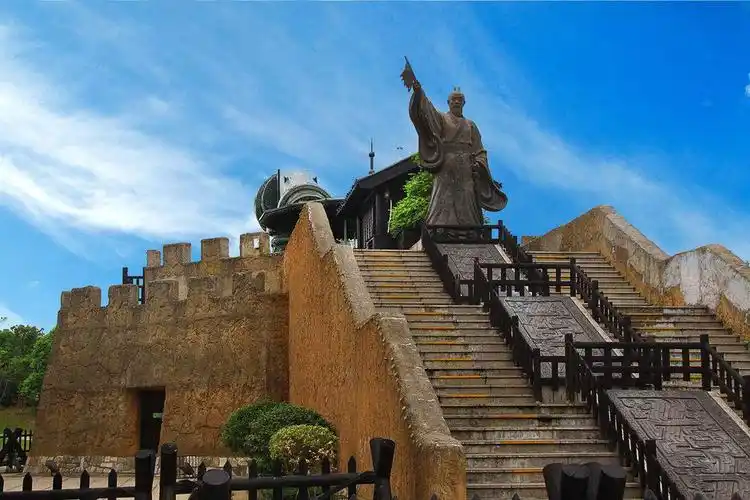 Yancheng is one of the earliest tangible proofs of urban civilization south of the Yangtze River, flourishing during the late Spring and Autumn period (roughly 770–476 BCE) at the same historical moment as the Greek Archaic age and the rise of Rome's Etruscan predecessors. Designated a National Key Cultural Heritage Site in 1988 and rated a 5A Tourist Attraction, it stands as Changzhou's most significant historical landmark, where archaeological conservation meets immersive heritage tourism.
What sets Yancheng apart architecturally is its extraordinary "three cities, three rivers" concentric design, reminiscent of how archaeologists visualize the layered defenses of ancient Troy or the nested ramparts of Mycenae, though rendered in a perfectly symmetrical Jiangnan wetland style. An inner royal citadel, a middle city, and an outer city are each ringed by their own moat, covering about 650,000 square meters. Remarkably, the only access in antiquity was by water, showcasing a sophisticated integration of military defense and hydraulic engineering that urban planners still study today.
The heart of the visit is the Spring and Autumn Yancheng Museum, a contemplative space housing nationally significant relics. Its centerpiece is the so-called "First Boat of China," an astonishingly preserved single-log dugout canoe, alongside bronze ritual vessels and proto-celadon pottery, some of which are so treasured they travel to China's National Museum in Beijing. Walking the earthen ramparts and tracing the still-watery moats on foot allows visitors to absorb the site's quiet, weathered grandeur in a way no glass case can replicate.
Practical details make planning straightforward: the site sits at 201 Wuyi Middle Road in Wujin District, opening daily from 08:30 to 17:00 with last entry at 16:00. Admission to the heritage park runs roughly 20–30 RMB, while the adjacent Spring and Autumn Theme Park requires a separate ticket around 190 RMB. Plan for two to three hours at the ruins themselves, picking up a brochure or booking a guide in advance to fully appreciate the archaeological narrative.
The best seasons are spring (March to May) and autumn (September to November), when soft light flatters the earthworks and temperatures invite leisurely strolling. In summer, sun protection and insect repellent are essential, as the open ramparts offer little shade. Arrive at opening time to enjoy the museum in tranquility before circling the walls and moats, allowing the layered silence of this 2,700-year-old citadel to work its quiet spell.
Yancheng is one of the earliest tangible proofs of urban civilization south of the Yangtze River, flourishing during the late Spring and Autumn period (roughly 770–476 BCE) at the same historical moment as the Greek Archaic age and the rise of Rome's Etruscan predecessors. Designated a National Key Cultural Heritage Site in 1988 and rated a 5A Tourist Attraction, it stands as Changzhou's most significant historical landmark, where archaeological conservation meets immersive heritage tourism.
What sets Yancheng apart architecturally is its extraordinary "three cities, three rivers" concentric design, reminiscent of how archaeologists visualize the layered defenses of ancient Troy or the nested ramparts of Mycenae, though rendered in a perfectly symmetrical Jiangnan wetland style. An inner royal citadel, a middle city, and an outer city are each ringed by their own moat, covering about 650,000 square meters. Remarkably, the only access in antiquity was by water, showcasing a sophisticated integration of military defense and hydraulic engineering that urban planners still study today.
The heart of the visit is the Spring and Autumn Yancheng Museum, a contemplative space housing nationally significant relics. Its centerpiece is the so-called "First Boat of China," an astonishingly preserved single-log dugout canoe, alongside bronze ritual vessels and proto-celadon pottery, some of which are so treasured they travel to China's National Museum in Beijing. Walking the earthen ramparts and tracing the still-watery moats on foot allows visitors to absorb the site's quiet, weathered grandeur in a way no glass case can replicate.
Practical details make planning straightforward: the site sits at 201 Wuyi Middle Road in Wujin District, opening daily from 08:30 to 17:00 with last entry at 16:00. Admission to the heritage park runs roughly 20–30 RMB, while the adjacent Spring and Autumn Theme Park requires a separate ticket around 190 RMB. Plan for two to three hours at the ruins themselves, picking up a brochure or booking a guide in advance to fully appreciate the archaeological narrative.
The best seasons are spring (March to May) and autumn (September to November), when soft light flatters the earthworks and temperatures invite leisurely strolling. In summer, sun protection and insect repellent are essential, as the open ramparts offer little shade. Arrive at opening time to enjoy the museum in tranquility before circling the walls and moats, allowing the layered silence of this 2,700-year-old citadel to work its quiet spell.