Changzhou Museum
⭐ 4.60
Changzhou, Jiangsu, China
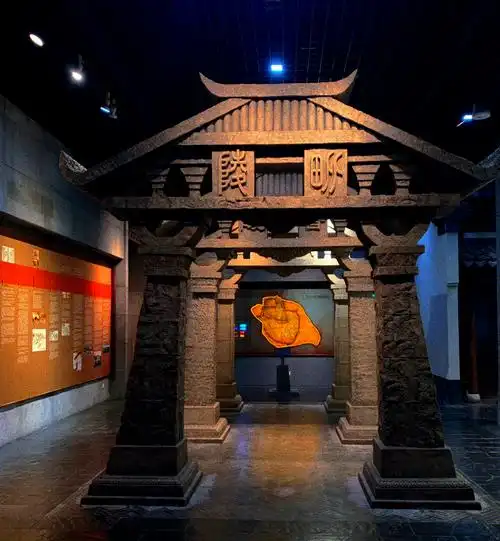 Opened in 2007, Changzhou Museum takes its architectural inspiration from the soaring form of a dragon in mid-flight, a poetic reference to the city's ancient name, Zhongwu, and its 6,000-year heritage along the Yangtze cultural corridor. The building's clean, sweeping lines translate classical Jiangnan symbolism into a contemporary museum language; in scale and ambition it invites comparison with the Musee du quai Branly in Paris or London's Design Museum, though its contents are rooted firmly in regional history. The spacious, climate-controlled interior protects both artefacts and visitors from the humid subtropical climate outside, making it a comfortable refuge on hot summer days or rainy afternoons.
The museum's heart is the second-floor permanent exhibition "Soaring Dragons of Zhongwu," which unfolds Changzhou's complete story across five thematic sections spanning prehistory to the early twentieth century. Here visitors encounter standout treasures—a translucent jade cong from the Liangzhu culture, dating to roughly the same era as Stonehenge's construction; vivid tomb bricks depicting dragons and courtly scenes from the Southern Dynasties; and refined Song-era lacquerware that speaks to the same artistic refinement found in Kyoto's imperial collections. For anyone seeking to understand Jiangnan civilisation beyond its better-known capitals of Suzhou and Nanjing, this gallery is essential.
Upstairs, Jiangsu's only dedicated children's nature museum awaits younger visitors. More than 4,000 specimens of flora, fauna, and fossils fill the hall, including a precious Confuciusornis fossil that bridges the gap between dinosaurs and modern birds. Touchable specimens, interactive games, and hands-on displays make it an ideal stop for families, much like the discovery rooms at London's Natural History Museum or Berlin's Museum für Naturkunde.
The same floor hosts two further galleries of considerable cultural weight. The Xie Zhiliu Art Hall displays more than eighty works by the twentieth-century painting master, whose bird-and-flower compositions are celebrated throughout East Asia. Nearby, the Liu Guojun Rosewood Collection presents over forty pieces of late-Qing and Republican-era furniture, each a masterclass in joinery and design, comparable in craftsmanship to the period interiors preserved at Vaux-le-Vicomt or the Wallace Collection in London.
Practical details make a visit straightforward. The museum opens Tuesday through Sunday, 9 a.m. to 5 p.m., with extended hours to 8 p.m. on summer weekends; it closes on Mondays. Entry is free with a passport or ID card—no advance booking required—though security screening is standard. Free audio guides run in Chinese, and multilingual human-guided tours or rental devices can be arranged on request. Allow two hours for the history gallery alone, and three to four hours for the full museum.
A few small comforts will improve the visit: halls are kept cool to protect artefacts, so a light jacket is advisable, and flash photography and tripods are prohibited. After exploring, visitors can cross directly to Changzhou Cultural Plaza opposite for restaurants and shopping—an easy way to extend the day without retracing steps. Whether you arrive as a casual traveller or a devoted history buff, the museum offers one of the most rewarding introductions to southern Jiangsu available outside its larger neighbours.
Opened in 2007, Changzhou Museum takes its architectural inspiration from the soaring form of a dragon in mid-flight, a poetic reference to the city's ancient name, Zhongwu, and its 6,000-year heritage along the Yangtze cultural corridor. The building's clean, sweeping lines translate classical Jiangnan symbolism into a contemporary museum language; in scale and ambition it invites comparison with the Musee du quai Branly in Paris or London's Design Museum, though its contents are rooted firmly in regional history. The spacious, climate-controlled interior protects both artefacts and visitors from the humid subtropical climate outside, making it a comfortable refuge on hot summer days or rainy afternoons.
The museum's heart is the second-floor permanent exhibition "Soaring Dragons of Zhongwu," which unfolds Changzhou's complete story across five thematic sections spanning prehistory to the early twentieth century. Here visitors encounter standout treasures—a translucent jade cong from the Liangzhu culture, dating to roughly the same era as Stonehenge's construction; vivid tomb bricks depicting dragons and courtly scenes from the Southern Dynasties; and refined Song-era lacquerware that speaks to the same artistic refinement found in Kyoto's imperial collections. For anyone seeking to understand Jiangnan civilisation beyond its better-known capitals of Suzhou and Nanjing, this gallery is essential.
Upstairs, Jiangsu's only dedicated children's nature museum awaits younger visitors. More than 4,000 specimens of flora, fauna, and fossils fill the hall, including a precious Confuciusornis fossil that bridges the gap between dinosaurs and modern birds. Touchable specimens, interactive games, and hands-on displays make it an ideal stop for families, much like the discovery rooms at London's Natural History Museum or Berlin's Museum für Naturkunde.
The same floor hosts two further galleries of considerable cultural weight. The Xie Zhiliu Art Hall displays more than eighty works by the twentieth-century painting master, whose bird-and-flower compositions are celebrated throughout East Asia. Nearby, the Liu Guojun Rosewood Collection presents over forty pieces of late-Qing and Republican-era furniture, each a masterclass in joinery and design, comparable in craftsmanship to the period interiors preserved at Vaux-le-Vicomt or the Wallace Collection in London.
Practical details make a visit straightforward. The museum opens Tuesday through Sunday, 9 a.m. to 5 p.m., with extended hours to 8 p.m. on summer weekends; it closes on Mondays. Entry is free with a passport or ID card—no advance booking required—though security screening is standard. Free audio guides run in Chinese, and multilingual human-guided tours or rental devices can be arranged on request. Allow two hours for the history gallery alone, and three to four hours for the full museum.
A few small comforts will improve the visit: halls are kept cool to protect artefacts, so a light jacket is advisable, and flash photography and tripods are prohibited. After exploring, visitors can cross directly to Changzhou Cultural Plaza opposite for restaurants and shopping—an easy way to extend the day without retracing steps. Whether you arrive as a casual traveller or a devoted history buff, the museum offers one of the most rewarding introductions to southern Jiangsu available outside its larger neighbours.