Wuwei Confucian Temple
⭐ 3.80
No. 172, Chongwen Street, Liangzhou District, Wuwei City, Gansu Province, China
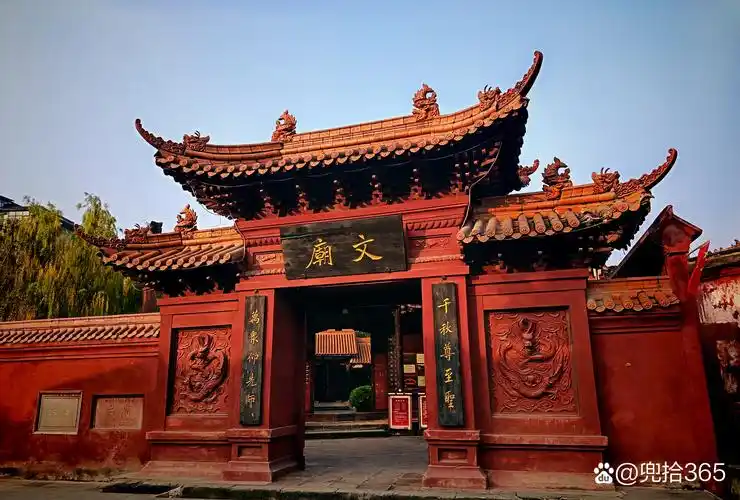 Built in 1437 during the Ming Zhengtong reign, the Wuwei Confucian Temple predates the European Renaissance print boom by just a generation and has stood for nearly 600 years. Wuwei—historically known as Liangzhou—was once a thriving Silk Road oasis rivaling Samarkand and Dunhuang in importance, where Persian merchants, Tibetan monks, and Confucian scholars crossed paths. Designated a provincial relic in 1981, the temple now enjoys national-level protection and ranks among China's three most significant Confucian shrines, alongside those in Qufu and Beijing.
The layout follows the classic "temple-school unity" model, comparable to a European monastery where worship and learning shared the same walled precinct. Three east-west courtyards unfold along a central axis: the towering Wanren Wall, the Pan Pool with its iconic Zyuan Bridge, the Lingxing Gate, the Ji Gate, the imposing Dacheng Hall, and finally the towering Zunjing Pavilion. Red walls crowned with imperial-yellow tiles and ancient cypresses create an atmosphere reminiscent of a Tuscan abbey or a secluded English cathedral close, where every structure feels steeped in centuries of quiet devotion.
The Guiji Hall in the eastern courtyard holds the temple's cultural crown—44 exquisite wooden plaques spanning the Ming, Qing, and Republican eras, bearing phrases like "The City of Books That Never Sleeps." Western visitors might liken these to the memorial tablets found in Westminster Abbey, each one a masterpiece of calligraphy and a window into regional pride. In Dacheng Hall, statues of Confucius and his disciples gaze serenely across the courtyard, much as Michelangelo's prophets oversee the Sistine Chapel.
A genuine national treasure awaits in the courtyard: the Western Xia Stele, inscribed in both Tangut script and classical Chinese—a bilingual Rosetta-Stone-like artifact found nowhere else in China. The temple also houses the Wuwei Municipal Museum, where visitors encounter the iconic Bronze Galloping Horse and a remarkable collection of Han-to-Tang dynasty bamboo and wooden slips, offering glimpses of everyday life along the ancient Silk Road.
Curious traditions enliven the visit. The grand Wanren Wall has never been officially opened because Liangzhou never produced a top imperial examination scholar; visitors must instead slip through side gates called "Rite" and "Righteousness." The Pan Pool's Zyuan Bridge has become a pilgrimage site for students seeking exam success—its railings festooned with red prayer ribbons, a custom not unlike tying wishes at Rome's Trevi Fountain. Entry costs around 30 yuan, the site is open roughly 8:30 to 18:00, and 1.5 to 2 hours suffice for a thorough visit.
Located at 172 Chongwen Street in Liangzhou District, the temple is easily reached by Bus 9 from Wuwei High-Speed Rail Station to the City Hall stop, followed by an 800-meter stroll. A suggested route enters through the south gate, crosses the Zyuan Bridge, progresses through the central halls, then detours into the eastern Guiji Hall and the western museum. Spring and summer offer leafy photography, while winter snow transforms the red walls into scenes reminiscent of Beijing's Forbidden City. The adjacent Western Xia Museum makes a perfect half-day pairing for travelers keen to experience how Confucian order and Silk Road cosmopolitanism once converged on this remote Gansu outpost.
Built in 1437 during the Ming Zhengtong reign, the Wuwei Confucian Temple predates the European Renaissance print boom by just a generation and has stood for nearly 600 years. Wuwei—historically known as Liangzhou—was once a thriving Silk Road oasis rivaling Samarkand and Dunhuang in importance, where Persian merchants, Tibetan monks, and Confucian scholars crossed paths. Designated a provincial relic in 1981, the temple now enjoys national-level protection and ranks among China's three most significant Confucian shrines, alongside those in Qufu and Beijing.
The layout follows the classic "temple-school unity" model, comparable to a European monastery where worship and learning shared the same walled precinct. Three east-west courtyards unfold along a central axis: the towering Wanren Wall, the Pan Pool with its iconic Zyuan Bridge, the Lingxing Gate, the Ji Gate, the imposing Dacheng Hall, and finally the towering Zunjing Pavilion. Red walls crowned with imperial-yellow tiles and ancient cypresses create an atmosphere reminiscent of a Tuscan abbey or a secluded English cathedral close, where every structure feels steeped in centuries of quiet devotion.
The Guiji Hall in the eastern courtyard holds the temple's cultural crown—44 exquisite wooden plaques spanning the Ming, Qing, and Republican eras, bearing phrases like "The City of Books That Never Sleeps." Western visitors might liken these to the memorial tablets found in Westminster Abbey, each one a masterpiece of calligraphy and a window into regional pride. In Dacheng Hall, statues of Confucius and his disciples gaze serenely across the courtyard, much as Michelangelo's prophets oversee the Sistine Chapel.
A genuine national treasure awaits in the courtyard: the Western Xia Stele, inscribed in both Tangut script and classical Chinese—a bilingual Rosetta-Stone-like artifact found nowhere else in China. The temple also houses the Wuwei Municipal Museum, where visitors encounter the iconic Bronze Galloping Horse and a remarkable collection of Han-to-Tang dynasty bamboo and wooden slips, offering glimpses of everyday life along the ancient Silk Road.
Curious traditions enliven the visit. The grand Wanren Wall has never been officially opened because Liangzhou never produced a top imperial examination scholar; visitors must instead slip through side gates called "Rite" and "Righteousness." The Pan Pool's Zyuan Bridge has become a pilgrimage site for students seeking exam success—its railings festooned with red prayer ribbons, a custom not unlike tying wishes at Rome's Trevi Fountain. Entry costs around 30 yuan, the site is open roughly 8:30 to 18:00, and 1.5 to 2 hours suffice for a thorough visit.
Located at 172 Chongwen Street in Liangzhou District, the temple is easily reached by Bus 9 from Wuwei High-Speed Rail Station to the City Hall stop, followed by an 800-meter stroll. A suggested route enters through the south gate, crosses the Zyuan Bridge, progresses through the central halls, then detours into the eastern Guiji Hall and the western museum. Spring and summer offer leafy photography, while winter snow transforms the red walls into scenes reminiscent of Beijing's Forbidden City. The adjacent Western Xia Museum makes a perfect half-day pairing for travelers keen to experience how Confucian order and Silk Road cosmopolitanism once converged on this remote Gansu outpost.