Baling Opera Museum
⭐ 2.50
Baling Opera Museum, Yueyanglou District, Yueyang City, Hunan Province, China
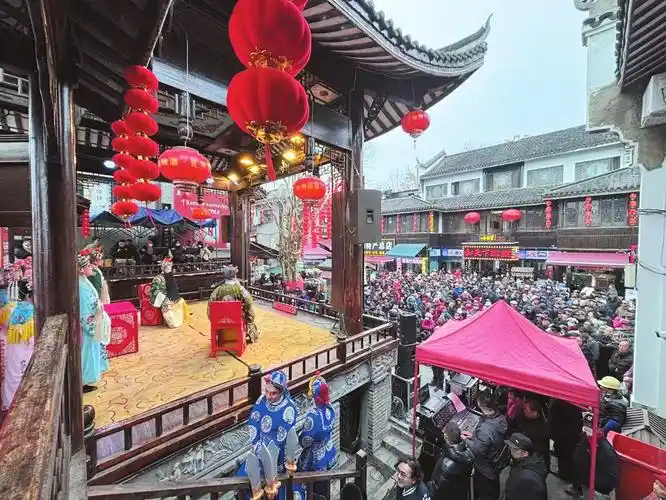 Baling Opera emerged during the late Ming and early Qing dynasties—an era when Italian opera was dawning in Florence and Venice. The art form crystallized from two major Chinese operatic streams: the elegant Kunqu, often called the "ancestor of a hundred operas," and the vigorous, percussion-driven Yiyang style. Over three centuries, it absorbed local folk tunes from the Dongting Lake region, evolving into a regional system with more than 450 traditional plays. Like Italy's commedia dell'arte preserving regional dialects, Baling Opera serves as a living archive of northern Hunan's cultural identity, officially recognized as a National Intangible Cultural Heritage in 2006.
The museum experience unfolds across two Yueyang sites. The Yueyang City Museum, on B陵 West Road, anchors its folk customs gallery with the Baling Opera section. Visitors encounter silk-embroidered costumes from various historical periods, brightly colored face masks reminiscent of Japanese Noh theatre, and finely crafted miniature temple-stage reconstructions—small architectural models revealing how rural audiences once watched performances in courtyard shrines. The companion venue at the Heritage Research Institute on Paotai Mountain Road presents a more scholarly collection: handwritten scores, original librettos, and authentic stage props documenting the art form's evolution.
Beyond entertainment, Baling Opera carries three centuries of Dongting Lake folklore. Its melodic phrasing—alternating between delicate lyrical passages and thunderous percussion-driven climaxes—reflects the rhythm of lake life itself. The stylized gestures encode social codes much as European Baroque dance once conveyed hierarchical meaning through courtly movement. The repertoire preserves historical narratives, folk legends, and moral tales unique to Hunan, making the opera both an artistic treasure and an ethnographic document. As one of China's few still-performed regional theatrical forms, it offers scholars invaluable insight into broader Chinese operatic evolution.
The Yueyang City Museum sits at 18 Baling West Road in Yueyanglou District, open Tuesday through Sunday from 9:00 AM to 5:00 PM, closed Mondays. Admission is free, though advance reservation through official channels is required. The Heritage Research Institute at 88 Paotai Mountain Road operates by appointment only, typically welcoming pre-arranged groups—serious enthusiasts should phone ahead to confirm access. English-language signage is limited, so a translation app or local guide is highly recommended for non-Mandarin speakers.
A visit rewards travelers seeking authentic cultural encounters beyond the standard tourist trail. Pair the museums with the nearby Yueyang Tower—one of China's three great ancient towers, celebrated in Northern Song dynasty poetry (roughly contemporary with England's Norman conquest) and comparable in stature to France's Mont Saint-Michel as a national cultural icon. Opera aficionados should additionally inquire about live performances at the Research Institute, where classic excerpts bring the museum's costumes to life through song, speech, dance, and martial arts—the four pillars of Chinese theatrical training. Allow two to three hours for a satisfying visit.
Baling Opera emerged during the late Ming and early Qing dynasties—an era when Italian opera was dawning in Florence and Venice. The art form crystallized from two major Chinese operatic streams: the elegant Kunqu, often called the "ancestor of a hundred operas," and the vigorous, percussion-driven Yiyang style. Over three centuries, it absorbed local folk tunes from the Dongting Lake region, evolving into a regional system with more than 450 traditional plays. Like Italy's commedia dell'arte preserving regional dialects, Baling Opera serves as a living archive of northern Hunan's cultural identity, officially recognized as a National Intangible Cultural Heritage in 2006.
The museum experience unfolds across two Yueyang sites. The Yueyang City Museum, on B陵 West Road, anchors its folk customs gallery with the Baling Opera section. Visitors encounter silk-embroidered costumes from various historical periods, brightly colored face masks reminiscent of Japanese Noh theatre, and finely crafted miniature temple-stage reconstructions—small architectural models revealing how rural audiences once watched performances in courtyard shrines. The companion venue at the Heritage Research Institute on Paotai Mountain Road presents a more scholarly collection: handwritten scores, original librettos, and authentic stage props documenting the art form's evolution.
Beyond entertainment, Baling Opera carries three centuries of Dongting Lake folklore. Its melodic phrasing—alternating between delicate lyrical passages and thunderous percussion-driven climaxes—reflects the rhythm of lake life itself. The stylized gestures encode social codes much as European Baroque dance once conveyed hierarchical meaning through courtly movement. The repertoire preserves historical narratives, folk legends, and moral tales unique to Hunan, making the opera both an artistic treasure and an ethnographic document. As one of China's few still-performed regional theatrical forms, it offers scholars invaluable insight into broader Chinese operatic evolution.
The Yueyang City Museum sits at 18 Baling West Road in Yueyanglou District, open Tuesday through Sunday from 9:00 AM to 5:00 PM, closed Mondays. Admission is free, though advance reservation through official channels is required. The Heritage Research Institute at 88 Paotai Mountain Road operates by appointment only, typically welcoming pre-arranged groups—serious enthusiasts should phone ahead to confirm access. English-language signage is limited, so a translation app or local guide is highly recommended for non-Mandarin speakers.
A visit rewards travelers seeking authentic cultural encounters beyond the standard tourist trail. Pair the museums with the nearby Yueyang Tower—one of China's three great ancient towers, celebrated in Northern Song dynasty poetry (roughly contemporary with England's Norman conquest) and comparable in stature to France's Mont Saint-Michel as a national cultural icon. Opera aficionados should additionally inquire about live performances at the Research Institute, where classic excerpts bring the museum's costumes to life through song, speech, dance, and martial arts—the four pillars of Chinese theatrical training. Allow two to three hours for a satisfying visit.