Dongting Lake Wetland Park
⭐ 4.50
Dongting Lake Wetland Park, Junshan District, Yueyang City, Hunan Province, China
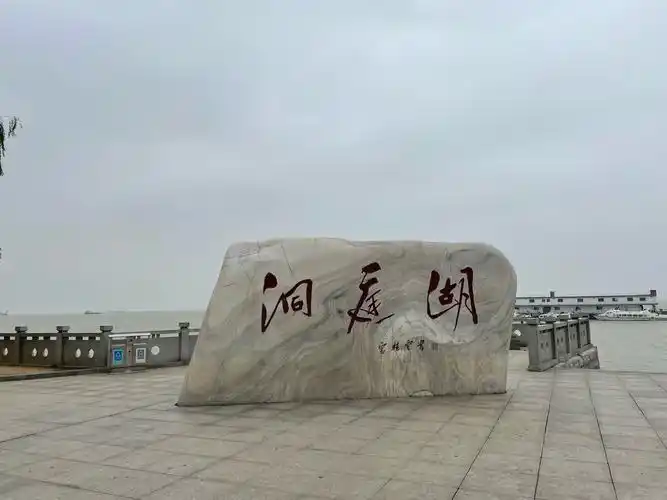 **Ecological Standing and Ancient Origins**
East Dongting Lake represents one of the most significant freshwater wetlands on the middle and lower Yangtze, a vast inland sea that has sustained human settlement since the Neolithic era. Archaeological finds here illuminate the cradle of Chu culture and the broader Hunan-Xiang civilisation, predating even the rise of the Shang dynasty. Today, holding dual status as both a national nature reserve and a national wetland park, it ranks among the most important entries on the East Asian–Australasian Flyway, the bird migration corridor that links Siberia to New Zealand—akin to the ecological role played by the Wadden Sea for European and Arctic birds.
**Wildlife and Natural Landscapes**
The reserve hosts approximately 132 Yangtze finless porpoises, the world's only freshwater porpoise, alongside a recovering population of around 50 milu deer—better known in the West as Père David's deer, the species famously rescued from extinction by European zoos. More than 300 bird species have been recorded, including seven nationally protected "first-class" species such as the Siberian crane and the Chinese merganser. Between October and March, over a million migratory birds congregate here, darkening the sky in formations reminiscent of the great stork roosts of the Spanish Coto Doñana.
**Cultural Resonance**
Dongting Lake has long occupied the imagination of Chinese literati, a tradition Western visitors can appreciate through parallels with Lake Como or the Lake District in their respective cultural canons. Most famously, it was here that the Song dynasty statesman Fan Zhongyan composed the immortal lines "To worry before the world worries, and rejoice only after the world rejoices," inscribed at the nearby Yueyang Tower. Today's park weaves this literary heritage into its eco-educational mission, with birdwatching boardwalks, interpretive signage and a small museum that transforms the visit into a living lesson in conservation.
**Seasonality and When to Go**
The experience shifts dramatically with the calendar. Winter, from October through March, is the undeniable peak: crisp air, golden reeds and the spectacle of globally threatened cranes feeding in the shallows. The annual Dongting Lake International Birdwatching Festival typically held in December draws enthusiasts from across Asia. Summer (June to August) offers a different palette—lotus flowers in bloom, breeding plumage on resident waterfowl and spectacular photography light, though without the awe-inspiring winter flocks. Plan accordingly based on your interests.
**Practical Information for Visitors**
The reserve itself is largely undeveloped for mass tourism; expect basic boardwalks and viewing hides rather than cafés or hotels. Visitors should base themselves in Yueyang city, the historic transport hub served by high-speed rail from Wuhan, Changsha and Guangzhou. Combine the wetland with the adjacent Yueyang Tower—one of China's Three Great Towers, celebrated in countless Tang and Song dynasty poems—and neighbouring Junshan Island, famous for its silver-needle tea, for a rich two- or three-day itinerary.
**A Word of Etiquette**
Wildlife observation here operates on a strict "silent birding" code: maintain distance from core protected zones, avoid sudden movements and never use playback calls. Mosquitoes can be ferocious from late spring through autumn, so pack strong repellent, and sun protection is essential in summer. Hiring a local guide is highly recommended, as unmarked paths and seasonal water level changes can make navigation challenging for first-time visitors.
**Ecological Standing and Ancient Origins**
East Dongting Lake represents one of the most significant freshwater wetlands on the middle and lower Yangtze, a vast inland sea that has sustained human settlement since the Neolithic era. Archaeological finds here illuminate the cradle of Chu culture and the broader Hunan-Xiang civilisation, predating even the rise of the Shang dynasty. Today, holding dual status as both a national nature reserve and a national wetland park, it ranks among the most important entries on the East Asian–Australasian Flyway, the bird migration corridor that links Siberia to New Zealand—akin to the ecological role played by the Wadden Sea for European and Arctic birds.
**Wildlife and Natural Landscapes**
The reserve hosts approximately 132 Yangtze finless porpoises, the world's only freshwater porpoise, alongside a recovering population of around 50 milu deer—better known in the West as Père David's deer, the species famously rescued from extinction by European zoos. More than 300 bird species have been recorded, including seven nationally protected "first-class" species such as the Siberian crane and the Chinese merganser. Between October and March, over a million migratory birds congregate here, darkening the sky in formations reminiscent of the great stork roosts of the Spanish Coto Doñana.
**Cultural Resonance**
Dongting Lake has long occupied the imagination of Chinese literati, a tradition Western visitors can appreciate through parallels with Lake Como or the Lake District in their respective cultural canons. Most famously, it was here that the Song dynasty statesman Fan Zhongyan composed the immortal lines "To worry before the world worries, and rejoice only after the world rejoices," inscribed at the nearby Yueyang Tower. Today's park weaves this literary heritage into its eco-educational mission, with birdwatching boardwalks, interpretive signage and a small museum that transforms the visit into a living lesson in conservation.
**Seasonality and When to Go**
The experience shifts dramatically with the calendar. Winter, from October through March, is the undeniable peak: crisp air, golden reeds and the spectacle of globally threatened cranes feeding in the shallows. The annual Dongting Lake International Birdwatching Festival typically held in December draws enthusiasts from across Asia. Summer (June to August) offers a different palette—lotus flowers in bloom, breeding plumage on resident waterfowl and spectacular photography light, though without the awe-inspiring winter flocks. Plan accordingly based on your interests.
**Practical Information for Visitors**
The reserve itself is largely undeveloped for mass tourism; expect basic boardwalks and viewing hides rather than cafés or hotels. Visitors should base themselves in Yueyang city, the historic transport hub served by high-speed rail from Wuhan, Changsha and Guangzhou. Combine the wetland with the adjacent Yueyang Tower—one of China's Three Great Towers, celebrated in countless Tang and Song dynasty poems—and neighbouring Junshan Island, famous for its silver-needle tea, for a rich two- or three-day itinerary.
**A Word of Etiquette**
Wildlife observation here operates on a strict "silent birding" code: maintain distance from core protected zones, avoid sudden movements and never use playback calls. Mosquitoes can be ferocious from late spring through autumn, so pack strong repellent, and sun protection is essential in summer. Hiring a local guide is highly recommended, as unmarked paths and seasonal water level changes can make navigation challenging for first-time visitors.