Junshan Silver Needle Tea Culture Park
⭐ 3.60
Junshan District, Yueyang City, Hunan Province, China
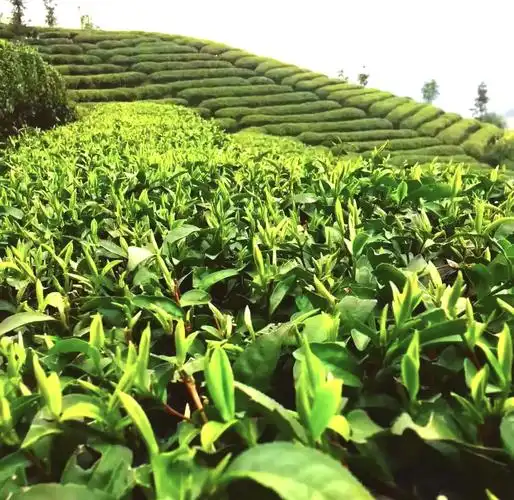 **A Royal Heritage with Global Recognition**
Junshan Silver Needle traces its lineage to the Tang Dynasty, when it entered the imperial tribute roster — a parallel to China's imperial-era monopolies on prized commodities like Darjeeling or Uji matcha centuries later. Local gazetteers from the Qianlong era already likened its flavour to the famed Longjing of Hangzhou. In 1915, the tea captured a gold medal at the Panama-Pacific International Exposition in San Francisco, the same world's fair that introduced fortune cookies to America. After 1949 it became a state gift tea, and in 1972 Premier Zhou Enlai personally presented it to President Richard Nixon during his historic opening to China — a tea diplomacy moment as significant as the Bordeaux exchanged between French heads of state. Its traditional craft was inscribed on Hunan's intangible cultural heritage list in 2017.
**Architecture and Setting**
The Imperial Tea Garden unfolds as a cluster of Ming-Qing dynasty courtyards — imagine something between a miniature Forbidden City pavilion and an English country manor kitchen garden, but in pale grey brick. Carved wooden lattice windows, upturned eaves, and weathered stone paths create a meditative backdrop against Dongting Lake's vast silver expanse, Hunan's largest body of water and a cradle of ancient Chu culture. The estate is threaded with historical relics: the Xiangfei Temple dedicated to the legendary weeping concubines, and the Liuyi Well, said to mark the spot of a Tang-dynasty love story reworked into one of China's earliest theatrical romances.
**The Craft and the Cup**
Inside the glass-walled processing atelier, artisans demonstrate the labour-intensive "sealed-yellowing" technique — a controlled humid fermentation unique to yellow teas, roughly analogous to how Stilton differs from a young Cheddar. Outside in the tasting pavilion, water heated precisely to 85°C is poured over the downy buds, which stand upright in the glass before sinking, rising again, and resettling in a slow ethereal dance. This "three rises, three falls" phenomenon has earned the brew its poetic nickname "Gold Inlaid in Jade." Master tea servers perform the ritual live, explaining how Confucian etiquette, much like Japanese sado or the English afternoon tea tradition, governs every gesture from warming the vessel to serving guests by seniority.
**Cultural Resonance**
The park weaves Chu-Hunan folklore directly into the visitor experience: the tale of the Liuyi messenger who rode through Dongting Lake to save a stranded princess, and the poignant legend of the imperial consorts whose tears stained bamboo leaves for eternity. Local customs such as "the first harvest is never sold" — where opening-day buds are reserved as ceremonial offerings — reflect the same reverence for terroir and ritual that animates Champagne's Maison rituals or Tuscany's first-pressed olive oil. For Western travellers, the park functions as a living classroom on East Asian tea philosophy, where Zen restraint, Confucian hierarchy, and Taoist harmony with nature converge in a single steaming cup.
**Practical Visit Information**
The garden sits on the western end of Junshan Island and is reached by a 5–10 minute ferry from the Junshan Island dock, roughly 30 minutes by road from Yueyang city centre; the ferry ticket is normally bundled with the main scenic area entry. Plan 1 to 1.5 hours for the tea garden itself, ideally combined with a morning visit to the nearby Yueyang Tower — one of China's Three Great Towers, beloved by范文澜-equivalentliterary pilgrims much as Edinburgh Castle anchors Scottish itineraries. The prime window for first-flush picking runs from late March to mid-April, when visitors can hand-harvest the silvery buds; summer shifts the focus indoors to processing demonstrations and lake-view tea tasting.
**Why Visit, and How to Plan**
This is one of the very few places outside core production zones where visitors can observe the entire chain — leaf to cup — of a true Chinese imperial tea. Foreigners with limited time gain an unusually compact, accessible window onto a craft usually restricted to specialist farms in remote mountains. Wear sun protection in summer, as open walking between historic sites is required, and prioritise indoor tea sessions during midday heat. When purchasing gift tea, insist on bottles bearing the official Geographical Indication anti-counterfeit label — comparable to checking the AOC seal on a bottle of Sancerre. Bring an empty daypack; you'll thank yourself later.
**A Royal Heritage with Global Recognition**
Junshan Silver Needle traces its lineage to the Tang Dynasty, when it entered the imperial tribute roster — a parallel to China's imperial-era monopolies on prized commodities like Darjeeling or Uji matcha centuries later. Local gazetteers from the Qianlong era already likened its flavour to the famed Longjing of Hangzhou. In 1915, the tea captured a gold medal at the Panama-Pacific International Exposition in San Francisco, the same world's fair that introduced fortune cookies to America. After 1949 it became a state gift tea, and in 1972 Premier Zhou Enlai personally presented it to President Richard Nixon during his historic opening to China — a tea diplomacy moment as significant as the Bordeaux exchanged between French heads of state. Its traditional craft was inscribed on Hunan's intangible cultural heritage list in 2017.
**Architecture and Setting**
The Imperial Tea Garden unfolds as a cluster of Ming-Qing dynasty courtyards — imagine something between a miniature Forbidden City pavilion and an English country manor kitchen garden, but in pale grey brick. Carved wooden lattice windows, upturned eaves, and weathered stone paths create a meditative backdrop against Dongting Lake's vast silver expanse, Hunan's largest body of water and a cradle of ancient Chu culture. The estate is threaded with historical relics: the Xiangfei Temple dedicated to the legendary weeping concubines, and the Liuyi Well, said to mark the spot of a Tang-dynasty love story reworked into one of China's earliest theatrical romances.
**The Craft and the Cup**
Inside the glass-walled processing atelier, artisans demonstrate the labour-intensive "sealed-yellowing" technique — a controlled humid fermentation unique to yellow teas, roughly analogous to how Stilton differs from a young Cheddar. Outside in the tasting pavilion, water heated precisely to 85°C is poured over the downy buds, which stand upright in the glass before sinking, rising again, and resettling in a slow ethereal dance. This "three rises, three falls" phenomenon has earned the brew its poetic nickname "Gold Inlaid in Jade." Master tea servers perform the ritual live, explaining how Confucian etiquette, much like Japanese sado or the English afternoon tea tradition, governs every gesture from warming the vessel to serving guests by seniority.
**Cultural Resonance**
The park weaves Chu-Hunan folklore directly into the visitor experience: the tale of the Liuyi messenger who rode through Dongting Lake to save a stranded princess, and the poignant legend of the imperial consorts whose tears stained bamboo leaves for eternity. Local customs such as "the first harvest is never sold" — where opening-day buds are reserved as ceremonial offerings — reflect the same reverence for terroir and ritual that animates Champagne's Maison rituals or Tuscany's first-pressed olive oil. For Western travellers, the park functions as a living classroom on East Asian tea philosophy, where Zen restraint, Confucian hierarchy, and Taoist harmony with nature converge in a single steaming cup.
**Practical Visit Information**
The garden sits on the western end of Junshan Island and is reached by a 5–10 minute ferry from the Junshan Island dock, roughly 30 minutes by road from Yueyang city centre; the ferry ticket is normally bundled with the main scenic area entry. Plan 1 to 1.5 hours for the tea garden itself, ideally combined with a morning visit to the nearby Yueyang Tower — one of China's Three Great Towers, beloved by范文澜-equivalentliterary pilgrims much as Edinburgh Castle anchors Scottish itineraries. The prime window for first-flush picking runs from late March to mid-April, when visitors can hand-harvest the silvery buds; summer shifts the focus indoors to processing demonstrations and lake-view tea tasting.
**Why Visit, and How to Plan**
This is one of the very few places outside core production zones where visitors can observe the entire chain — leaf to cup — of a true Chinese imperial tea. Foreigners with limited time gain an unusually compact, accessible window onto a craft usually restricted to specialist farms in remote mountains. Wear sun protection in summer, as open walking between historic sites is required, and prioritise indoor tea sessions during midday heat. When purchasing gift tea, insist on bottles bearing the official Geographical Indication anti-counterfeit label — comparable to checking the AOC seal on a bottle of Sancerre. Bring an empty daypack; you'll thank yourself later.