Keyuan Garden
⭐ 4.20
No. 1, Keyuan Road, Guancheng District, Dongguan City, Guangdong Province, China
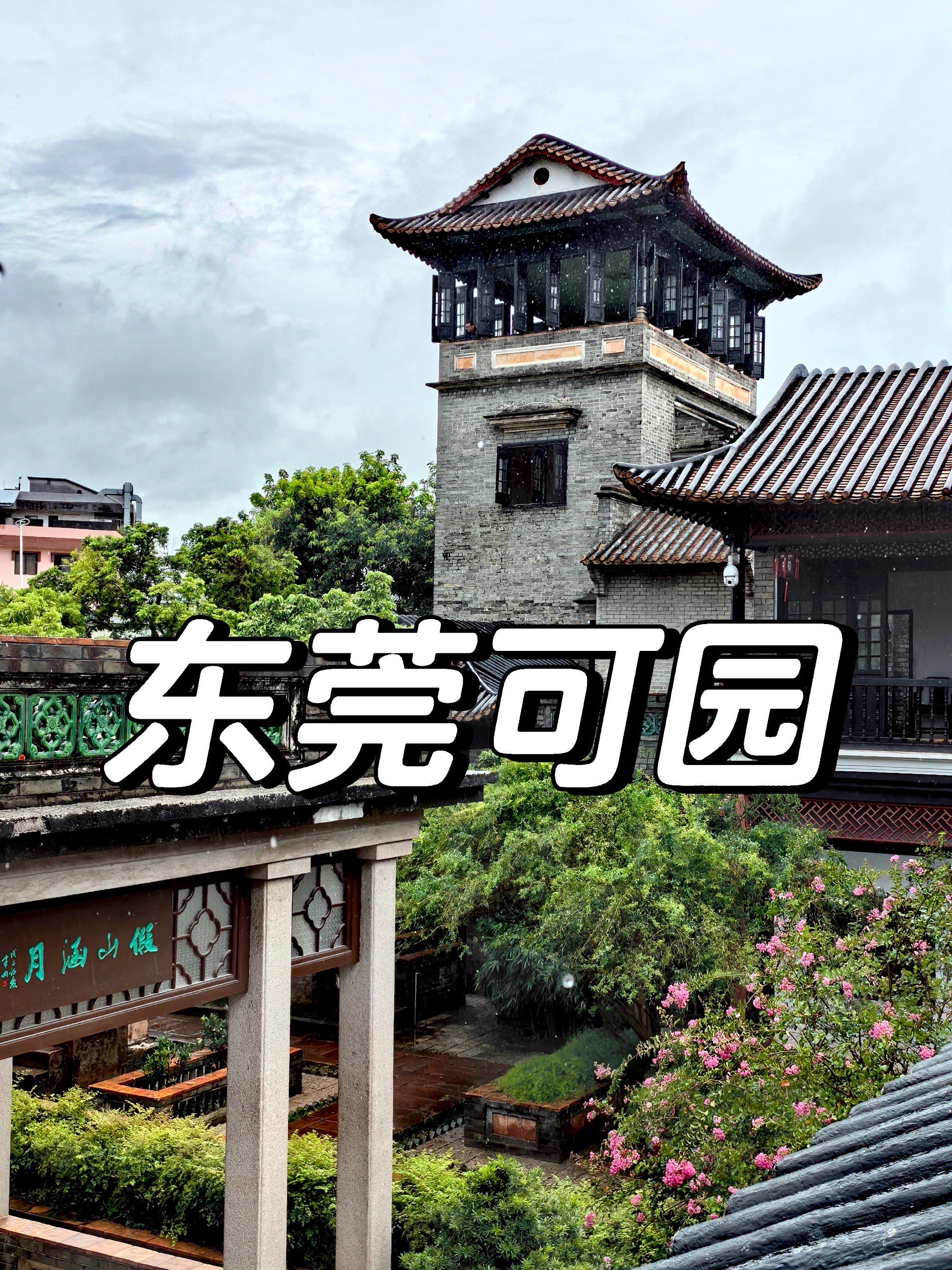 **A Merchant's Dream in Miniature.** Keyuan was commissioned in 1850 by Zhang Jingxiu, a prosperous Guancheng salt merchant, and completed four years later. The name playfully means "what one can [enjoy]" or "worthy of," reflecting his poetic aspirations for a cultured retirement. Built during the twilight of the Qing dynasty—just as Europe was entering its Belle Époque and America its Gilded Age—this private pleasure ground belongs to the same international family of 19th-century bourgeois retreats as Sanssouci near Berlin or the garden pavilions of Stowe in England, only rendered in distinctly Cantonese style.
**Architecture: The Art of the Tiny.** At barely a third of an acre, Keyuan demonstrates the Chinese genius for compressing landscape into a courtyard. Its designers stacked pavilions and galleries at varying heights, threaded 130 doorways and moon gates into a labyrinth of covered walkways, and turned every "empty" corner into a framed view. The four-storey wooden Inviting Mountain Pavilion (Yaoshange) crowns the composition and once offered panoramas across the walled city; the crescent-shaped Chuyue Pool Hall is built to resemble a painted pleasure boat frozen mid-glide. Expect wok-ear gables, Manchu-style stained-glass windows, and brick-and-wood carvings that quietly fuse Chinese tradition with subtle European influences imported through Canton, the era's only legal port of Western trade.
**Birthplace of a Painting School.** Between 1864 and 1874 the brothers Ju Chao and Ju Lian took up residence here, and in a small upstairs studio they refined a brushless, water-charged method of applying mineral pigments that became known as the "splash water, splash powder" (zhuangshui zhuangfen) technique. Their students—later branded the Lingnan School—would rival the older Shanghai and Jiangsu traditions and bring modern Chinese art into dialogue with Japanese and Western painting. Keyuan is rightly called the cradle of that movement, and a small gallery inside displays period works and explains the technique.
**Practical Visit Information.** Keyuan sits at 32 Keyuan Road in central Guancheng; the south gate is the easiest entry. The historic core costs just 8 RMB (around €1), while the adjacent modern museum hall is free—reserve through the WeChat account "Dongguan Keyuan Museum." Opening hours run 9:00–17:30 daily (8:30 during holidays and school breaks), last admission at 17:00, and the site closes every Tuesday except public holidays. Free Mandarin guided tours run at set times; casual visitors need only 30–45 minutes, but photography enthusiasts should budget 1–1.5 hours.
**Tips for Western Travellers.** Wear flat shoes—the flagstone paths and stepped thresholds are unforgiving on heels—and bring a light layer in winter, as some galleries are unheated. Late afternoon (16:00–17:00) delivers the softest, most golden light for shooting the carved windows and reflective pools. Touching the historic fabric, commercial photography, and pets are all prohibited. Combine your visit with the adjacent Yingen Gate tower and a stroll through Xichenglou Park to round out an atmospheric half-day in old Dongguan, easily reached by metro or taxi from the city's main hubs.
**A Merchant's Dream in Miniature.** Keyuan was commissioned in 1850 by Zhang Jingxiu, a prosperous Guancheng salt merchant, and completed four years later. The name playfully means "what one can [enjoy]" or "worthy of," reflecting his poetic aspirations for a cultured retirement. Built during the twilight of the Qing dynasty—just as Europe was entering its Belle Époque and America its Gilded Age—this private pleasure ground belongs to the same international family of 19th-century bourgeois retreats as Sanssouci near Berlin or the garden pavilions of Stowe in England, only rendered in distinctly Cantonese style.
**Architecture: The Art of the Tiny.** At barely a third of an acre, Keyuan demonstrates the Chinese genius for compressing landscape into a courtyard. Its designers stacked pavilions and galleries at varying heights, threaded 130 doorways and moon gates into a labyrinth of covered walkways, and turned every "empty" corner into a framed view. The four-storey wooden Inviting Mountain Pavilion (Yaoshange) crowns the composition and once offered panoramas across the walled city; the crescent-shaped Chuyue Pool Hall is built to resemble a painted pleasure boat frozen mid-glide. Expect wok-ear gables, Manchu-style stained-glass windows, and brick-and-wood carvings that quietly fuse Chinese tradition with subtle European influences imported through Canton, the era's only legal port of Western trade.
**Birthplace of a Painting School.** Between 1864 and 1874 the brothers Ju Chao and Ju Lian took up residence here, and in a small upstairs studio they refined a brushless, water-charged method of applying mineral pigments that became known as the "splash water, splash powder" (zhuangshui zhuangfen) technique. Their students—later branded the Lingnan School—would rival the older Shanghai and Jiangsu traditions and bring modern Chinese art into dialogue with Japanese and Western painting. Keyuan is rightly called the cradle of that movement, and a small gallery inside displays period works and explains the technique.
**Practical Visit Information.** Keyuan sits at 32 Keyuan Road in central Guancheng; the south gate is the easiest entry. The historic core costs just 8 RMB (around €1), while the adjacent modern museum hall is free—reserve through the WeChat account "Dongguan Keyuan Museum." Opening hours run 9:00–17:30 daily (8:30 during holidays and school breaks), last admission at 17:00, and the site closes every Tuesday except public holidays. Free Mandarin guided tours run at set times; casual visitors need only 30–45 minutes, but photography enthusiasts should budget 1–1.5 hours.
**Tips for Western Travellers.** Wear flat shoes—the flagstone paths and stepped thresholds are unforgiving on heels—and bring a light layer in winter, as some galleries are unheated. Late afternoon (16:00–17:00) delivers the softest, most golden light for shooting the carved windows and reflective pools. Touching the historic fabric, commercial photography, and pets are all prohibited. Combine your visit with the adjacent Yingen Gate tower and a stroll through Xichenglou Park to round out an atmospheric half-day in old Dongguan, easily reached by metro or taxi from the city's main hubs.