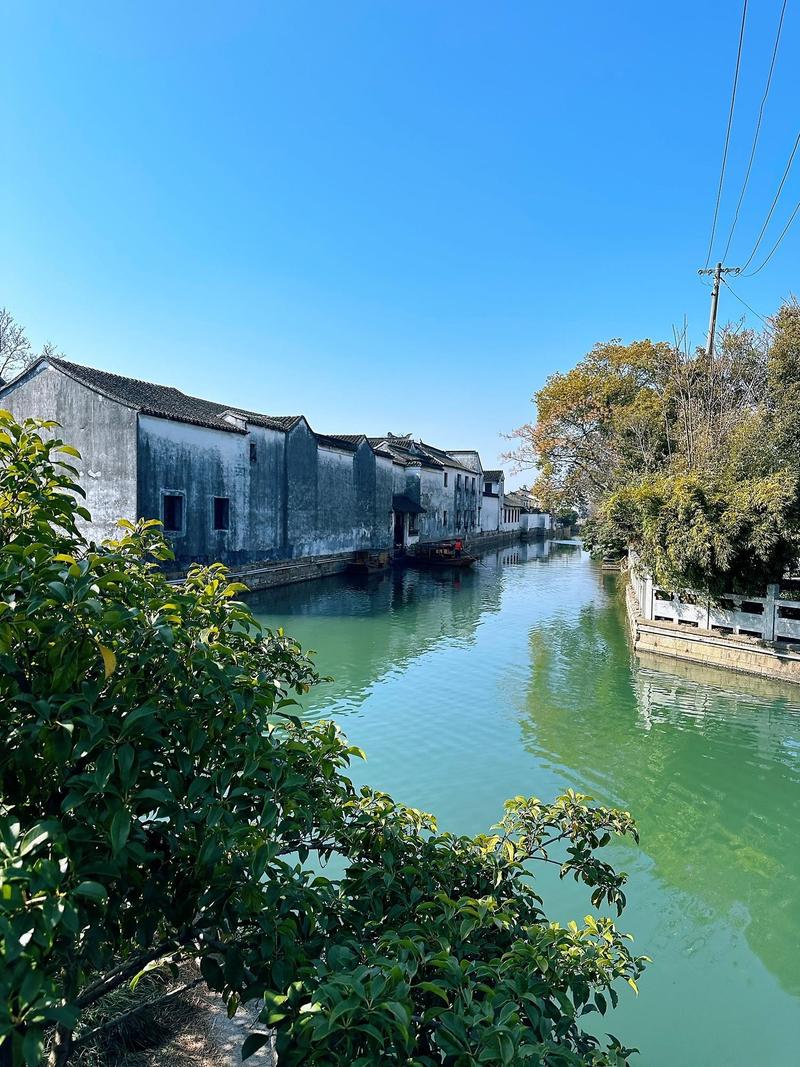
Stretching across Asia's longest-enduring cityscape, Pingjiang Historic Block represents an extraordinary urban fossil: its street pattern essentially mirrors the 12th-century Pingjiang Map, a stone tablet carved during the Southern Song Dynasty—the era when Genghis Khan was still uniting the Mongol tribes and Europe's great Gothic cathedrals were rising. More than 2,500 years of Suzhou's history layer into this quarter, yet remarkably, the medieval grid of canals and lanes survives largely intact. The layout, with waterways flanking streets in a "double-chessboard" pattern, has no real European equivalent; it resembles a denser, more intimate cousin of Amsterdam's canal belt, though built for merchant barges and scholars rather than Dutch commerce.
The architecture is pure Jiangnan vernacular: whitewashed plaster facades topped with dark clay-tile roofs cascading toward the canal, their reflections broken only by low stone arches. Stepping through alleys like Zhongjia Alley or Dingxiang Lane feels like slipping into a Canaletto painting, but one inhabited rather than staged. Tucked into these lanes are protected heritage buildings ranging from modest merchant homes to grand residences such as the Pan Shien Former Home—once home to a Qing imperial zhuangyuan (top scholar). The visual logic is restrained, elegant, and unmistakably southern Chinese, far gentler in scale than Beijing's imperial grandeur or the soaring drama of a Mughal fort.
Cultural density rivals any major European museum quarter. Within a few hundred meters lie the China Kunqu Museum—housed in the 1760s Quanjin Guild Hall, a stunning stage for the UNESCO-listed Kunqu opera tradition—and the Suzhou Pingtan Museum, where the melodious Wu-dialect storytelling tradition still draws afternoon audiences. The retired scholar-garden Couple's Garden (Ou Yuan), a UNESCO World Heritage site shared with four other Suzhou classical gardens, anchors the southern end and offers a quiet green counterpoint to the bustle. Visitors often pause mid-walk to hear a gentle pingtan refrain drifting from a canal-side teahouse.
Practically speaking, the block is free and unfenced, making it ideal for a slow cultural amble of three to four hours. The softest light, and thinnest crowds, arrive just after sunrise or in the golden hour before dusk, when laundry flutters above cobbled lanes and stone bridges glow amber. Three metro stations serve the area—Xiangmen (Line 1), Lindun Lu (Line 4), and Xuanqiang Xiang (Line 6)—each an easy walk to a different entry point. A logical half-day route begins at the adjacent Humble Administrator's Garden and Suzhou Museum (Line 1, Lindun Lu), then proceeds southward along Pingjiang Road through the Kunqu Museum to the Couple's Garden.
The soul of the district lies in its side alleys, where over 10,000 original residents still hang laundry, brew tea, and chat in soft Suzhou dialect. Escape the main drag into Daru Lane or Zhongjia Alley to find plum-blossom cakes, chicken-foot snacks, and sweet rice porridge from vendors whose families have worked these blocks for generations. A hand-rowed punt offers a centuries-old vantage from the water itself. Weekends and holidays fill the main street shoulder-to-shoulder, so off-peak visits reward the patient; visitors should also politely decline touts steering them toward unmarked "teahouses" or "specialty shops" with inflated prices, a minor but persistent nuisance in this otherwise enchanting corner of Jiangnan.