Junshan Island
⭐ 4.20
Junshan Island, Junshan District, Yueyang City, Hunan Province, China
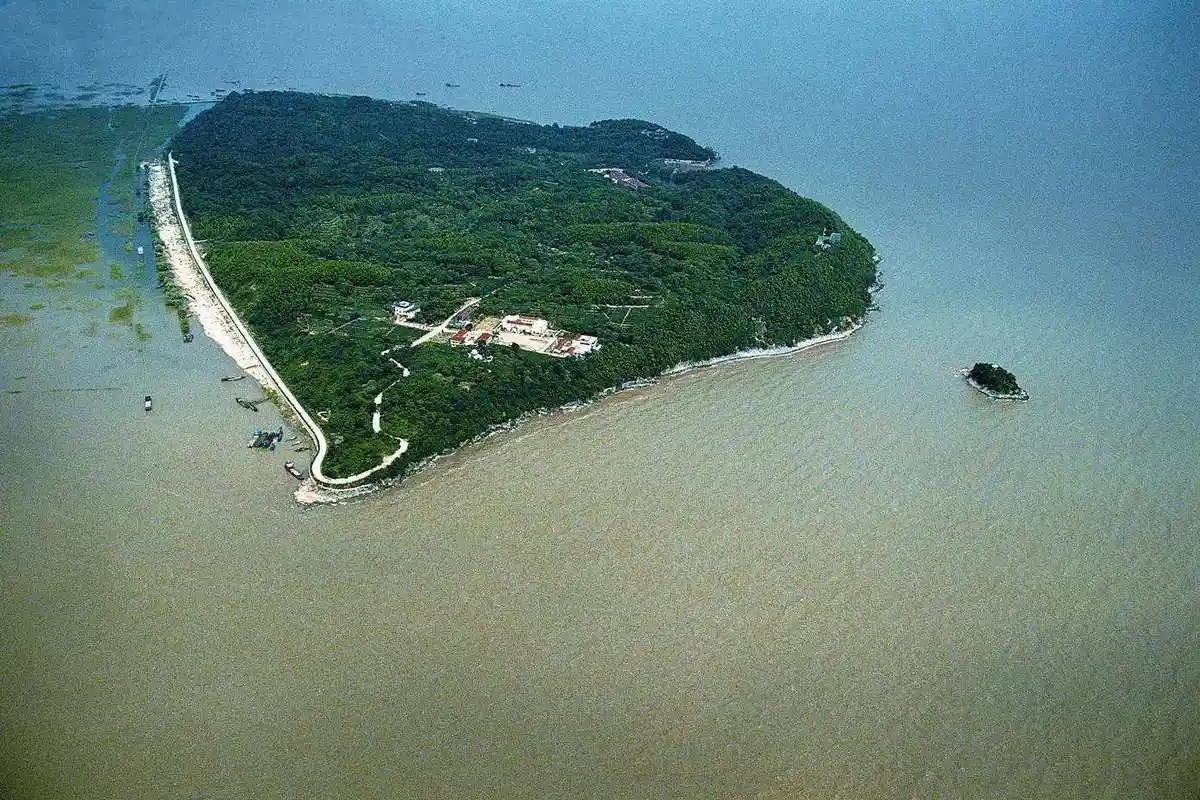 Junshan Island carries a literary pedigree that rivals the storied riverbanks of the Rhine. Since the legendary Yu the Great reputedly cast ritual tripods here while taming the floods—roughly contemporary with the Bronze Age civilizations of Mycenae—kings and sages have left their mark. Qin Shi Huang's "Seal of the Mountain" stone carving endures from his southern tour in 215 BCE, while remnants of the Song-era Yang Yao rebellion and a flying bell from that uprising still survive. Generations of China’s greatest writers, from Qu Yuan and Jia Yi to Tang poet Li Bai, have immortalized these waters, earning Junshan its enduring reputation as a "poetry island" much as Petrarch shaped the cultural image of Vaucluse.
The island’s heart lies in its remarkable funerary and commemorative architecture. The Tomb of the Two Consorts, honoring Ehuang and Nüying—wives of the sage-king Shun—holds the distinction of being China’s earliest imperial consort mausoleum. Nearby, the Xiangfei Shrine displays a monumental antithetical couplet penned by the late Qing reformer Zhang Zhidong, comparable in ambition to the inscriptions adorning Westminster Abbey’s Poets' Corner. The Liu Yi Well and its adjacent pavilion commemorate a tender folktale of love and duty that predates by centuries the courtly romances of medieval Europe, while the Langyin Pavilion is said to mark where the immortal Lü Dongbin composed his farewell verses before ascending to the heavens.
Junshan’s natural treasures are equally captivating. Some two dozen bamboo varieties flourish here, including the famous "speckled bamboo," whose mottled markings are said to be the eternal tear stains of the grieving consorts. The island is the birthplace of Junshan Yinzhen tea, one of China’s most prestigious yellow varieties—savored for centuries in imperial palaces and often compared to the delicate first flushes of Darjeeling. When brewed, its needle-like leaves perform a magical "three rises and three falls" dance in the cup, a spectacle as mesmerizing as the unfurling of a perfectly steeping West Lake Longjing.
Visiting Junshan requires a short ferry ride from either the Yueyang Tower Wharf or the Baling Square Wharf, evoking the approach to Mont Saint-Michel across its tidal flats—only here the “sea” is the legendary eight-hundred-li expanse of Dongting Lake. Adult entry is approximately 78 yuan, with complimentary admission for visitors over 65 and half-price tickets for students; round-trip ferry fares (around 30 yuan) are separate. Operating hours vary seasonally, so confirm final return-boat times and weather conditions before departure, especially during the summer flood season when service may be adjusted.
For the best experience, follow a clockwise loop beginning at the Two Consorts Tomb and Xiangfei Shrine, continuing through the atmospheric speckled bamboo groves to the Liu Yi Well and Junshan tea gardens, then finishing at the Dongting Temple or Langyin Pavilion, where sweeping lake panoramas unfold. Allow three to four hours for a thorough exploration. Spring (March–May) brings blooming flora and tea-picking season, while autumn (September–November) is prime for birdwatching as migratory flocks pause along the East Asian flyway. Dining options on the island are limited, so visitors should carry water and light refreshments. A guidebook or local guide is highly recommended—without one, the layered mythology behind each stone, well, and pavilion can easily pass unnoticed.
Junshan Island carries a literary pedigree that rivals the storied riverbanks of the Rhine. Since the legendary Yu the Great reputedly cast ritual tripods here while taming the floods—roughly contemporary with the Bronze Age civilizations of Mycenae—kings and sages have left their mark. Qin Shi Huang's "Seal of the Mountain" stone carving endures from his southern tour in 215 BCE, while remnants of the Song-era Yang Yao rebellion and a flying bell from that uprising still survive. Generations of China’s greatest writers, from Qu Yuan and Jia Yi to Tang poet Li Bai, have immortalized these waters, earning Junshan its enduring reputation as a "poetry island" much as Petrarch shaped the cultural image of Vaucluse.
The island’s heart lies in its remarkable funerary and commemorative architecture. The Tomb of the Two Consorts, honoring Ehuang and Nüying—wives of the sage-king Shun—holds the distinction of being China’s earliest imperial consort mausoleum. Nearby, the Xiangfei Shrine displays a monumental antithetical couplet penned by the late Qing reformer Zhang Zhidong, comparable in ambition to the inscriptions adorning Westminster Abbey’s Poets' Corner. The Liu Yi Well and its adjacent pavilion commemorate a tender folktale of love and duty that predates by centuries the courtly romances of medieval Europe, while the Langyin Pavilion is said to mark where the immortal Lü Dongbin composed his farewell verses before ascending to the heavens.
Junshan’s natural treasures are equally captivating. Some two dozen bamboo varieties flourish here, including the famous "speckled bamboo," whose mottled markings are said to be the eternal tear stains of the grieving consorts. The island is the birthplace of Junshan Yinzhen tea, one of China’s most prestigious yellow varieties—savored for centuries in imperial palaces and often compared to the delicate first flushes of Darjeeling. When brewed, its needle-like leaves perform a magical "three rises and three falls" dance in the cup, a spectacle as mesmerizing as the unfurling of a perfectly steeping West Lake Longjing.
Visiting Junshan requires a short ferry ride from either the Yueyang Tower Wharf or the Baling Square Wharf, evoking the approach to Mont Saint-Michel across its tidal flats—only here the “sea” is the legendary eight-hundred-li expanse of Dongting Lake. Adult entry is approximately 78 yuan, with complimentary admission for visitors over 65 and half-price tickets for students; round-trip ferry fares (around 30 yuan) are separate. Operating hours vary seasonally, so confirm final return-boat times and weather conditions before departure, especially during the summer flood season when service may be adjusted.
For the best experience, follow a clockwise loop beginning at the Two Consorts Tomb and Xiangfei Shrine, continuing through the atmospheric speckled bamboo groves to the Liu Yi Well and Junshan tea gardens, then finishing at the Dongting Temple or Langyin Pavilion, where sweeping lake panoramas unfold. Allow three to four hours for a thorough exploration. Spring (March–May) brings blooming flora and tea-picking season, while autumn (September–November) is prime for birdwatching as migratory flocks pause along the East Asian flyway. Dining options on the island are limited, so visitors should carry water and light refreshments. A guidebook or local guide is highly recommended—without one, the layered mythology behind each stone, well, and pavilion can easily pass unnoticed.