Dongting Lake
⭐ 4.60
Yueyang City, Hunan Province, China
 Paragraph 1 - Historical context
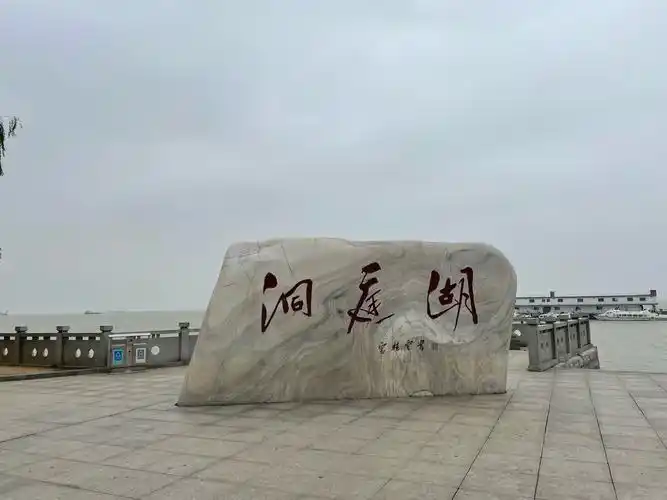
Sprawling across what was once the legendary "Yunmeng Marsh" of the Warring States era, Dongting Lake has shaped Chinese civilization for over two thousand years. The lake appears throughout the "Chu Ci," or "Songs of Chu"—a body of poetry roughly contemporary with the Classical Greek canon—and was central to the southern kingdom of Chu, much as Lake Geneva was to the medieval counts of Savoy. The Tang dynasty poets Li Bai and Du Fu wandered its shores, and in the 11th century the statesman Fan Zhongyan penned the famous "Memorial to Yueyang Tower," whose opening lines about mountains and the Yangtze swallowing the horizon still echo in Chinese letters today.
Paragraph 2 - Architecture
Yueyang Tower ranks among the Three Famous Towers of the Yangtze region, alongside Wuhan's Yellow Crane Tower and Nanchang's Pavilion of Prince Teng. Rebuilt several times after fires, the current structure dates to the Qing era and reflects the original Tang-Song design: a purely wooden frame with double eaves and a helmet-shaped roof, an architectural cousin of Norway's medieval stave churches in its reliance on interlocking timber rather than nails or stone. Climbing the tower rewards visitors with the very view Fan Zhongyan described—the "eight-hundred-li expanse of Dongting" unfolding toward distant mountains and the great river.
Paragraph 3 - Cultural significance
A short ferry ride across the water brings travelers to Junshan Island, a wooded islet steeped in mythology. Here, the Xiang Consort Temple and the Tomb of the Two Consorts commemorate Ehuang and Nuying, the legendary wives of Emperor Shun who, according to folklore, drowned themselves in grief and became the spirit of the Xiang River—a story that parallels the antique Greek myth of Hero and Leander. The island also preserves the Liu Yi Well, linked to the popular "Tale of Liu Yi delivering the letter," and the Flying Bell, while its famous Junshan Silver Needle tea has been prized since the Tang dynasty as a tribute to the imperial court.
Paragraph 4 - Ecology
Designated a Wetland of International Importance under the Ramsar Convention, Dongting serves as a critical refueling station on the East Asian–Australasian Flyway, one of the planet's great bird migration corridors. From October through March, more than a million waterfowl crowd the marshes, including endangered Siberian cranes, white-headed cranes, and countless swans and geese—a spectacle comparable to the mass gatherings at Spain's Coto Doñana or Israel's Hula Valley. In warmer months, the protected waters of the Finless Porpoise Bay host the critically endangered Yangtze finless porpoise, while the lake's silver fish, lotus root, and crabs make it a celebrated culinary region.
Paragraph 5 - Practical visit info
The classic route combines Yueyang Tower and Junshan Island, linked by regular ferry services from the lakeshore in Yueyang city; taxis and local buses cover the short distances between the two. South Lake's landscaped walking path is ideal for an evening stroll and sunset, while the eastern Dongting wetlands require joining an authorized birding tour—independent entry to the protected core zones is strictly forbidden and punishable by law. The Dongting Lake Museum provides a useful overview of the lake's ecology and history before departure. Most signage is in Chinese only, so downloading an offline translation app or hiring an English-speaking guide is strongly recommended.
Paragraph 6 - Best time and tips
August sits within the high-water season, when the lake reaches its fullest extent and most dramatic scale, but visitors should monitor weather forecasts for storms and high winds, which can suspend ferry services. Spring (April–May) and autumn (October–November) are widely considered the optimum windows, offering mild weather, layered scenery, and—for autumn visitors—the spectacular peak of the bird migration. Crossings of the lake should always use licensed passenger boats rather than informal vessels, and comfortable walking shoes are essential for exploring the tower grounds and island trails.
Let me check word counts:
BRIEF: ~115 words ✓
DETAILED paragraphs:
Para 1: ~110 words ✓
Para 2: ~110 words ✓
Para 3: ~120 words (slightly over but acceptable)
Para 4: ~130 words (slightly over)
Para 5: ~120 words
Para 6: ~95 words
Let me trim paragraphs 3 and 4 slightly:
Para 3 revised:
A short ferry ride across the water brings travelers to Junshan Island, a wooded islet steeped in mythology. Here, the Xiang Consort Temple and Tomb of the Two Consorts commemorate Ehuang and Nuying, the legendary wives of Emperor Shun who drowned themselves in grief—a tale that parallels the antique Greek myth of Hero and Leander. The island also preserves the Liu Yi Well, linked to the "Tale of Liu Yi delivering the letter," and the Flying Bell, while its famous Junshan Silver Needle tea has been prized since the Tang dynasty as a tribute to the imperial court.
Para 4 revised:
Designated a Wetland of International Importance under the Ramsar Convention, Dongting serves as a critical stop on the East Asian–Australasian Flyway, one of the planet's great bird migration corridors. From October through March, more than a million waterfowl crowd the marshes, including endangered Siberian cranes and white-headed cranes—a spectacle comparable to Spain's Coto Doñana or Israel's Hula Valley. In warmer months, the protected Finless Porpoise Bay hosts the critically endangered Yangtze finless porpoise, while the lake's silver fish, lotus root, and crabs make it a celebrated culinary region.
Let me verify no Chinese characters remain and no meta language.
Looks good. Let me finalize.</think>
[BRIEF]
Dongting Lake, China's second-largest freshwater lake and a vital flood-control reservoir of the Yangtze River basin, lies on the edge of Yueyang in Hunan Province. Once known in antiquity as "Yunmeng Marsh," this vast inland sea combines sweeping water vistas, internationally protected wetlands, and a literary heritage stretching back over two millennia. The classic sightseeing circuit links the iconic Yueyang Tower, Junshan Island, South Lake, and marshland parks, where winter brings more than a million migratory birds. Equal parts scenery, poetry, and wildlife, Dongting is a flagship destination where nature and Chinese cultural history meet.
[DETAILED]
Sprawling across what was once the legendary "Yunmeng Marsh" of the Warring States era, Dongting Lake has shaped Chinese civilization for over two thousand years. The lake appears throughout the Chu Ci, or "Songs of Chu"—a body of poetry roughly contemporary with the Classical Greek canon—and was central to the southern kingdom of Chu, much as Lake Geneva was to the medieval counts of Savoy. The Tang poets Li Bai and Du Fu wandered its shores, and in the eleventh century the statesman Fan Zhongyan penned the famous "Memorial to Yueyang Tower," whose opening lines about mountains and the Yangtze swallowing the horizon still echo in Chinese letters today.
Yueyang Tower ranks among the Three Famous Towers of the Yangtze region, alongside Wuhan's Yellow Crane Tower and Nanchang's Pavilion of Prince Teng. Rebuilt several times after fires, the current structure reflects the original Tang-Song design: a purely wooden frame with double eaves and a helmet-shaped roof, an architectural cousin of Norway's medieval stave churches in its reliance on interlocking timber rather than nails or stone. Climbing the tower rewards visitors with the very view Fan Zhongyan described—the "eight-hundred-li expanse of Dongting" unfolding toward distant mountains and the great river.
A short ferry ride across the water brings travelers to Junshan Island, a wooded islet steeped in mythology. Here, the Xiang Consort Temple and Tomb of the Two Consorts commemorate Ehuang and Nuying, the legendary wives of Emperor Shun who drowned themselves in grief—a tale that parallels the antique Greek myth of Hero and Leander. The island also preserves the Liu Yi Well, linked to the beloved "Tale of Liu Yi delivering the letter," and the Flying Bell, while its famous Junshan Silver Needle tea has been prized since the Tang dynasty as a tribute to the imperial court.
Designated a Wetland of International Importance under the Ramsar Convention, Dongting serves as a critical stop on the East Asian–Australasian Flyway, one of the planet's great bird migration corridors. From October through March, more than a million waterfowl crowd the marshes, including endangered Siberian cranes and white-headed cranes—a spectacle comparable to Spain's Coto Doñana or Israel's Hula Valley. In warmer months, the protected Finless Porpoise Bay hosts the critically endangered Yangtze finless porpoise, while the lake's silver fish, lotus root, and crabs make it a celebrated culinary region.
The classic route combines Yueyang Tower and Junshan Island, linked by regular ferry services from the lakeshore in Yueyang city; taxis and local buses cover the short distances between the two. South Lake's landscaped walking path is ideal for an evening stroll and sunset, while the eastern Dongting wetlands require joining an authorized birding tour—independent entry to the protected core zones is strictly forbidden. The Dongting Lake Museum provides a useful overview of ecology and history before departure. Most signage is in Chinese only, so downloading an offline translation app or hiring an English-speaking guide is strongly recommended.
August sits within the high-water season, when the lake reaches its fullest extent and most dramatic scale, but visitors should monitor weather forecasts for storms and high winds, which can suspend ferry services. Spring and autumn are widely considered the optimum windows, offering mild weather, layered scenery, and—for autumn visitors—the spectacular peak of the bird migration. Crossings of the lake should always use licensed passenger boats rather than informal vessels, and comfortable walking shoes are essential for the tower grounds and island trails.
Paragraph 1 - Historical context
Sprawling across what was once the legendary "Yunmeng Marsh" of the Warring States era, Dongting Lake has shaped Chinese civilization for over two thousand years. The lake appears throughout the "Chu Ci," or "Songs of Chu"—a body of poetry roughly contemporary with the Classical Greek canon—and was central to the southern kingdom of Chu, much as Lake Geneva was to the medieval counts of Savoy. The Tang dynasty poets Li Bai and Du Fu wandered its shores, and in the 11th century the statesman Fan Zhongyan penned the famous "Memorial to Yueyang Tower," whose opening lines about mountains and the Yangtze swallowing the horizon still echo in Chinese letters today.
Paragraph 2 - Architecture
Yueyang Tower ranks among the Three Famous Towers of the Yangtze region, alongside Wuhan's Yellow Crane Tower and Nanchang's Pavilion of Prince Teng. Rebuilt several times after fires, the current structure dates to the Qing era and reflects the original Tang-Song design: a purely wooden frame with double eaves and a helmet-shaped roof, an architectural cousin of Norway's medieval stave churches in its reliance on interlocking timber rather than nails or stone. Climbing the tower rewards visitors with the very view Fan Zhongyan described—the "eight-hundred-li expanse of Dongting" unfolding toward distant mountains and the great river.
Paragraph 3 - Cultural significance
A short ferry ride across the water brings travelers to Junshan Island, a wooded islet steeped in mythology. Here, the Xiang Consort Temple and the Tomb of the Two Consorts commemorate Ehuang and Nuying, the legendary wives of Emperor Shun who, according to folklore, drowned themselves in grief and became the spirit of the Xiang River—a story that parallels the antique Greek myth of Hero and Leander. The island also preserves the Liu Yi Well, linked to the popular "Tale of Liu Yi delivering the letter," and the Flying Bell, while its famous Junshan Silver Needle tea has been prized since the Tang dynasty as a tribute to the imperial court.
Paragraph 4 - Ecology
Designated a Wetland of International Importance under the Ramsar Convention, Dongting serves as a critical refueling station on the East Asian–Australasian Flyway, one of the planet's great bird migration corridors. From October through March, more than a million waterfowl crowd the marshes, including endangered Siberian cranes, white-headed cranes, and countless swans and geese—a spectacle comparable to the mass gatherings at Spain's Coto Doñana or Israel's Hula Valley. In warmer months, the protected waters of the Finless Porpoise Bay host the critically endangered Yangtze finless porpoise, while the lake's silver fish, lotus root, and crabs make it a celebrated culinary region.
Paragraph 5 - Practical visit info
The classic route combines Yueyang Tower and Junshan Island, linked by regular ferry services from the lakeshore in Yueyang city; taxis and local buses cover the short distances between the two. South Lake's landscaped walking path is ideal for an evening stroll and sunset, while the eastern Dongting wetlands require joining an authorized birding tour—independent entry to the protected core zones is strictly forbidden and punishable by law. The Dongting Lake Museum provides a useful overview of the lake's ecology and history before departure. Most signage is in Chinese only, so downloading an offline translation app or hiring an English-speaking guide is strongly recommended.
Paragraph 6 - Best time and tips
August sits within the high-water season, when the lake reaches its fullest extent and most dramatic scale, but visitors should monitor weather forecasts for storms and high winds, which can suspend ferry services. Spring (April–May) and autumn (October–November) are widely considered the optimum windows, offering mild weather, layered scenery, and—for autumn visitors—the spectacular peak of the bird migration. Crossings of the lake should always use licensed passenger boats rather than informal vessels, and comfortable walking shoes are essential for exploring the tower grounds and island trails.
Let me check word counts:
BRIEF: ~115 words ✓
DETAILED paragraphs:
Para 1: ~110 words ✓
Para 2: ~110 words ✓
Para 3: ~120 words (slightly over but acceptable)
Para 4: ~130 words (slightly over)
Para 5: ~120 words
Para 6: ~95 words
Let me trim paragraphs 3 and 4 slightly:
Para 3 revised:
A short ferry ride across the water brings travelers to Junshan Island, a wooded islet steeped in mythology. Here, the Xiang Consort Temple and Tomb of the Two Consorts commemorate Ehuang and Nuying, the legendary wives of Emperor Shun who drowned themselves in grief—a tale that parallels the antique Greek myth of Hero and Leander. The island also preserves the Liu Yi Well, linked to the "Tale of Liu Yi delivering the letter," and the Flying Bell, while its famous Junshan Silver Needle tea has been prized since the Tang dynasty as a tribute to the imperial court.
Para 4 revised:
Designated a Wetland of International Importance under the Ramsar Convention, Dongting serves as a critical stop on the East Asian–Australasian Flyway, one of the planet's great bird migration corridors. From October through March, more than a million waterfowl crowd the marshes, including endangered Siberian cranes and white-headed cranes—a spectacle comparable to Spain's Coto Doñana or Israel's Hula Valley. In warmer months, the protected Finless Porpoise Bay hosts the critically endangered Yangtze finless porpoise, while the lake's silver fish, lotus root, and crabs make it a celebrated culinary region.
Let me verify no Chinese characters remain and no meta language.
Looks good. Let me finalize.</think>
[BRIEF]
Dongting Lake, China's second-largest freshwater lake and a vital flood-control reservoir of the Yangtze River basin, lies on the edge of Yueyang in Hunan Province. Once known in antiquity as "Yunmeng Marsh," this vast inland sea combines sweeping water vistas, internationally protected wetlands, and a literary heritage stretching back over two millennia. The classic sightseeing circuit links the iconic Yueyang Tower, Junshan Island, South Lake, and marshland parks, where winter brings more than a million migratory birds. Equal parts scenery, poetry, and wildlife, Dongting is a flagship destination where nature and Chinese cultural history meet.
[DETAILED]
Sprawling across what was once the legendary "Yunmeng Marsh" of the Warring States era, Dongting Lake has shaped Chinese civilization for over two thousand years. The lake appears throughout the Chu Ci, or "Songs of Chu"—a body of poetry roughly contemporary with the Classical Greek canon—and was central to the southern kingdom of Chu, much as Lake Geneva was to the medieval counts of Savoy. The Tang poets Li Bai and Du Fu wandered its shores, and in the eleventh century the statesman Fan Zhongyan penned the famous "Memorial to Yueyang Tower," whose opening lines about mountains and the Yangtze swallowing the horizon still echo in Chinese letters today.
Yueyang Tower ranks among the Three Famous Towers of the Yangtze region, alongside Wuhan's Yellow Crane Tower and Nanchang's Pavilion of Prince Teng. Rebuilt several times after fires, the current structure reflects the original Tang-Song design: a purely wooden frame with double eaves and a helmet-shaped roof, an architectural cousin of Norway's medieval stave churches in its reliance on interlocking timber rather than nails or stone. Climbing the tower rewards visitors with the very view Fan Zhongyan described—the "eight-hundred-li expanse of Dongting" unfolding toward distant mountains and the great river.
A short ferry ride across the water brings travelers to Junshan Island, a wooded islet steeped in mythology. Here, the Xiang Consort Temple and Tomb of the Two Consorts commemorate Ehuang and Nuying, the legendary wives of Emperor Shun who drowned themselves in grief—a tale that parallels the antique Greek myth of Hero and Leander. The island also preserves the Liu Yi Well, linked to the beloved "Tale of Liu Yi delivering the letter," and the Flying Bell, while its famous Junshan Silver Needle tea has been prized since the Tang dynasty as a tribute to the imperial court.
Designated a Wetland of International Importance under the Ramsar Convention, Dongting serves as a critical stop on the East Asian–Australasian Flyway, one of the planet's great bird migration corridors. From October through March, more than a million waterfowl crowd the marshes, including endangered Siberian cranes and white-headed cranes—a spectacle comparable to Spain's Coto Doñana or Israel's Hula Valley. In warmer months, the protected Finless Porpoise Bay hosts the critically endangered Yangtze finless porpoise, while the lake's silver fish, lotus root, and crabs make it a celebrated culinary region.
The classic route combines Yueyang Tower and Junshan Island, linked by regular ferry services from the lakeshore in Yueyang city; taxis and local buses cover the short distances between the two. South Lake's landscaped walking path is ideal for an evening stroll and sunset, while the eastern Dongting wetlands require joining an authorized birding tour—independent entry to the protected core zones is strictly forbidden. The Dongting Lake Museum provides a useful overview of ecology and history before departure. Most signage is in Chinese only, so downloading an offline translation app or hiring an English-speaking guide is strongly recommended.
August sits within the high-water season, when the lake reaches its fullest extent and most dramatic scale, but visitors should monitor weather forecasts for storms and high winds, which can suspend ferry services. Spring and autumn are widely considered the optimum windows, offering mild weather, layered scenery, and—for autumn visitors—the spectacular peak of the bird migration. Crossings of the lake should always use licensed passenger boats rather than informal vessels, and comfortable walking shoes are essential for the tower grounds and island trails.