Yichun Art Museum
⭐ 3.80
No. 18, Yuquan Road, Yuanzhou District, Yichun City, Jiangxi Province, China
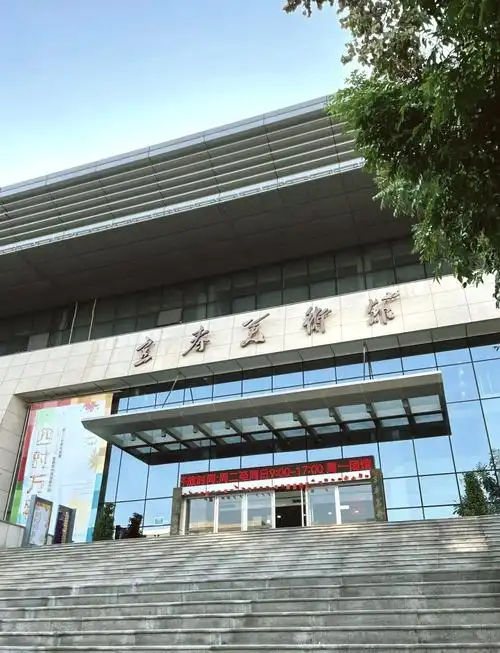 Opened in January 2018 under the city's Bureau of Culture, Broadcasting, and Tourism, the Yichun Art Museum fills a long-standing gap in western Jiangxi's cultural infrastructure. As the region's only professional public gallery dedicated to collecting, exhibiting, and researching fine art, it serves a function comparable to municipal museums that anchored European civic life from the Renaissance onward—think of Florence's Palazzo Pitti reimagined for a modern Chinese city. With five exhibition halls and a dedicated printmaking workshop, the museum gives the surrounding prefecture-level region its first venue capable of hosting museum-quality traveling shows alongside permanent displays of local artistic heritage.
The architecture itself is the first work of art visitors encounter. The building's pure white geometric massing, expansive glass curtain walls, and sunken light-shadow courtyards create an aesthetic that recalls the sculptural modernism of Britain's Hepworth Wakefield or California's The Broad—buildings where form serves as a quiet prelude to the art within. Natural light filters through the courtyards and bounces off the alabaster facades, producing the luminous, ever-shifting ambiance that has made the museum one of Jiangxi's most "Instagrammable" cultural sites. The design is contemplative rather than spectacular, rewarding slow observation.
Culturally, the museum is best understood through its commitment to two parallel narratives. The first is the preservation of Yichun woodblock printing, a centuries-old folk technique recognized as national intangible cultural heritage, whose bold black-and-white graphic language draws inevitable parallels to the German Expressionist woodcuts of Kirchner and Heckel. The second is a forward-looking international program that has already brought German contemporary art and farmer-painter biennials to Jiangxi. Together these threads position Yichun as a quiet but genuine crossroads between regional tradition and global contemporary practice.
Practical visiting details favor spontaneous travelers. The museum is free to enter and requires only a passport or Chinese ID card swiped at the gate—no advance reservation needed. Doors are open Tuesday through Sunday from 9:00 to 17:00, with last entry at 16:30, and the building is closed on Mondays except during official Chinese holidays. Visitors should dress modestly and bring a light layer, as the air-conditioned interiors run cool, and they should note that flash photography, food, beverages, smoking, and pets are all prohibited inside the galleries.
For the most rewarding experience, plan your visit on a weekday morning or after 4 p.m., when the angle of sunlight transforms the courtyard geometry and crowds thin out. Neutral or monochrome clothing photographs beautifully against the white walls. After exploring the galleries, the museum forms the centerpiece of a compact half-day cultural loop: walk next door to the Yichun Museum for a survey of regional history, then wander the Drum Tower Pedestrian Street for local snacks such as sticky rice cakes (米糕) and warm sweet-potting tea soup, completing a thoroughly satisfying introduction to this under-explored corner of Jiangxi.
Opened in January 2018 under the city's Bureau of Culture, Broadcasting, and Tourism, the Yichun Art Museum fills a long-standing gap in western Jiangxi's cultural infrastructure. As the region's only professional public gallery dedicated to collecting, exhibiting, and researching fine art, it serves a function comparable to municipal museums that anchored European civic life from the Renaissance onward—think of Florence's Palazzo Pitti reimagined for a modern Chinese city. With five exhibition halls and a dedicated printmaking workshop, the museum gives the surrounding prefecture-level region its first venue capable of hosting museum-quality traveling shows alongside permanent displays of local artistic heritage.
The architecture itself is the first work of art visitors encounter. The building's pure white geometric massing, expansive glass curtain walls, and sunken light-shadow courtyards create an aesthetic that recalls the sculptural modernism of Britain's Hepworth Wakefield or California's The Broad—buildings where form serves as a quiet prelude to the art within. Natural light filters through the courtyards and bounces off the alabaster facades, producing the luminous, ever-shifting ambiance that has made the museum one of Jiangxi's most "Instagrammable" cultural sites. The design is contemplative rather than spectacular, rewarding slow observation.
Culturally, the museum is best understood through its commitment to two parallel narratives. The first is the preservation of Yichun woodblock printing, a centuries-old folk technique recognized as national intangible cultural heritage, whose bold black-and-white graphic language draws inevitable parallels to the German Expressionist woodcuts of Kirchner and Heckel. The second is a forward-looking international program that has already brought German contemporary art and farmer-painter biennials to Jiangxi. Together these threads position Yichun as a quiet but genuine crossroads between regional tradition and global contemporary practice.
Practical visiting details favor spontaneous travelers. The museum is free to enter and requires only a passport or Chinese ID card swiped at the gate—no advance reservation needed. Doors are open Tuesday through Sunday from 9:00 to 17:00, with last entry at 16:30, and the building is closed on Mondays except during official Chinese holidays. Visitors should dress modestly and bring a light layer, as the air-conditioned interiors run cool, and they should note that flash photography, food, beverages, smoking, and pets are all prohibited inside the galleries.
For the most rewarding experience, plan your visit on a weekday morning or after 4 p.m., when the angle of sunlight transforms the courtyard geometry and crowds thin out. Neutral or monochrome clothing photographs beautifully against the white walls. After exploring the galleries, the museum forms the centerpiece of a compact half-day cultural loop: walk next door to the Yichun Museum for a survey of regional history, then wander the Drum Tower Pedestrian Street for local snacks such as sticky rice cakes (米糕) and warm sweet-potting tea soup, completing a thoroughly satisfying introduction to this under-explored corner of Jiangxi.