Dongguan Museum
⭐ 4.20
No. 1, Dongmen Road, Guancheng District, Dongguan City, Guangdong Province, China
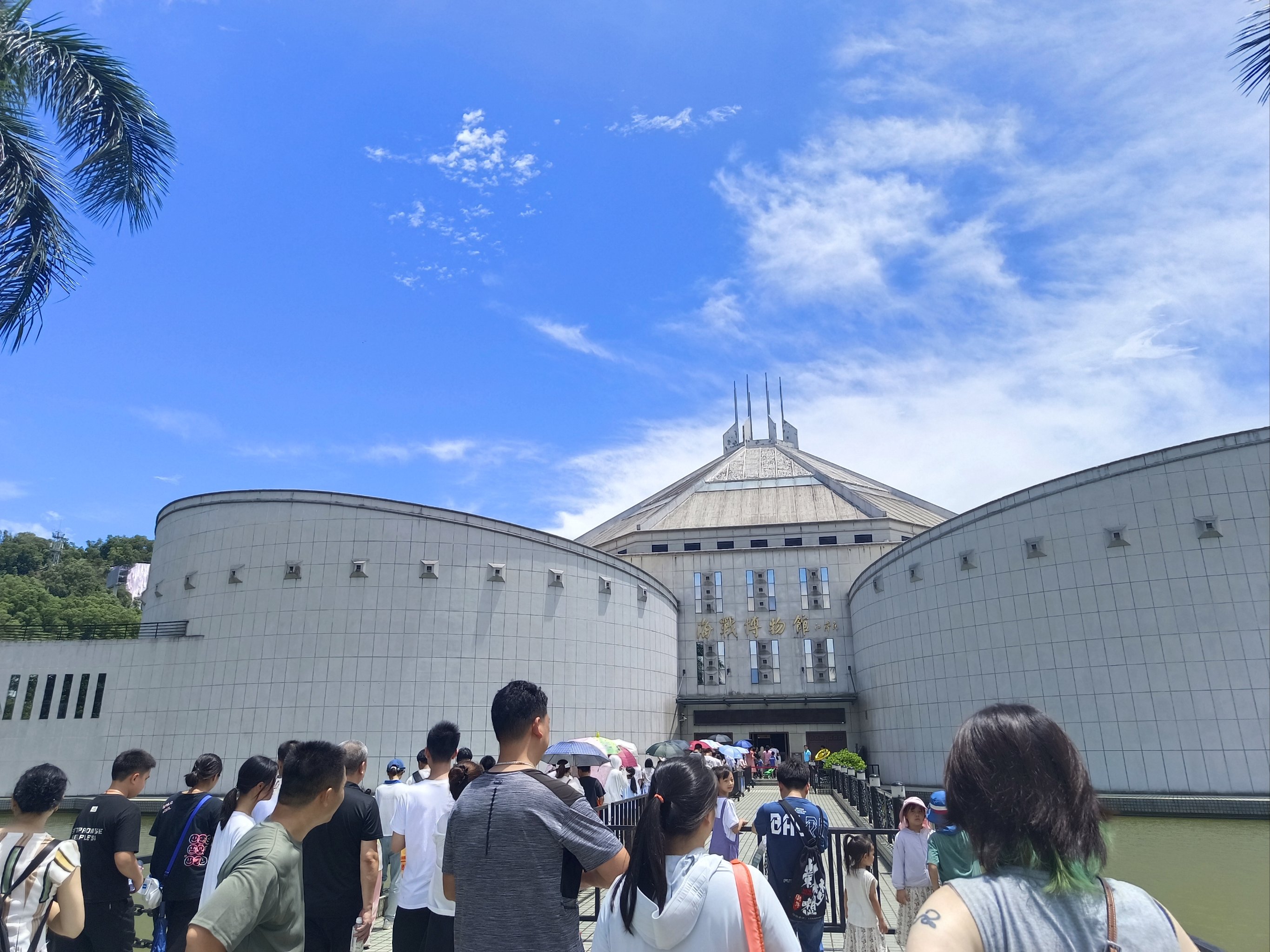 Dongguan Museum traces its origins to the late twentieth century and has matured into a nationally ranked institution chronicling five millennia of Pearl River Delta heritage. Its collections illuminate the region's role on the ancient Maritime Silk Road, when ceramics and silverwork from Guangdong workshops reached European drawing rooms during the Ming and Qing dynasties—much as Delftware traveled the world's trade routes. Holdings such as Song and Yuan imperial jades and Qing export silver parallel the chinoiserie collections found in London's Victoria and Albert Museum or Stockholm's Museum of Far Eastern Antiquities, offering Western visitors familiar touchstones with this distant civilization.
The new Dongguan Museum, designed by He Jingtang—a Chinese Academy of Engineering member renowned for the China Pavilion at the 2010 Shanghai Expo—rises on the city's central plaza at twenty times the size of its predecessor. Echoing the spatial drama of Norman Foster's Great Court at the British Museum, the structure combines Lingnan vernacular rooflines with soaring modern volumes, embodying the philosophy of "rooted modernism." Its 40,000 square meters unfold across fluid, light-filled galleries, positioning it among the most ambitious regional museum openings in recent years.
Beyond its treasures, the museum serves as the cultural anchor of the Greater Bay Area, weaving together narratives of ancient Lingnan water-town life, Hakka migration patterns, and Dongguan's pivotal role as one of China's first reform-and-opening-up experiment zones in the 1980s. A centerpiece is the White Glaze Appliqued Plum Vase, a Grade One national treasure, displayed alongside calligraphy by Qing masters Ju Lian and Deng Bai. For visitors seeking to understand how a once-quiet southern county transformed into a global manufacturing powerhouse, this institution offers indispensable context.
The new museum is expected to operate Tuesday through Sunday, with Mondays reserved for maintenance—following the standard rhythm of most major international museums. Admission is free, though advance reservation through the official WeChat account will likely be required. Situated on the central plaza, the building enjoys direct metro and bus access, with abundant dining options nearby. Visitors should allocate two to three hours for a thorough experience, and families will find nearly 10,000 square meters of interactive and children's zones.
Dongguan rarely appears on Western tourist itineraries, yet this museum offers an unparalleled lens on southern China's layered past—from prehistoric settlements through maritime trade and modern transformation. The combination of national-grade treasures, cutting-edge digital interpretation, and family-friendly facilities rivals offerings found in much-visited European cities, but without the crowds. Travelers passing through Guangzhou or Shenzhen will find the museum a rewarding half-day detour into one of the world's most dynamic cultural regions.
Dongguan Museum traces its origins to the late twentieth century and has matured into a nationally ranked institution chronicling five millennia of Pearl River Delta heritage. Its collections illuminate the region's role on the ancient Maritime Silk Road, when ceramics and silverwork from Guangdong workshops reached European drawing rooms during the Ming and Qing dynasties—much as Delftware traveled the world's trade routes. Holdings such as Song and Yuan imperial jades and Qing export silver parallel the chinoiserie collections found in London's Victoria and Albert Museum or Stockholm's Museum of Far Eastern Antiquities, offering Western visitors familiar touchstones with this distant civilization.
The new Dongguan Museum, designed by He Jingtang—a Chinese Academy of Engineering member renowned for the China Pavilion at the 2010 Shanghai Expo—rises on the city's central plaza at twenty times the size of its predecessor. Echoing the spatial drama of Norman Foster's Great Court at the British Museum, the structure combines Lingnan vernacular rooflines with soaring modern volumes, embodying the philosophy of "rooted modernism." Its 40,000 square meters unfold across fluid, light-filled galleries, positioning it among the most ambitious regional museum openings in recent years.
Beyond its treasures, the museum serves as the cultural anchor of the Greater Bay Area, weaving together narratives of ancient Lingnan water-town life, Hakka migration patterns, and Dongguan's pivotal role as one of China's first reform-and-opening-up experiment zones in the 1980s. A centerpiece is the White Glaze Appliqued Plum Vase, a Grade One national treasure, displayed alongside calligraphy by Qing masters Ju Lian and Deng Bai. For visitors seeking to understand how a once-quiet southern county transformed into a global manufacturing powerhouse, this institution offers indispensable context.
The new museum is expected to operate Tuesday through Sunday, with Mondays reserved for maintenance—following the standard rhythm of most major international museums. Admission is free, though advance reservation through the official WeChat account will likely be required. Situated on the central plaza, the building enjoys direct metro and bus access, with abundant dining options nearby. Visitors should allocate two to three hours for a thorough experience, and families will find nearly 10,000 square meters of interactive and children's zones.
Dongguan rarely appears on Western tourist itineraries, yet this museum offers an unparalleled lens on southern China's layered past—from prehistoric settlements through maritime trade and modern transformation. The combination of national-grade treasures, cutting-edge digital interpretation, and family-friendly facilities rivals offerings found in much-visited European cities, but without the crowds. Travelers passing through Guangzhou or Shenzhen will find the museum a rewarding half-day detour into one of the world's most dynamic cultural regions.